How Microscopic Worms can Get Rid of Grubs and Other Soil Pests
When you choose an organic approach to caring for your outdoor lawn and landscape, the goal is help build up healthy populations of beneficial insects that can help you keep the bad bugs at bay. Ladybugs, lacewings, praying mantis and other beneficial insects can help you control invasions of destructive pests without the use of chemicals. While most of these beneficial insects live above ground, there is one very important beneficial critter you may never know is there...the beneficial nematode.
Beneficial nematodes help control lawn pests such as grubs.
What are beneficial nematodes?
Beneficial nematodes are are microscopic, non-segmented round worms that live and multiply in the soil. These are not to be confused with pest nematodes, such as root-knot nematodes that can cause a lot of plant damage. Beneficial nematodes prey on insects in their larval stage underground. However, they are known to sometimes feed above ground on the adults of insects such as fire ants.
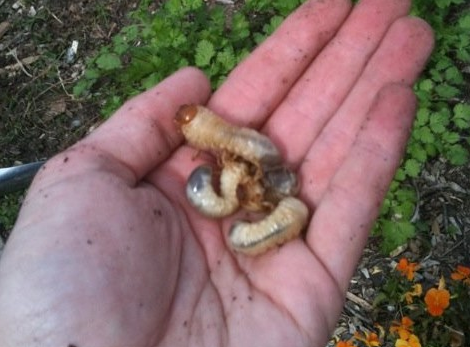
Big Fat Lawn Grubs!
PC: Leslie F. Halleck
And yes, you can also add beneficial nematodes to container grown plants, greenhouse plants, and houseplants to control root damaging pests.
If you have persistent problems with grubs (the larval
stage of the June beetle), fire ants, fleas or chiggers, beneficial
nematodes might just be your best weapon.
But that’s not all beneficial nematodes eat...in fact they can control about 230 different kinds of insects including:
Root Mealybugs
Japanese beetles (white grubs)
Cut worms
Wire worms
Root weevils
Fungus gnat larvae
Thrips pupae
Fleas
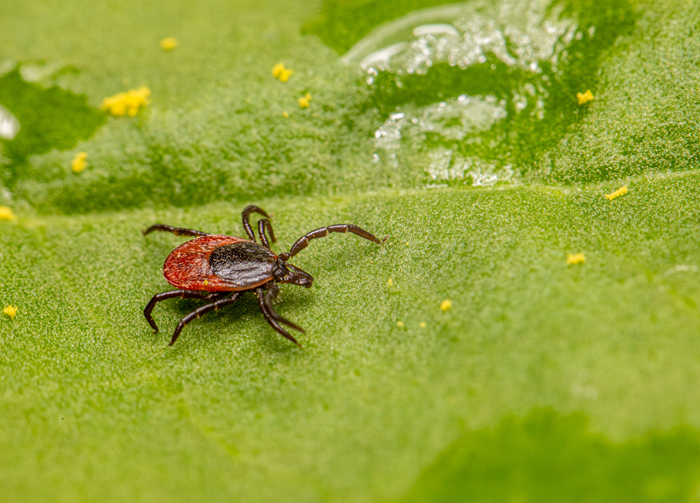
TICKS - yes ticks. While nematodes will have less limited control efficacy on young larvae, they've actually shown to have a bigger impact on engorged female ticks in the soil
How
do they operate? Nematodes kill their target by burrowing into
the
larva’s body cavity, then releasing a bacterial that kills it. YIKES.
What about adult ticks? The nematodes enter through body openings or
even chew through the stretched skin, then release the bacteria that
liquefy internal organs. GROSS. But better the ticks than you?
One of the biggest benefits of using beneficial nematodes
is that they won’t harm earthworms in your soil, or reptiles, pets, or
people. Plus, they get along nicely with other beneficials such as
ladybugs and their larvae since ladybug larvae don’t pupate near the
soil.
How do you apply them?
You
release beneficial nematodes by simply mixing them into water, then
spraying or pouring them onto your soil. The early morning or evening is
a great time to apply them to your landscape, as they prefer cooler
soil temperatures. Don’t plan to apply them during the heat of the day.
It’s best if your soil is healthy and the texture is loose. Remember,
healthy, crumbly soil full of bioactivity is the best breeding ground
for microbes and insects that benefit your landscape.
And yes, you can also add beneficial nematodes to
container grown plants, greenhouse plants, and houseplants to control
root damaging pests.
Once you have applied your beneficial nematodes, you’ll
want to ensure the soil doesn’t completely dry out soon after. Keeping
your soil moist will ensure their populations thrive and multiplies.
Once your beneficial nematodes are living underground, they are still
susceptible to non-selective pesticides. So avoid spraying them after
you’ve put down nematodes.
Keep in mind that it will take a few weeks for the
nematodes to begin having an effect. As with all organic methods,
patience is key. A healthy population of beneficial nematodes may
continue controlling soil pests for several years, or you may want to
re-apply them annually in areas where soils dry out regularly.
Which Nematodes to Use?
There are several different species, each having their own best pest targets.
Look for:
- Heterorhabditis bacteriophora: Best for deeper soil pests such as grubs
- Steinernema feltiae: Best for fungus gnats and thrips.
- Steinernema carpocapsae: Best for cutworms, webworms, and web-spinning caterpillars
- Steinernema carpocapsae (Sc) and Steinernema feltiae (Sf), often paired with Heterorhabditis bacteriophora (Hb) are often best for TICKS.
What about dry heat?
It's important to note that beneficial nematodes do require some consistency of dampness in the soil as well as some shade, so you'll find they are less effective in the hottest part of the summer in full sun lawn areas. But the spring and fall seasons are the best times to deploy nematodes and weather conditions are more favorable for them during these times. Since fall is right around the corner, now is the time to plan you fall nematode applications.
And of course you can use them 365 year-round in your greenhouse and indoor houseplants as long as temperatures aren't too hot.