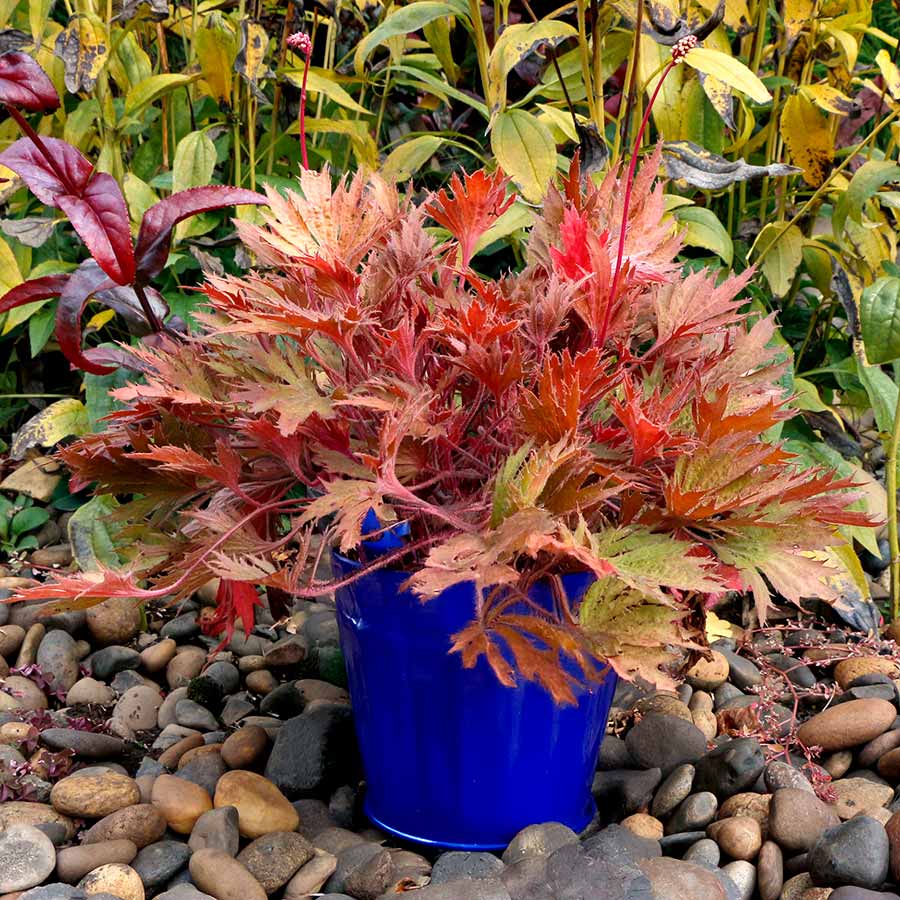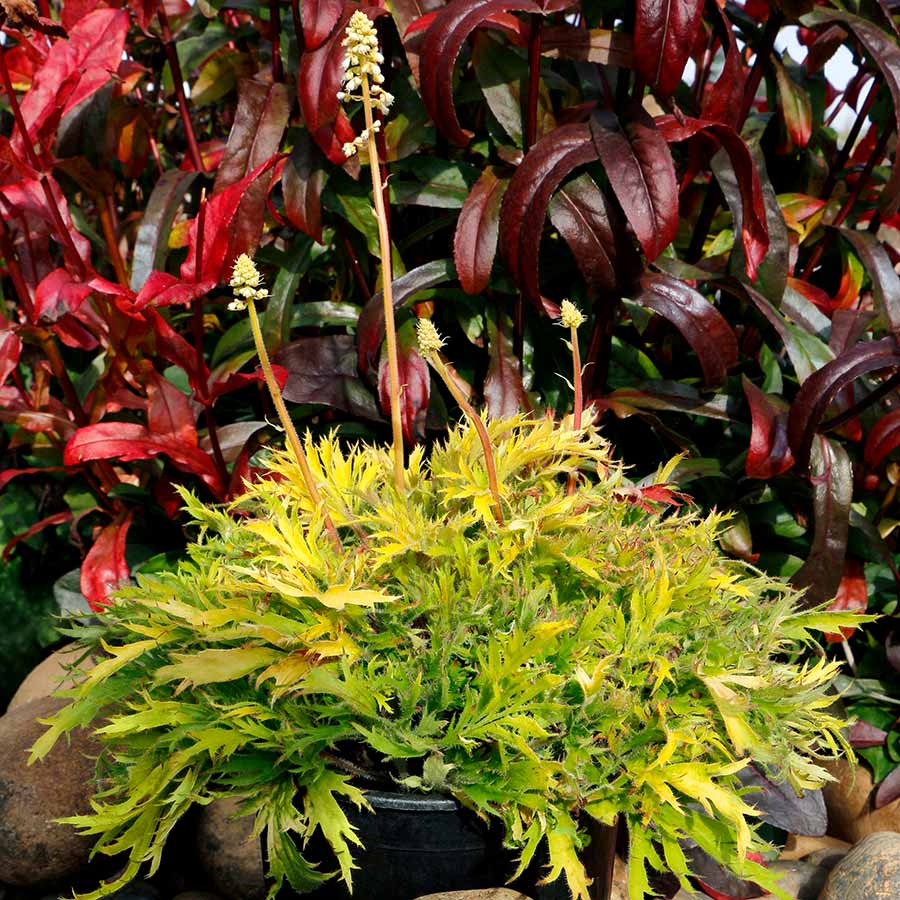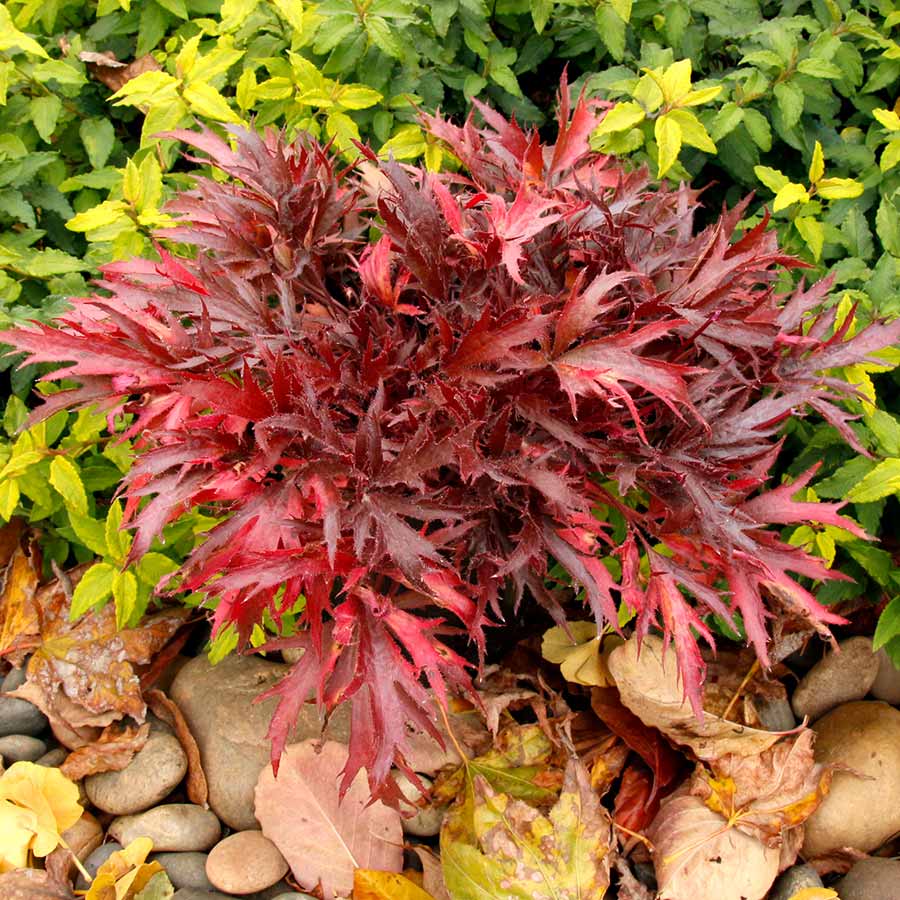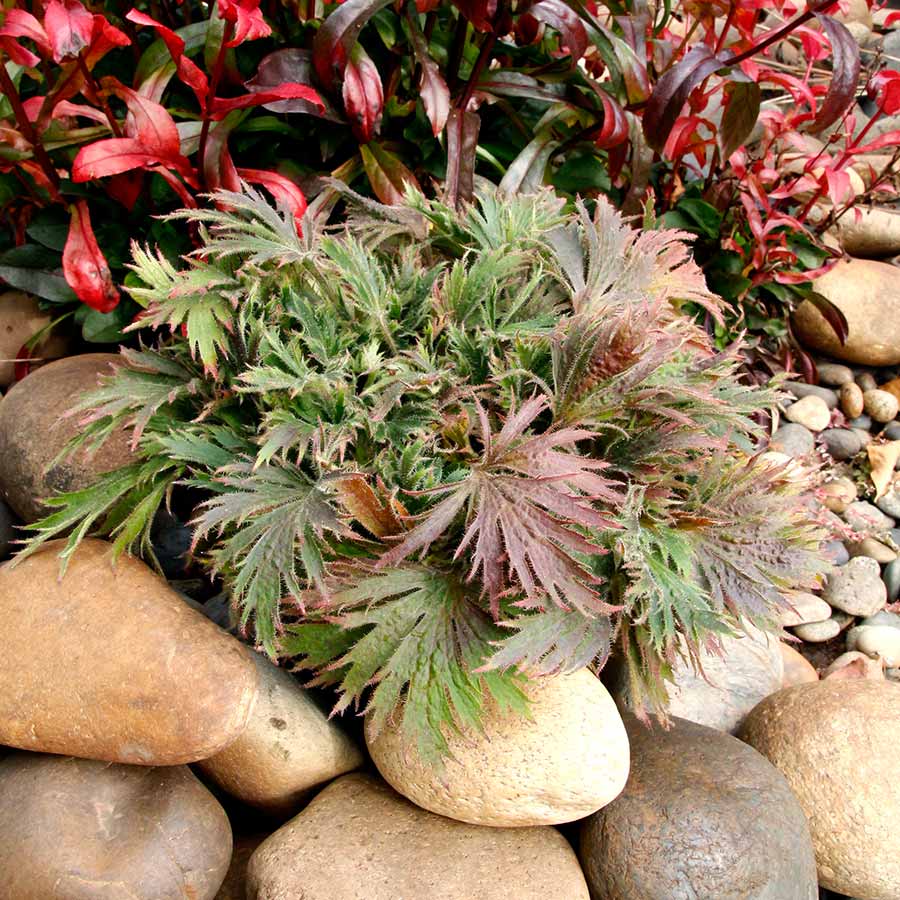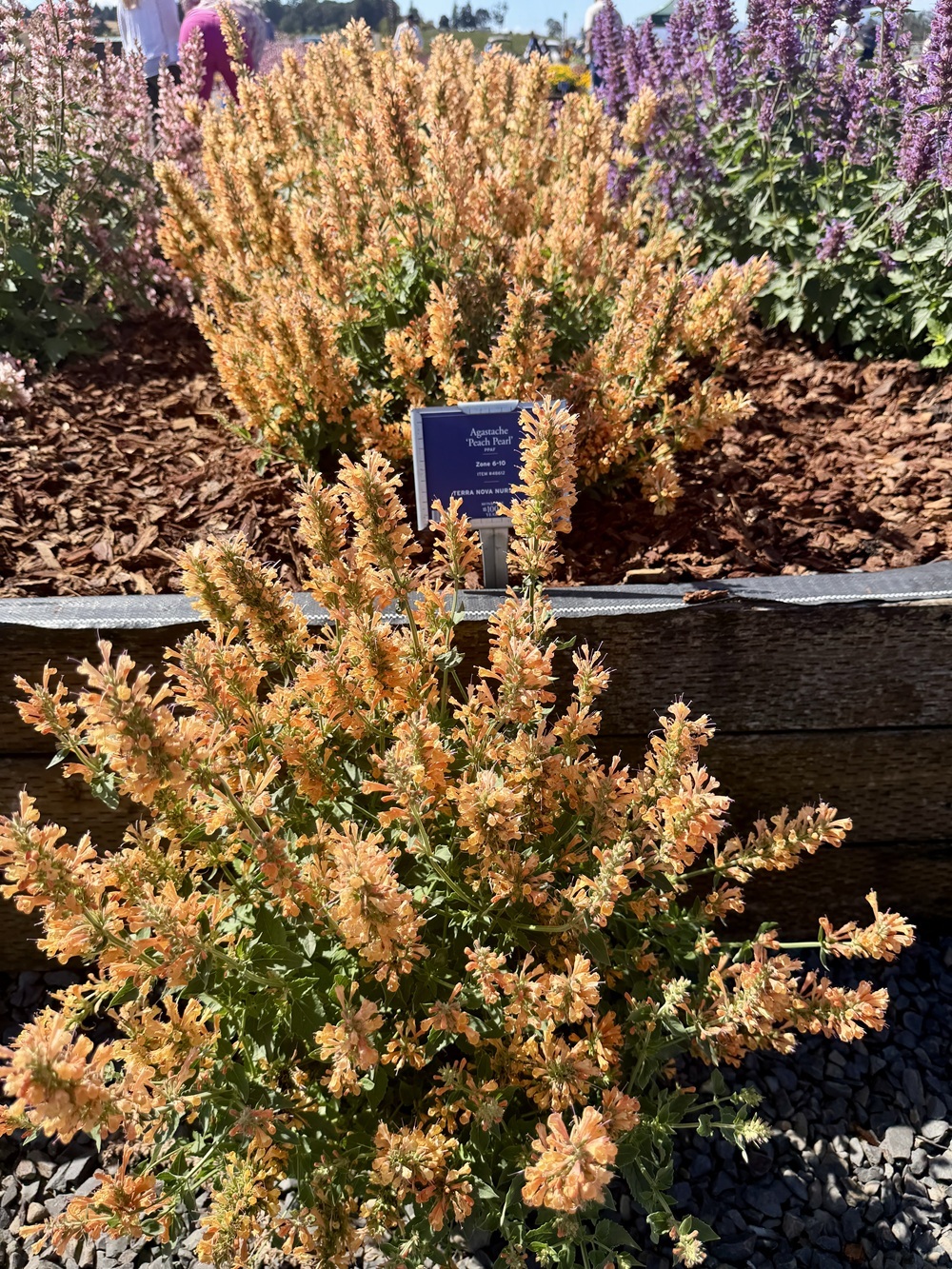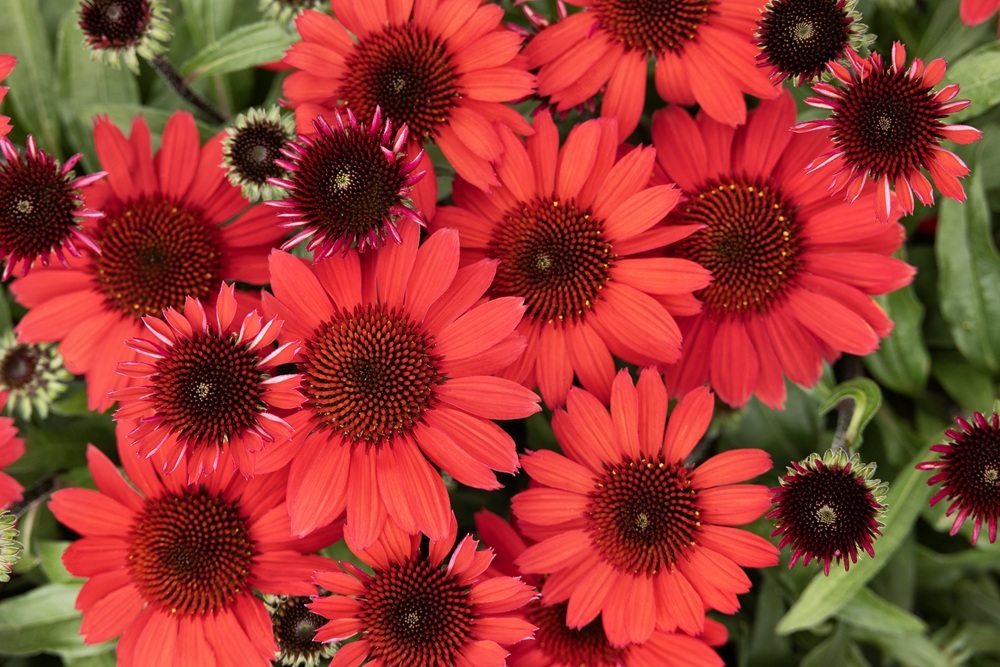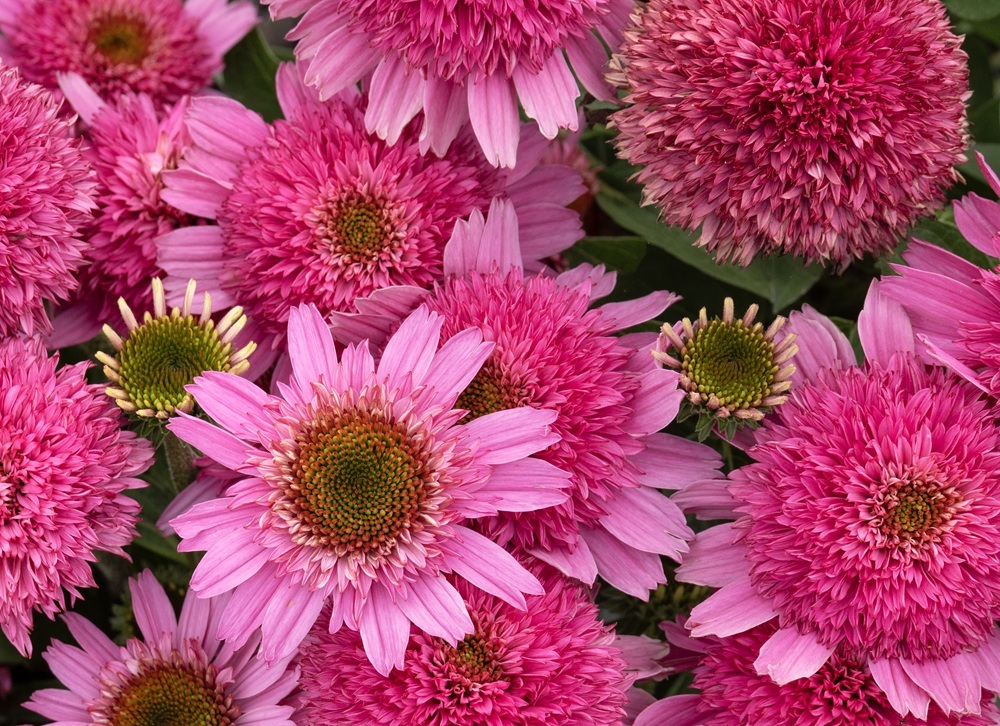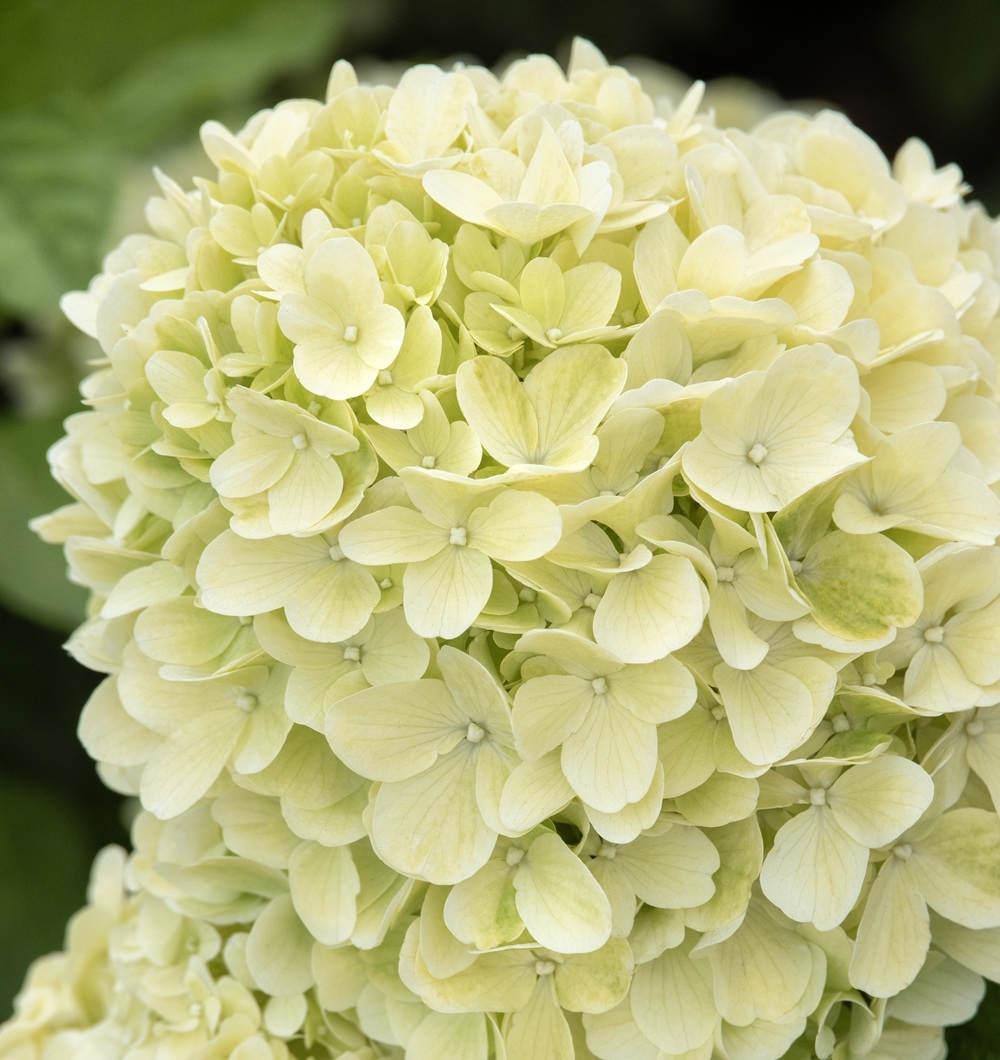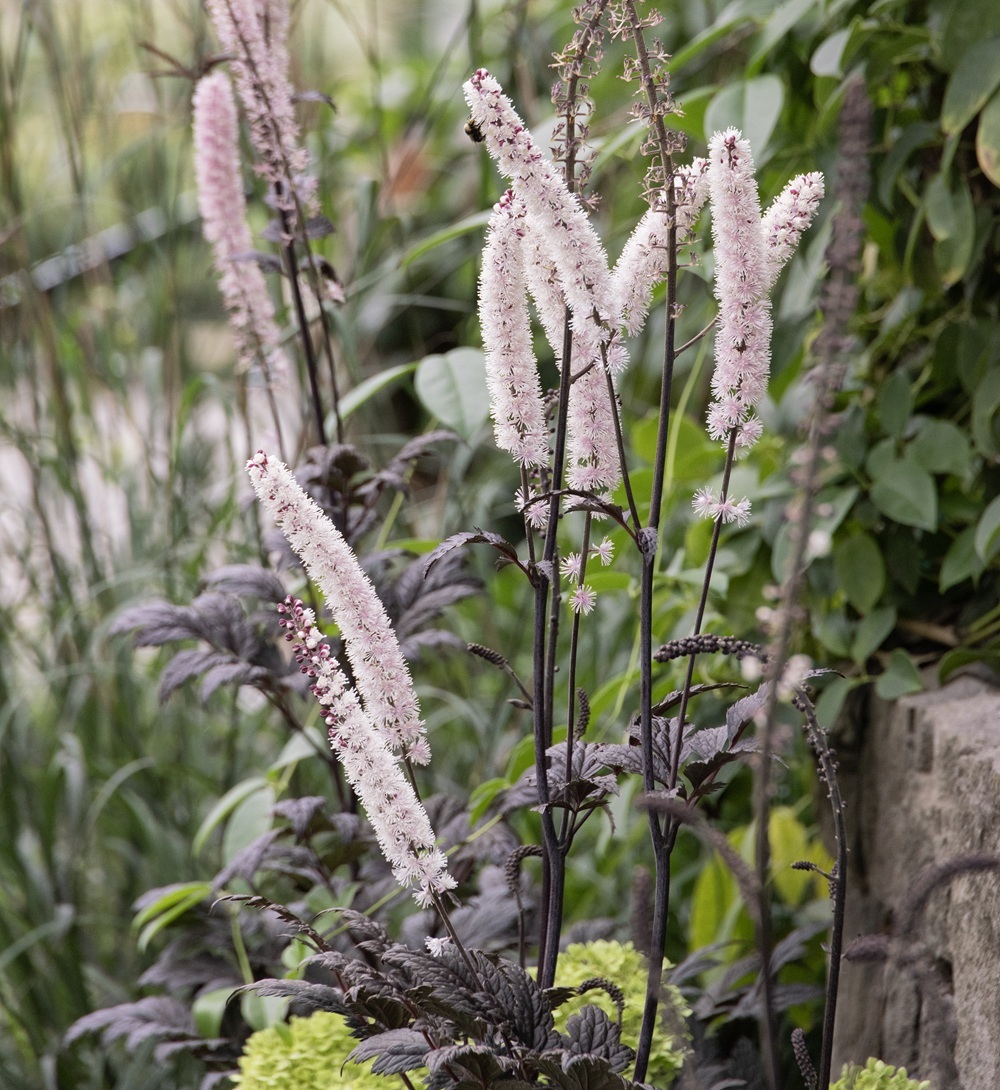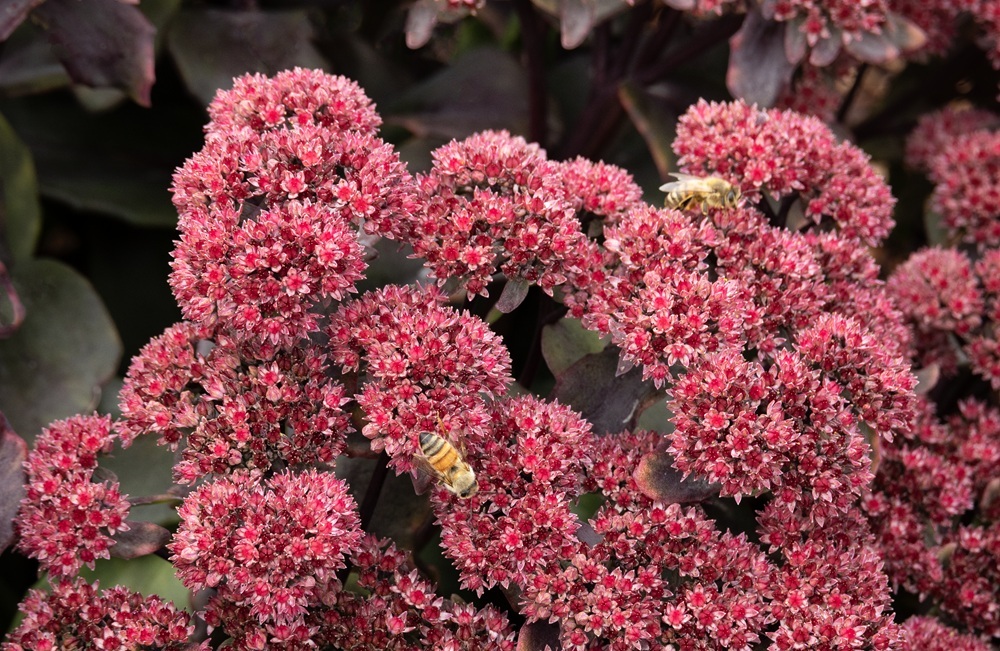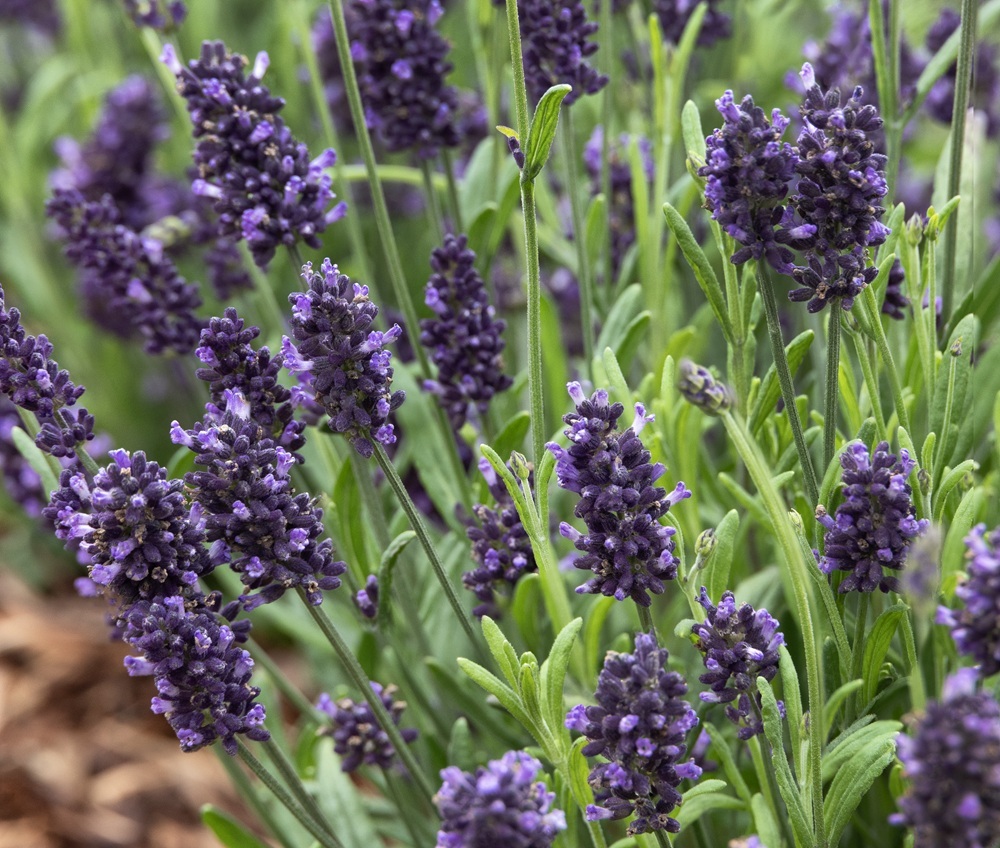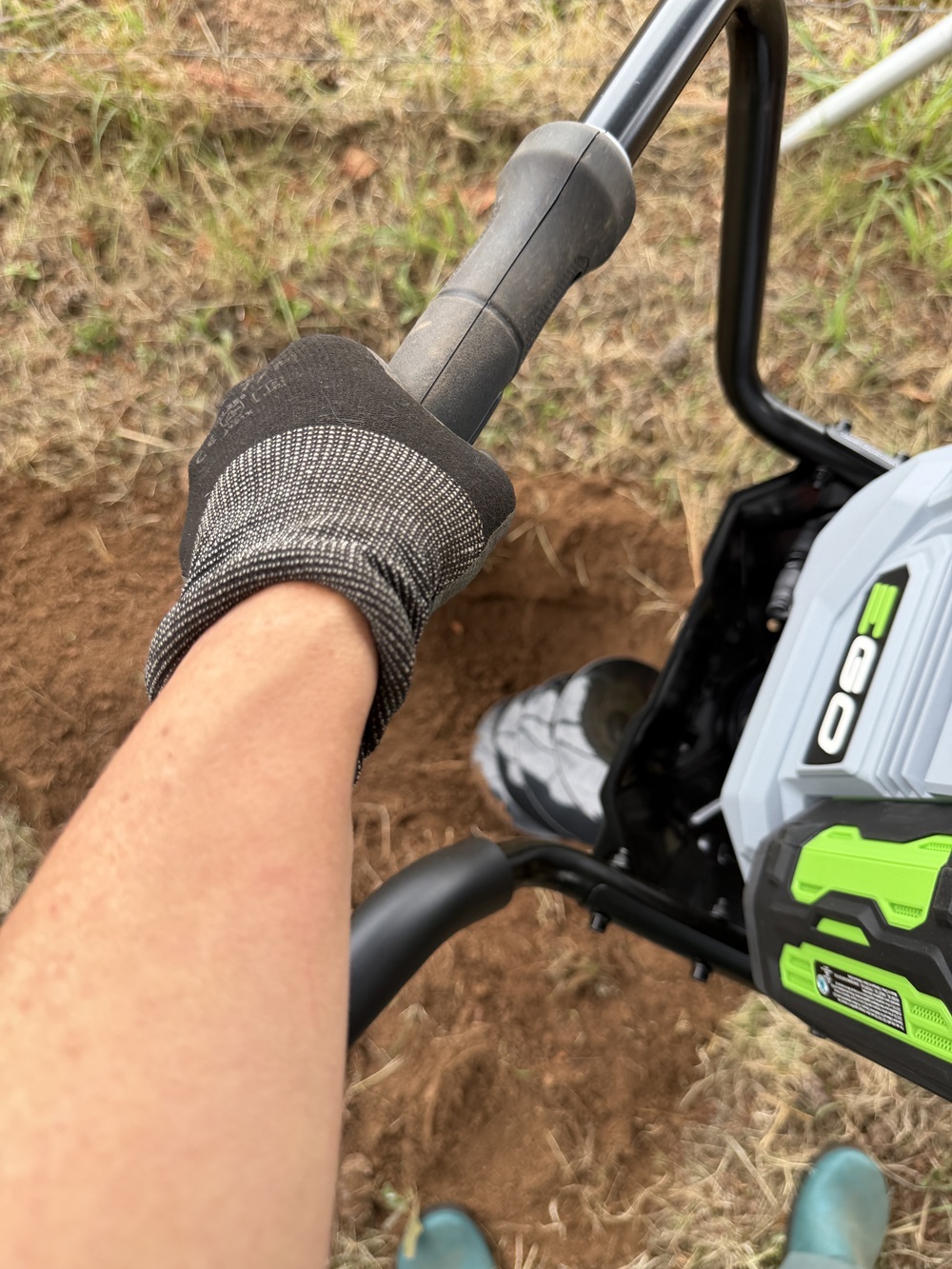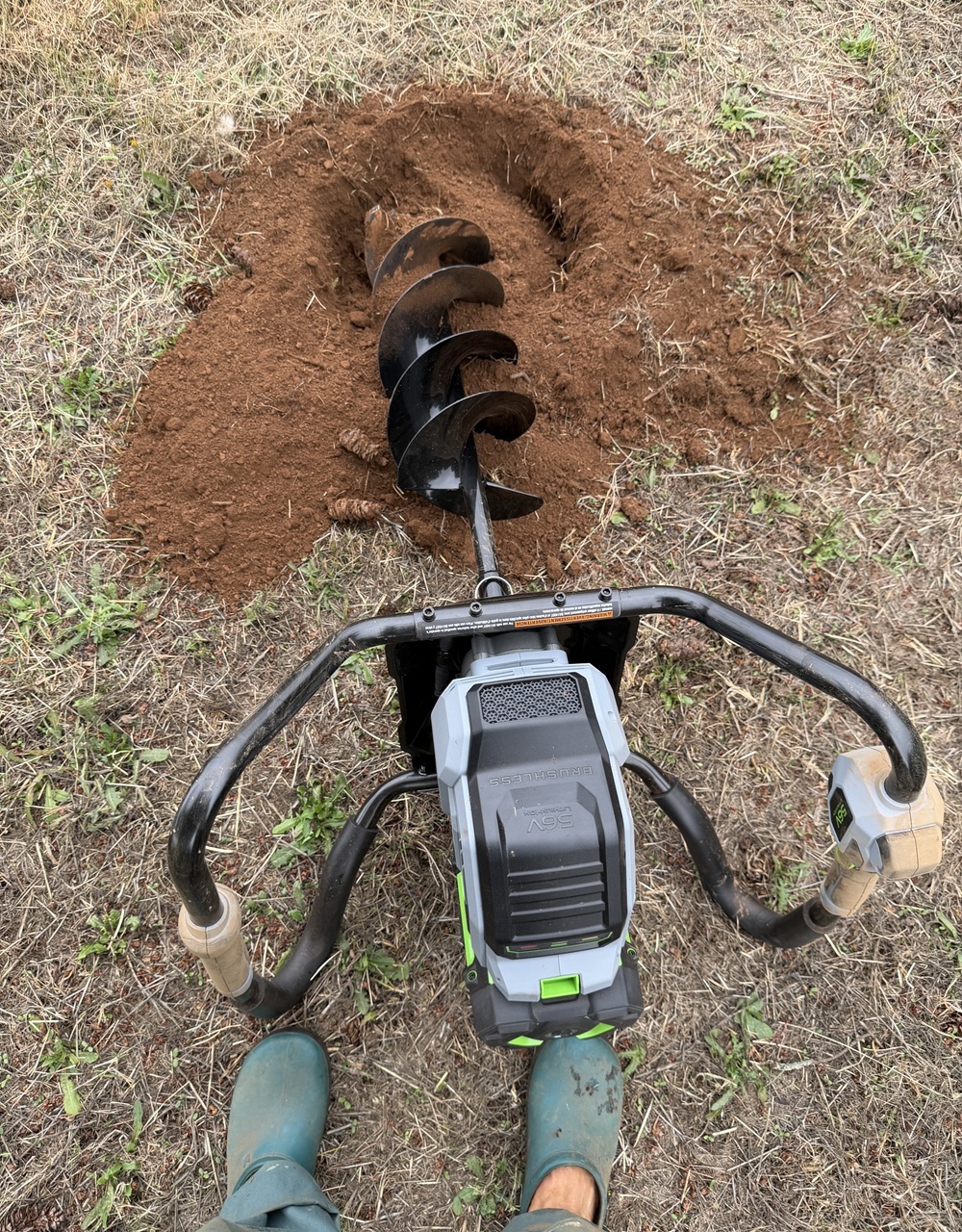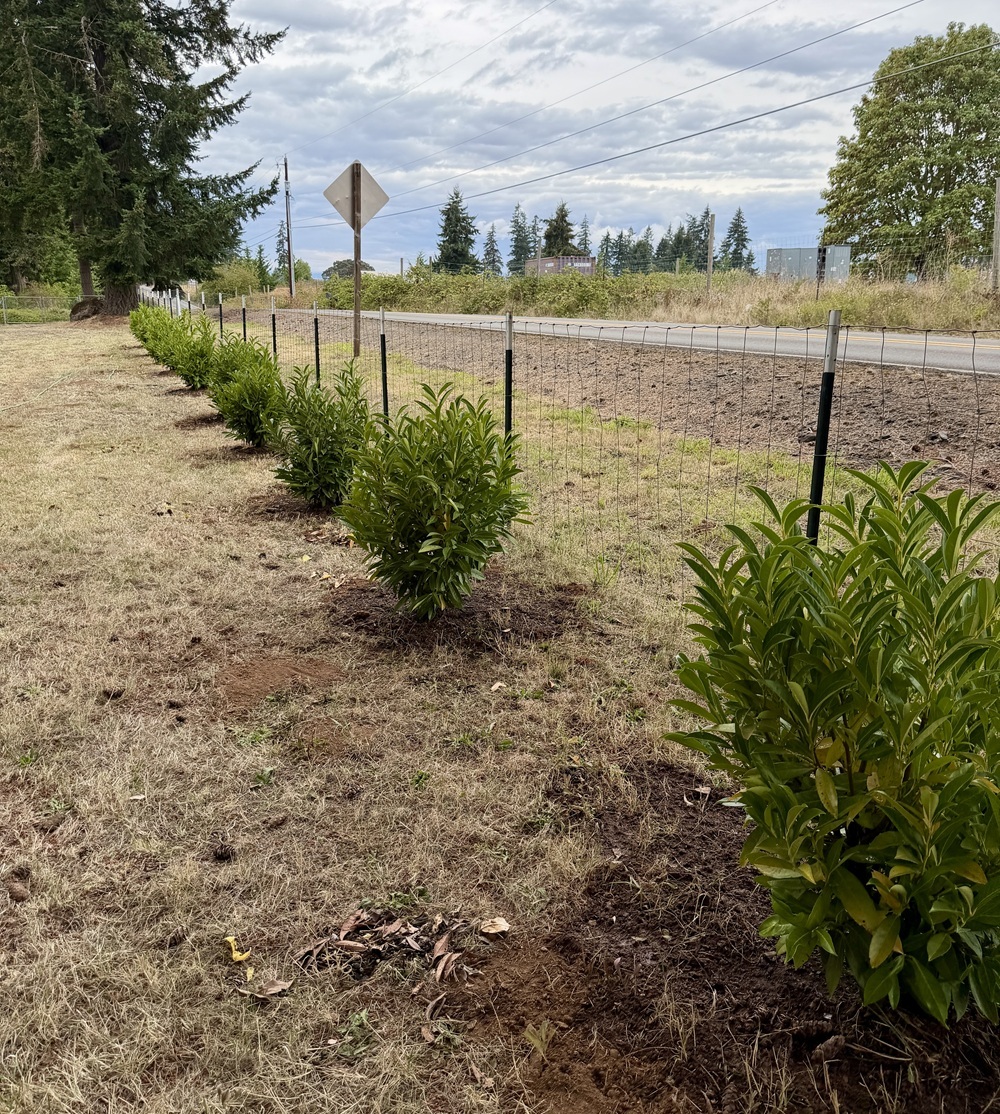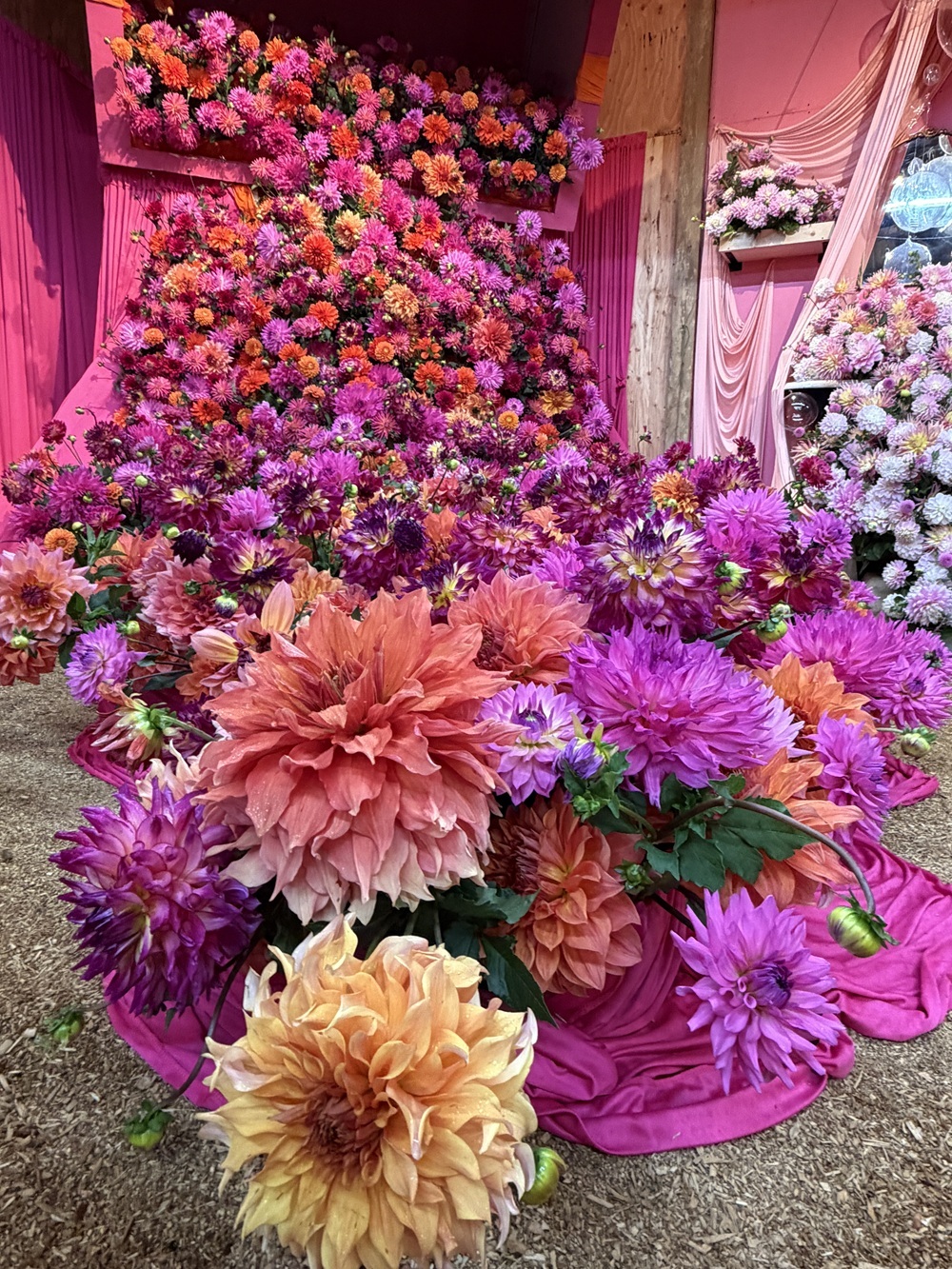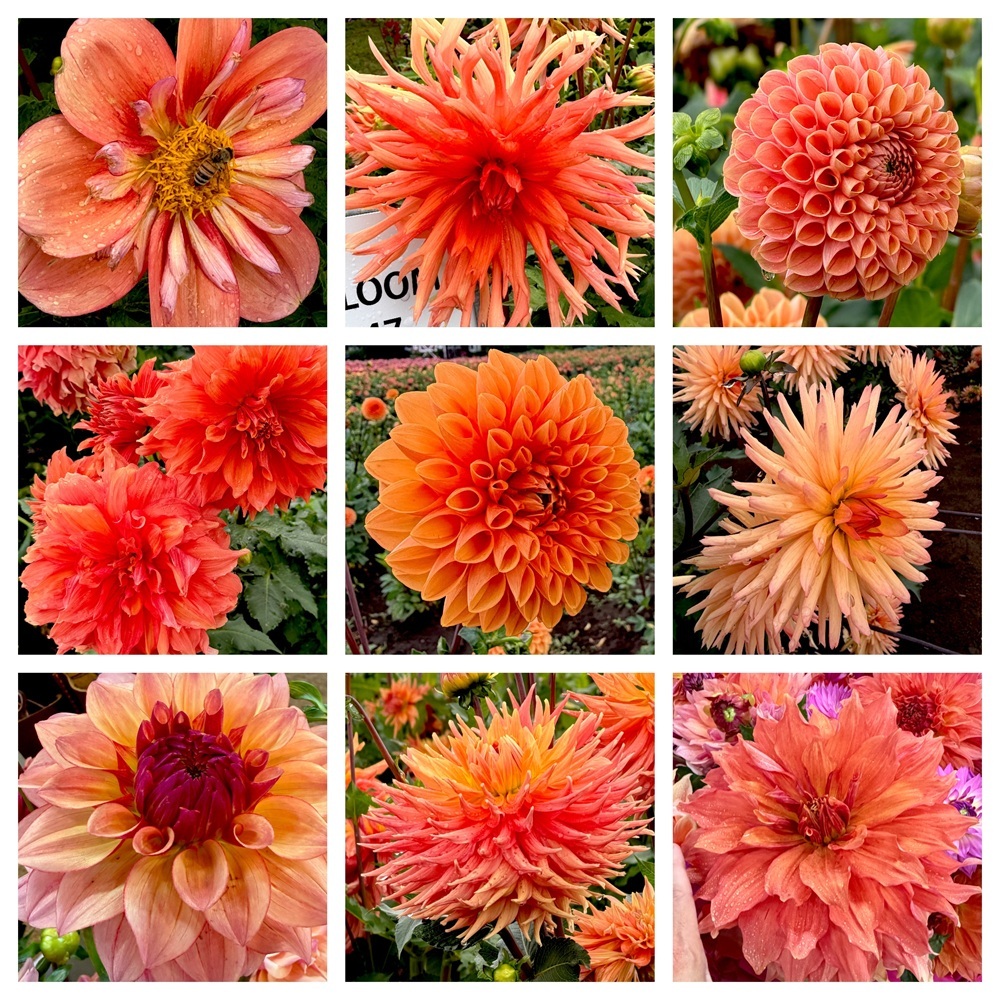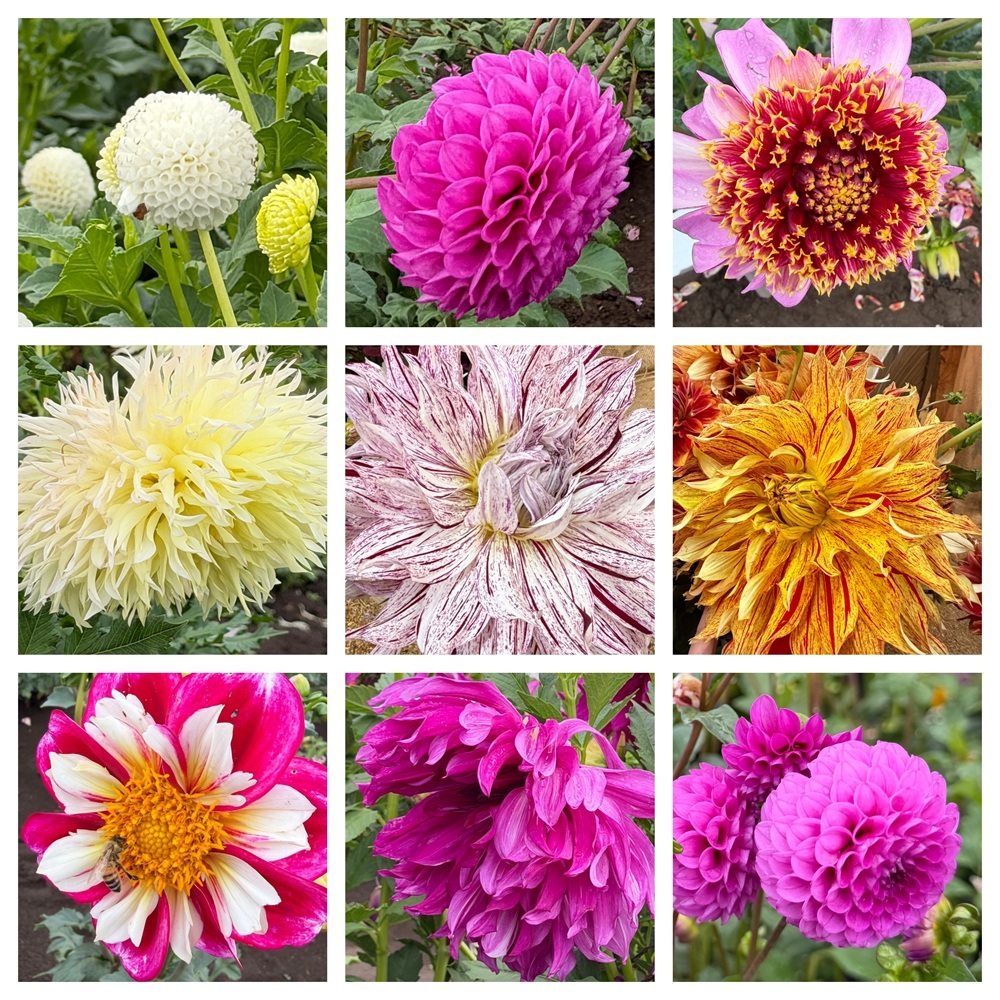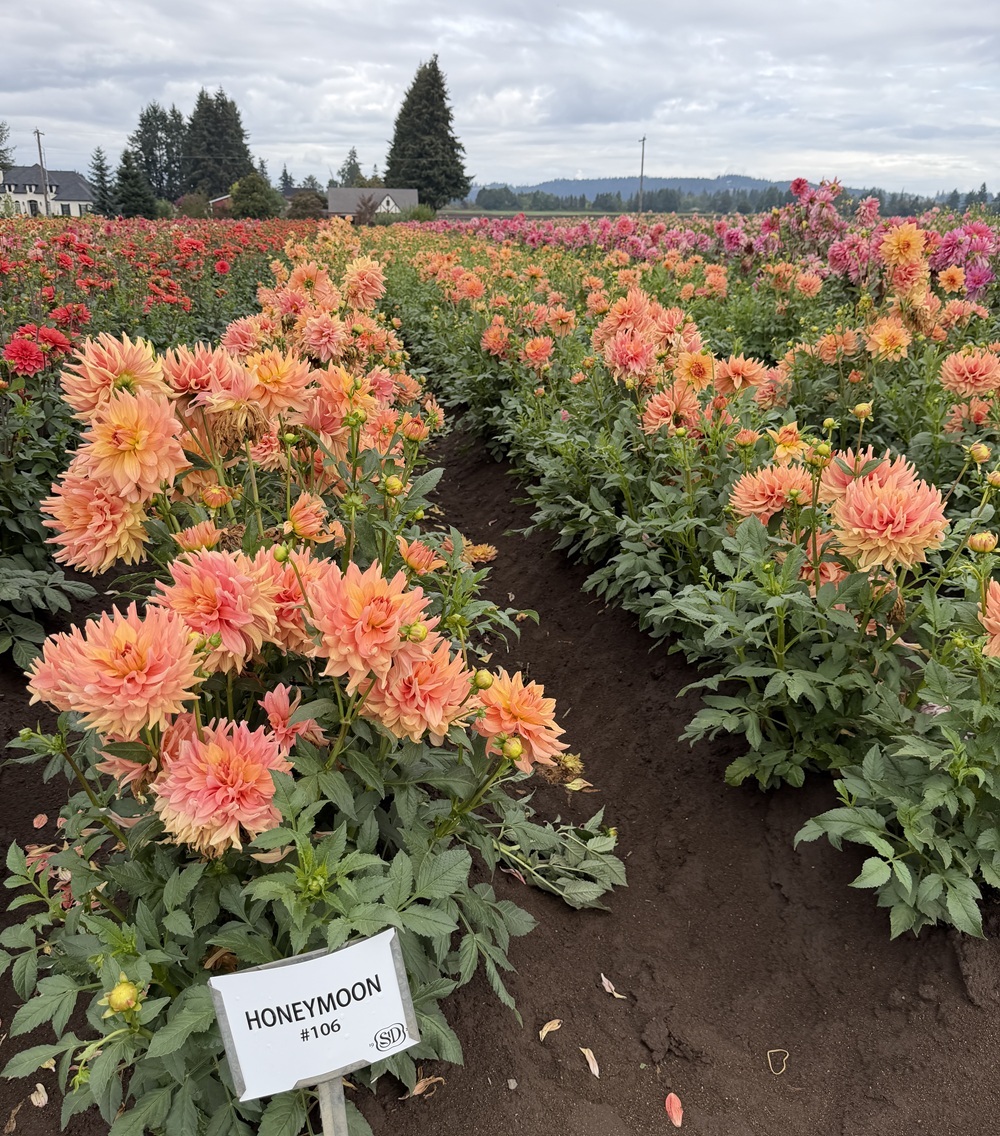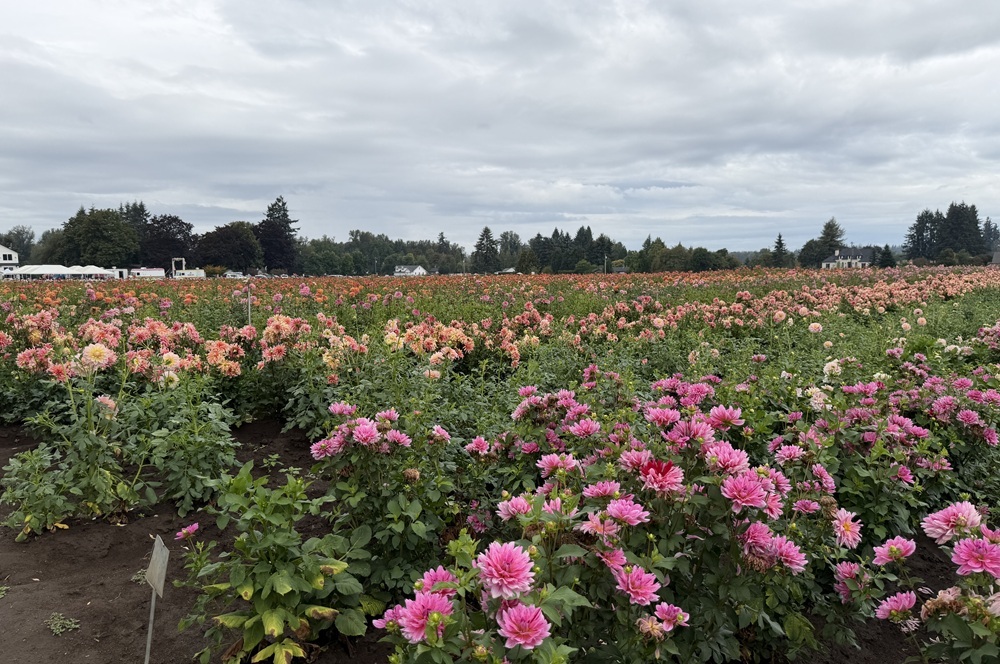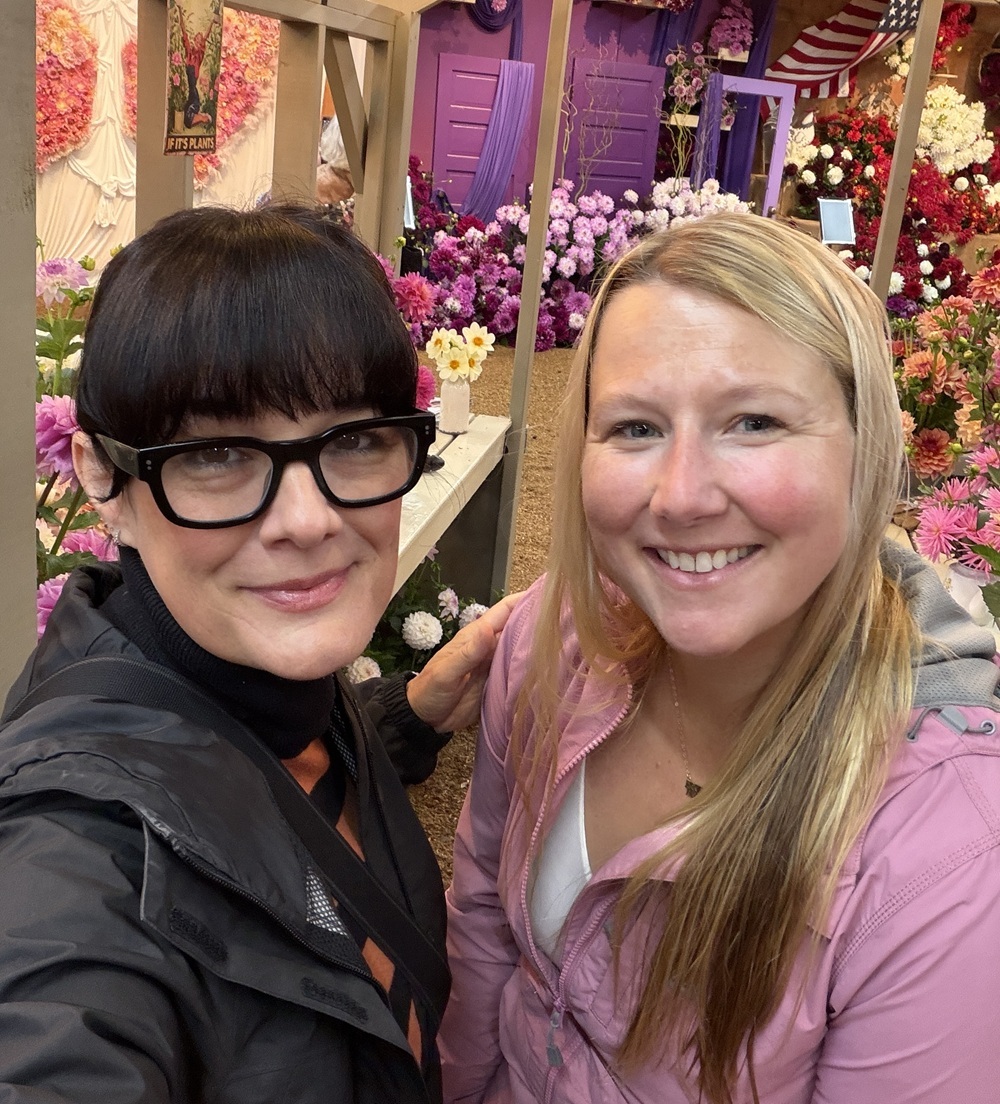
No, I didn’t take crying lessons from Erika Kirk; I just don’t like pink!

May 4, 2026

The Pink Saga Continues in the Garden...

If you follow me on Instagram you may have seen my recent dramatic lamenting of just how many PINK flowering plants I’ve inherited at my new forest farm property in Oregon. (Login to IG for video reel HERE) I just do not like pink. As a botanist and plant lover I certainly appreciate many pink-flowering plants out in nature. Of course. But as a professional horticulturist and lifelong gardener I do get a bit particular about my color choices for my own gardens. Pink is not one of those color choices. But, apparently, this is NOT a popular stance up here in the Pacific Northwest because almost everything that blooms in spring is PINK! Mostly due to the dominance of spring-blooming Rhododendrons that anchor most gardens here.

SO many bubble gum PINK Rhododendron! And hot pink ones, and magenta ones...
PC: Leslie F. Halleck

Get a Grip

I’ve seemingly upset a lot of people with my lack of a penchant for pink. Now, a lot of folks did not get the humor and thought I was actually having a real crying fit and melt down over SO MANY PINK flowers in my garden. I was told I “need to get a grip about plants” in a repost and in DMs, while another commenter stated I must have “taken crying lessons from Erika Kirk”, and then was told by many I just needed to learn to love pink and work with it. Perhaps my next career should be in acting. Don't worry folks, I'm really OK! Just having a little horticultural fun.

Weigelia is pretty, but it's still PINK! OH, and yes, those are ALL pink dogwoods in the backgorund!
PC: Leslie F. Halleck

It's ok to make intentional choices

Rhodies (Rhododendron spp.) are a plant that I grew up with along the East Coast and in Germany. Both premier locations for these bloomers. So I'm certainly not new to much of the plant palette that's common here, or many of the natives to the area. Rhodies certainly are gorgeous plants and there are a number of species native here to the PNW. So I certainly get the loyalty to them!

Let me ask you though…if you really did not like the color red, and you bought a house with all the interior walls painted bright red, would you just force yourself to eventually like red or just work with it? No. Of course not. Color is a deeply personal matter and we all react mentally and emotionally in our own way when surrounded by colors we love or dislike.

There’s an entire industry called landscape and garden design - along with interior design - that is devoted to making specific thoughtful choices about color, aesthetics, and mood in your garden. In addition of course to making the right plant choices for the right places along with many other goals related to sustainability and wildlife.

So many SCREAMING hot pink Azaleas!
PC: Leslie F. Halleck

Bruise Gardening

So whilst I may not rip out ALL the pink plants (There are a few Rhododendron that are coming in a darker almost purple-pink that I’ll probably let stay), I have already started my color transition. I was also asked "if no pink what other colors ARE there?". Well, I do blues, purples, whites, oranges, chartreuse, peach, etc. And I usually will let a few yellow intruders stick around. I call it “bruise gardening”!

As I introduce you to more areas around my new Oregon Forest Farm, I will also start showing you some plants I'm excited about that are NOT pink that are starting to bloom. And don't worry, white, lavender, purple, and orange Rhodies and azaleas (and color variations thereof) are MOST welcome in my garden.

Your garden should bring you personal joy, and if pink doesn’t do it for you either, I’m giving you permission to go ahead and not like it! But don’t worry, I never want to waste perfectly good plants, and I’ve already hooked up with at least one new local connection on IG who came and dug up a few of the small pink azaleas. They’ve made him super happy, which makes me super happy.

You do you gardeners!


Welcome to My New Oregon Forest Farm!

May 1, 2026

A Horticulturist Transplants from Dallas to Rural-ish Oregon

One of my lovely sit spots
PC: Leslie F. Halleck

It took a lot of planning, and a lot of waiting, and it was a long time coming.

I have finally made the transition from my urban garden in Dallas, TX, to my rural-ish forest farm in Oregon. I say rural-ish because even though we are "out in the country", and are on 6-acres with rural, farming, and forestry zoning, we're still only 30 minutes from downtown Portland, and pretty much anywhere else we need to get to in the area. We're also very close to two neighboring towns of Canby and Oregon City, so amenities are a mere minutes away. It's the perfect hybrid of having elbow room to grow (and LOTS of trees) but not being too far from civilization.

It's difficult to get good photo that show the entire property, so, we'll take it bit by bit over time.

What's Growing on at the Forest Farm?

I'm still toying with names for my little "forest farm", as I'm calling it, and figuring out where I can do just what. It's not open flat agricultural land, rather a lovely forested gardening retreat (y'all, I have a POOL in Oregon, lol), with a lot of the property on slope, with different pockets of different growing opportunities; be it establishing woodland natives and bulbs (YES please!), fern gardens (DUH), MOSS gardens (Absolutely), too fruit trees and berry bushes, to edible gardens, and of course plenty of spaces to flesh out more ornamental spaces, natives, cool conifers, and fun plant collections (yes, the miniature Iris collection has already begun). Of course my "ornamental" gardens are always mixed with edibles and herbs.

Essentially, I'll be master planning this property as my own little 6-acre botanical garden and habitat.

There are areas I'm considering to set back up my beehives (the small produce farmer across the road will be happy about that!), as well as a place to reestablish my chicken flock...I'm thinking we may be a full-time Silkies only operation moving forward! (Tiny pants, tiny chihuahuas, tiny chickens...you get my jam!)

The POOP Garden

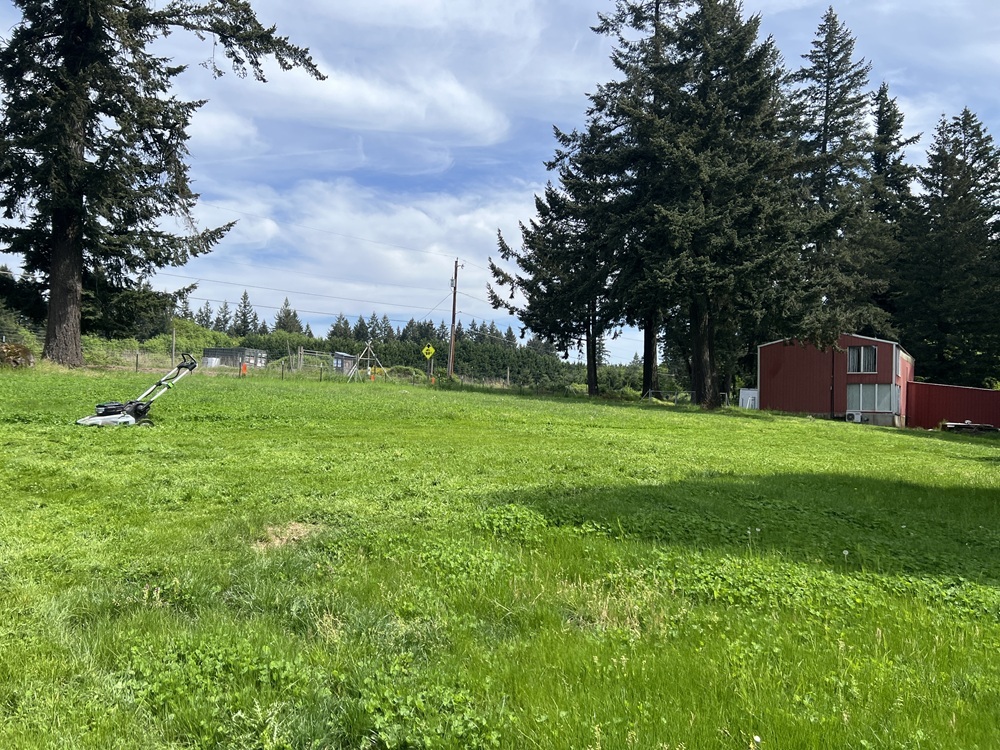
Yes, that's my little battery powered push mower I'm using to mow down 2-3ft tall grass and assorted vegetation across the property, including this area which houses my septic drain field - AKA "The POOP Garden". Yes, I'm that nuts but my guns will be amazing!
PC: Leslie F. Halleck

OH..and being out here in the country we are on a well and septic system. So I also have a large septic drain field to manage, which I've dubbed "the poop garden", so I'll also be talking about how to maintain that, and what you can or can't plant on top of it or near it.

I also have a large shop where I'll be setting up my art studio and a couple more rooms for horticultural activities. So keep your eyes peeled for some new artsy activity from the forest farm.

Home Greenhouse Revival

Perfect spot for my future greenhouse!
PC: Leslie F. Halleck

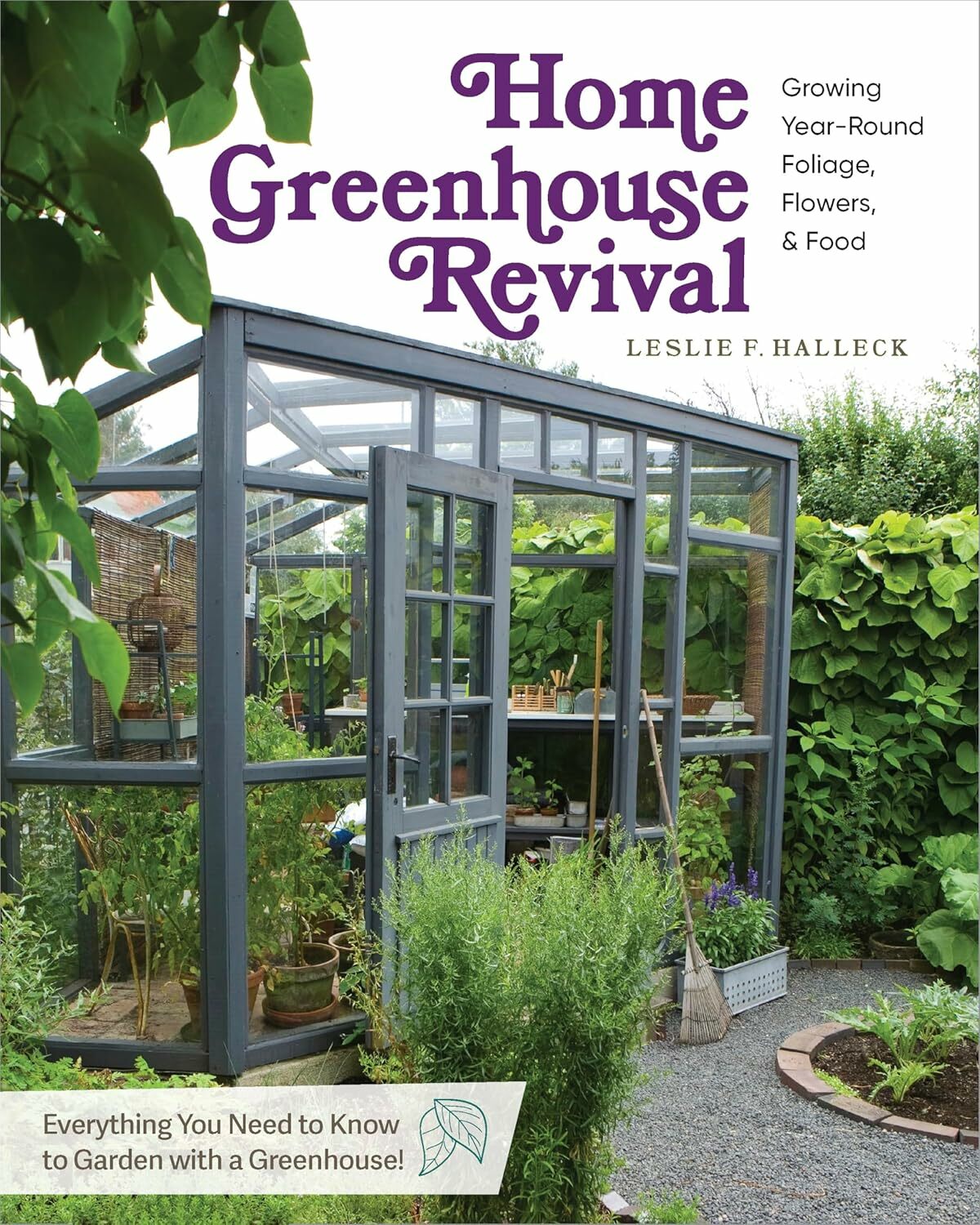
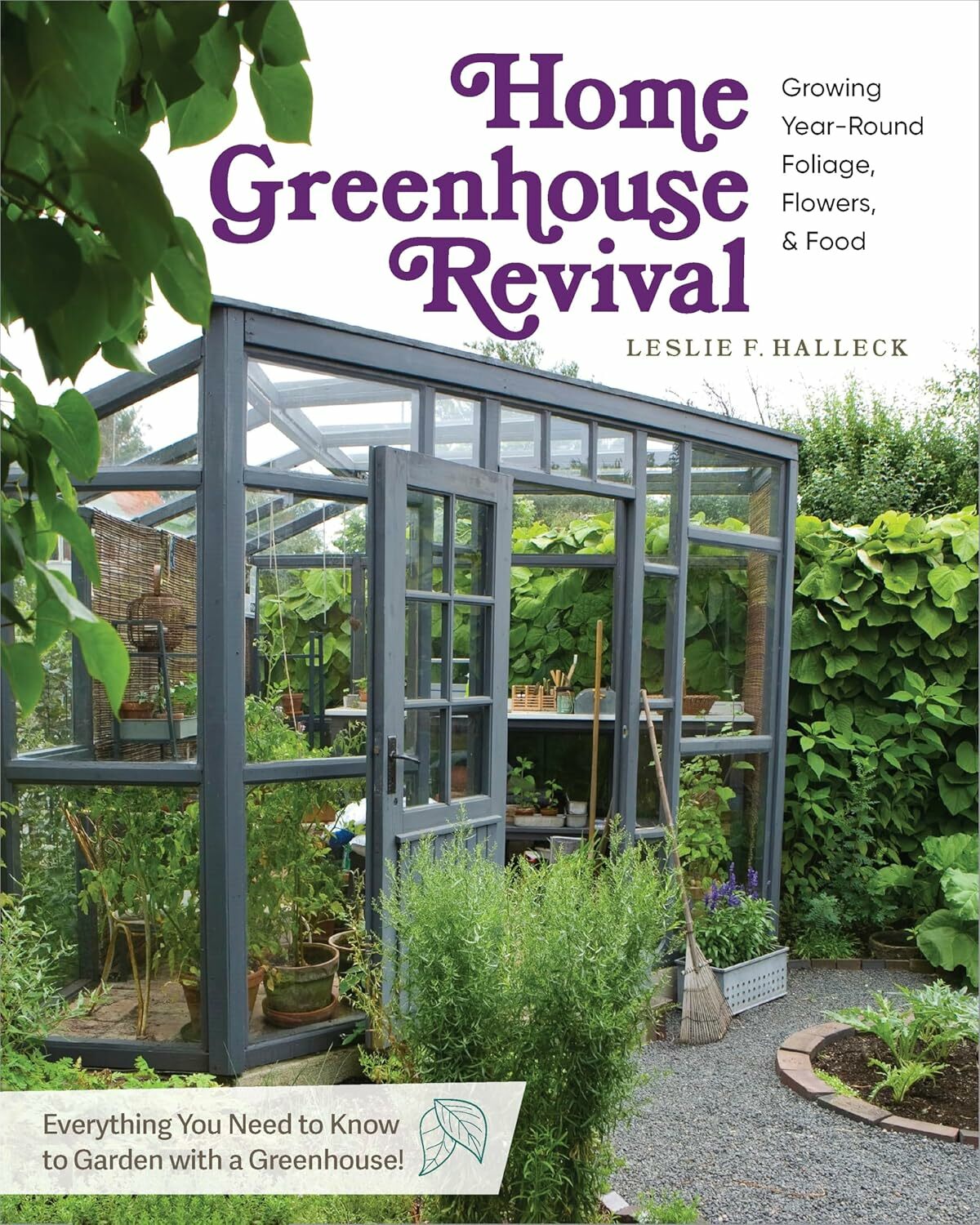
And of course I wouldn't have bought a property like this unless it had at least one perfect spot for a GREENHOUSE! And here it is folks, my perfect spot for a good sized home greenhouse. It doesn't exist yet, and I haven't decided exactly which type I'm going to put in, but if any of you greenhouse companies in the Oregon City or surrounding area want to talk about a project, drop me a line! I was hoping to have a new greenhouse built by the time my new book Home Greenhouse Revival comes out on September 1st (you can learn more and pre-order at the link), but that may or may not happen. In any case, you'll be along for the journey.

Guided Forest Therapy

A part of trails I'll be re-establishing for forest walks on property
PC: Leslie F. Halleck

As a newly minted Certified Nature & Forest Therapy Guide (you'll see my walks posted under the name Folia Forest Therapy) I'm also excited about creating opportunities for guided forest therapy walks here at my forest farm. I have lovely forested areas to enjoy, and some existing trails that need some work to clear a better path. I can't wait to start establishing more natives and wildflowers down in the forest to enjoy on our walks. As soon as I can start hosting here, I'll let you know. In the meantime I'll keep you posted on walks I do out at other locations.

There will be so much more to come and I can't wait to start sharing more of my botanical and gardening adventures here at the "farm".


Spring Tulips in the Pacific Northwest

April 13, 2026

It's mid-April and it's prime tulip bloom season here in Oregon. We had a week or more of warm sunny weather, so this pushed blooms on a bit earlier and may make them finish up a little sooner than they normally would; nonetheless tulips have been putting on quite a show.

I hit Woodburn, Oregon this last weekend to visit the Wooden Shoe Farm Tulip Festival. As I will be living out in a rural area of Oregon not far from this farm, it was a lovely drive down in to the Willamette Valley area, which is dominated by plant growing nurseries. So I was happy to get an introduction to all of these businesses along the way.

Wooden Shoe Tulip Farm, Woodburn, Oregon
PC: Leslie F. Halleck

Now, having grown up overseas I've had the privilege of visiting the massive tulip fields in Holland, which are quite the thing. While this planting isn't quite to scale with Dutch plantings, it's quite lovely and impressive and worth a visit. While we ended up with a cold raining morning for our visit, the grey skies allowed the flower colors to pop for pictures. (It can often be tough to get good flower photos when conditions are sunny).

Wooden Shoe Tulip Farm Fields, Woodburn, Oregon
PC: Leslie F. Halleck

It took me a minute to figure exactly what this tulip farm offers, and as it turns out most of their business is in offering cut tulips and selling cut and potted tulips at the farm. The spring tulip festival and events such as weddings seem to be the main focus of the operation.

Tulip Types

Most of the cultivars they have growing on display are industry standards. I've used most of them in my years of work designing massive tulip displays for the Dallas Arboretum, plant trials, and of course choosing the best selections for the clients I had in Texas. Most of the cultivars growing at Wood Shoe Tulip farm work equally well planted in more southern hot climates. Single lates, Darwin Hybrids, and lily-flowering amongst the strongest types. The earlies, dwarfs, mid-season, and peony flowering look to perform better here in cooler weather than in the south as they are a bit more temperature sensitive.

A few of my very favorite sing lates were in good form, 'Maureen' (white), 'Dordogne'(orange/pink/peach multi-colored), and 'Negrita' (Dark purple)

Tulip 'Maureen', Single late white
PC: Leslie F. Halleck

Tulip 'Dordogne', Single late
PC: Leslie F. Halleck

Tulip 'Negrita', Single late
PC: Leslie F. Halleck

I was, however, happy and surprised to find amongst all the old favorites a couple of cultivars I'm not familiar with. They just happened to be in my favorite flower colors, both orange and green! 'Orange Marmalade' and 'Green Power'. Tulips with green flower petals, or partially green, typically fall into the viridiflora tulip category. Definitely adding these to my new garden...

Tulip 'Orange Marmalade'
PC: Leslie F. Halleck

Tulip 'Green Power'
PC: Leslie F. Halleck

I don't have room here to post all the fabulous photos of my favorite cultivars, but I'll leave you with two more that I love, the weeping and perfectly named 'Purple Rain' and 'Charming Beauty'. I've a penchant for double peachy anything so if they'd actually had any 'Charming Beauty' for sale, I'd have bought them up!

Tulip 'Purple Rain'
PC: Leslie F. Halleck

Tulip 'Charming Beauty'
PC: Leslie F. Halleck

Lift & Store the Tulip Bulbs

To keep bulbs from splitting to multiply (tulips bulbs will split, producing baby bulbs, also called offsets) - which results in crowding over time and several years of delay for the tiny new bulbs to start blooming -the farm lifts the bulbs after blooming season to store them, then replants them in the fall. That way they get nice big single bloom stems per bulb each spring. So yes, if you're growing tulips for cut flowers, this is common practice for field grow bulbs.

I hope you're enjoying your spring wherever you are and have enjoyed a glimpse of tulip season up here in Oregon!


Trilliums on the Trail

March 28, 2026

Ephemeral Blooming Beauties

Spring is springing here in the Portland area of Oregon, and we've had so many sunny gorgeous days, I've been trying to get out and hit some of the plentiful city parks and trails. I was pleasantly surprised to find the Trillium grandiflorum in full spring blooming glory today out in the Tyron Creek State Natural Area.

Trillium grandiflorum in Tyron Creek State Natural Area, Portland
PC: Leslie F. Halleck

Elegant with a stately presence, these woodland plants are spring ephemerals, producing large flowers that include three petals, three bracts, and three sepals. Plants thrive in wooded areas with shade and dappled sun, as well as moist soil conditions. They appreciate a bit more of the less intense spring sunshine, so you'll often find they thrive better in forests with deciduous trees.

Plants are slow growing and usually take about ten years to start blooming...but are certainly worth the wait! Blooms usually emerge about March through June.

Ecosystem Boosters

Blooming in early spring, Trillium flowers provide an important early season food source for many insects. Ants often spread their seed, and deer much on the plants (so, if you have a lot of deer, be prepared for the Trillium to be a target!

Oh, but YOU shouldn't consume these plants, as the plant parts and the berries are poisonous. Some species of Trillium are also protected so resist the urge to harvest or dig up these plants.

Trillium grandiflorum specimen
PC: Leslie F. Halleck

I hope you are also getting out of the house to spend some times outdoors and get a chance to encounter spring ephemerals in your area. Nature (and your garden) is such an antidote to the stresses of the work, which are most certainly plentiful right now...

PC: Leslie F. Halleck


Sakura: The Cherry Trees are Blooming

March 24, 2026

It's Cherry Blossom Season in the Pacific Northwest

Take a deep breath, sink into the cherry blossoms, and relaaaxxxxx

Cherry tree in peak bloom in the Portland Japanese Garden
PC: Leslie F. Halleck

Cherry blossoms (sakura) abound in the Portland, Oregon area, as well as much of the Pacific Northwest. I was lucky enough to relocate here from Texas in early March, just in time to catch the initial emergence of spring blooms.

I've been keeping watch on the cherry trees around town trying to time the perfect moment to head over to the Portland Japanese Garden to catch the cherry trees in bloom. The garden does a pretty good job of posting cherry blossom reports on their social feeds, and a "cherry tracker" on their website, so you can also get updates on the best time to visit. We ended up with the most gloriously beautiful spring day this past Saturday to hit the garden, and it did not disappoint. Blue skies, sunshine and cherry tree exploding with blooms...they look like fluffy cotton candy!

Stunning cherry tree specimen in the Sand and Stone Garden at the Portland Japanese Garden
PC: Leslie F. Halleck

The Zen Sand and Stone Garden, also referred to as karesansui gardens (or dry landscape) is a beloved feature in the Japanese Garden. There is one stunning specimen of highly tended cherry tree, which I believe is a Higan or weeping Fuji cherry (Prunus itosakura x P. incisa), or Shidarezakura, that is the star of the show in early spring. Now, This specimen is about 100 years old and is definitely a prize occupant of the garden. I feel privileged to have witnessed it's emergence this year. Truly lovely.

Yoshino Cherries in bloom at the Portland Japanese Garden
PC: Leslie F. Halleck

Yoshino cherries (Prunus x yedoensis) punctuate the rest of the garden with their dark branches and fluffy light pink blooms. When you look up at the sky in the garden it's like there are big billowy pink clouds of flowers everywhere.

PC: Leslie F. Halleck

PC: Leslie F. Halleck

There are also a number of beautiful Camellia specimens in bloom in the garden, as well as many striking specimens of Japanese maples that will soon be leafing out. I'll definitely be making a trip back over to take in the fresh young leaves. It was a soothing and peaceful visit (even though there were a lot of other visitors that day) and it was so enjoyable to breath the fresh air and all take in the visual beauty of nature.

If you need to find a little peace right now, get outside and visit some nature!


Grow Your Greens: My Breakfast Veggie Pile!

September 23, 2025

Time to Seed Your Salad Greens

This is my salad greens (spinach) breakfast pile!
PC: Leslie F. Halleck

Grow Your own VEG

Here in southern warm climates, it's time to start your fall veggie garden, which should include lots of salad greens! Mid-September, depending in temperatures is usually a good time to start direct seeding Brassicas, root crops, and leafy green such as lettuces, kale, collards, Swiss chard and spinach, to name a few.

This year (2025) as is often the case we're in the third week of September and it's still pretty warm. It looks like night temperatures will finally drop just below 70F later in the week, which is your signal (as long as day temps start to drop below 90F) that you're good to start seeding your first succession of cool season crops.

So that's my plan for this coming weekend (Sept. 27th) - I'll be direct seeding a ton of salad greens outdoors as well as other crops (gotta have my turnips and greens too) along with cool season perennial rye grass in areas I need to mitigate soil erosion, AND a new round of wildflower seeds for my wildscape easement.

Tip: Spinach likes it a little cooler, so you may wait until temperatures drop a bit more to seed it, however arugula is much more heat tolerate and I usually start seeding it at the beginning of September (seeds that dropped from the previous winter/spring crop usually start sprouting on their own end of August-early September so I already have a small patch going).

In my hot climate, I can grow the tomatoes, cucumbers, and peppers in my outside vegetable garden through summer- but it's way too lot for the cool season greens. So to have those fresh through summer, they have to be grown in the indoor garden, or purchased. Conversely, I can grow ALL the greens I need in my outdoor garden from about October-May in my Texas climate.

That's NINE months of homegrown greens. During these cool months, the tomatoes, peppers, and cucumbers need to be grown indoors under grow lights.

My pile of veggies hids a coupe of eggs, cheese, and wheat toast.
PC: Leslie F. Halleck

Green up Your Breakfast

Why do I have to grow a lot of salad greens? Well folks, as you can see in the photos, I start out my days with a PILE of salad greens! Plus other veg/fruits such as cucumber, tomatoes, and peppers.

Salad for breakfast? You bet. I personally deal with PCOS, thyroid challenges, AND menopause (whew) and all of this requires I manage a healthy diet that balances plenty of fiber-rich healthy carbs with the right amounts of fat and protein. Overall, I manage a diet that's on the lower-carb side, but I eat lots of veggies and certain fruits. Bread can certainly be a part of that, either whole wheat, mixed grains, or my homemade sourdough; I just load those carbs earlier in the day (combined with fat/protein) and at lunch, with a focus on less carb/more protein in the evening, but I can pretty much have as much salad greens and veg any meal of the day. Macros are usually 65-100g Carb/90-100g protein/90g fat. Anyway, it just means I need a regular supply of plenty of greens and I gotta grow 'em!

Stretch Your Food Budget

With food and grocery prices continually on the rise right now (seriously my grocery bill is getting painful), there's no reason you can't reduce some of those costs by growing some produce. It's not always less expensive to grow things like tomatoes (especially if you're a new gardener and you have a lot of costs associated with getting set up, materials, soils, etc.) BUT, lettuces is practically the easiest food you can grow. If you grow it in the right season, it takes minimal care, water, or fertilizer. And, you can grow it cut-and-come-again style, meaning you don't pull up the whole lettuce plant when you harvest - you simply cut the leaves you need from it and the plant continues to grow. So relatively speaking, for the price of a couple of seed packs, you can stay in fresh greens for many months for much less than buying from the grocery store. Not to mention, probably incur much less waste.

Year-Round Vegetable Seeding and Planting Calendar

If you want to learn more about when to seed and transplant just about anything for your year-round vegetable garden (indoors and out), check out my year-round planting calendar. There's a link to my free PDF calendar download at the bottom!

Pro-Grower Tip for Lettuce

Know that seeds of lettuce species typically require light for successful germination (specifically exposure to red light). That means you don't want to bury the seeds and cover them with soil. Simply sprinkle them on the soil surface, either in your garden or pots for indoor growing and keep the surface moist.

For all you need to know about starting seeds outdoors or inside, or growing any of your veggie crops indoors, check out my books:

Plant Parenting
Gardening Under Lights

AND my Fall Book Bundle Special


This is NOT My Tree

September 8, 2025

This ugly tree. It’s not mine. Ok, well, technically I bought it and planted it on my property, so legally it’s mine. But after doing that, it became not mine.

Confused yet?

This tree was labeled Autumn Blaze Maple, Acer x freemanii 'Jeffersred' - (but I think it's actually Acer rubrum 'October Glory') -suffering from sun scaled and subsequent systemic fungal disease and dieback.
PC: Leslie F. Halleck

Ok, let me break it down for you. I live and garden in Texas. We get EXTREME heat and intense sun in the summer (high PPFD). These conditions can be tough on many plants. Some hybrid red maples, such as this Autumn Blaze maple, Acer x freemanii 'Jeffersred' (or 'October Glory') don’t always take the heat and hot sun, even though there are a couple of species of red maple native to East Texas, Acer rubrum var. drummondii and Acer rubrum var. trilobum. Emphasis on East Texas…I live in North Texas where soils, climate, and weather are different.

Nonetheless, knowing what I know as a professional horticulturist, I sometimes push the boundaries and do or plant things that I would tell you not to, so I can experiment and see if I can make a plant work. The other reality is that I’m usually so busy helping everyone else with their horticultural needs that my own garden and plants get neglected. Both were the cases with this maple cultivar that I planted on an exposed west-facing corner. What did I know? That it may succumb to sun scald and subsequent infections, and sure enough that's exactly what happened. Sure, I treated the infections a few times, and did see some improvements…but again, I’m busy.

So in the 15-years since I planted it, the tree went from putting in a fair amount of growth, to doing a 180 into a slow descent into decline. It’s never looked great, usually full of scorched anemic leaves in the summer leaving a lackluster fall color display. Slowly, but surly, branches started to die, with the leader finally croaking this last summer, so I cut it off. Should I have removed this tree years ago and replaced it with a more appropriate species? Yes. Have I? No.

The tree is still here, and it’s still “ugly”.

Recently a neighbor asked me why it was still there, given it was clearly dying. My answer was “Because it’s not my tree.”

See, here’s the deal. The deal is Myrtle. Myrtle the mockingbird. This tree is HER tree. Mockingbirds can live about eight years or so. For the past five years Myrtle has had an established nest in this tree that she has tended continuously. The entire front corner of my property is HER turf, and she regularly hangs out with me while I garden and I love listening to her sing. So, you see, I can’t cut down the tree, even if I wanted to. It’s her tree, not mine.

This could be Myrtle the Mockingbird...or it could be her male partner...I'm not completely sure as it can often be tough to tell the difference. He/she has been relatively quiet (which makes me think it's Myrtle (female), but quite territorial, which says it could be a male partner. Male's often sing/call in the evening or night, and females tend to do most of their singing in the fall.
PC: Leslie F. Halleck

Frankly, this is my overall philosophy to landscaping and gardening, and it’s the approach I take with all my plantings and upkeep. Once planted, the garden and the plants in it no longer fully belong to you - or to me. They become an integral part of the surrounding ecosystem and habitat. Birds, toads, insects, spiders, lizards…you name it, they all move in and take up residence as well as foraging. Keeping every plant and tree perfectly “tidy” with no dead branches or expired blooms, or keeping every leaf raked or blown out of your property, might serve your uptight human aesthetics, but it doesn’t serve your nature community. Dead trees, plants, or branches, are just as important to the habitat and sustaining core ecosystem functions, as your pretty foliage and flowers.

This tree, whilst dying, was not a hazard to anyone or anything - be it from dropping branches or threats to power lines - other than it perhaps may have been a bit aesthetically offensive to some. But I hate to break it to most of my neighbors…their constantly half-dead brown-tipped yet over-watered St. Augustine lawns and square holly hedges from 1960s are aesthetically offensive to me. So there ya go.

Now, I noticed just recently that Myrtle’s nest is gone and I hadn't seen her for a bit. I wondered if perhaps she'd moved on to the next bird life. It made me a little sad but then I thought AHA! I can finally take this tree down and replace it, which I really need to do along with some other much needed property updates. So I scheduled time with my arborist to remove it along with a bunch of other timely tree care. Just to have Myrtle show back up in the last few days, hanging out in HER tree on HER turf. (Or, honestly, it could be a male partner of hers as it's hard to tell the difference, maybe Myrtle has gone over to the rainbow bridge and this dude is looking for a new mate for his territory). Luckily, I haven’t seen any signs of a new nest yet, and I did have a pretty pointed conversation with her the other day that this was NOT the time to start building a new one, and that I was really sorry I was going to have to take her tree away from her. That I would be getting her a new one, albeit it’s not going to be as big and full of bugs for her to eat as this one.

Bad, bad human!

Anyhoo, just a friendly reminder that your garden doesn’t need to be perfectly “tidy” to be “correct”. Beauty and function come in all forms in the garden, and it’s often good to leave what is or has expired that is useful to your nature neighbors.


Tiny Plants: Hiking on the Ute Trail Alpine Tundra

August 15, 2025

Hiking and Botanizing the Alpine Tundra in the Rocky Mountain National Park

Where in the World is Leslie Hiking and Botanizing?

Where have I been hiding? If you couldn’t find me for the last couple of weeks, that’s because I’ve been hiking all over different elevations in the Rocky Mountain National Park, as well as some spots in New Mexico before CO, and the Palo Duro Canyon in Canyon TX afterwards.

On this particular day we were hiking the Ute Trail up at about 12k ft, in an alpine tundra biome. SO MANY COOL tiny plants! If you know me, you know I'm a little obsessed with TINY PLANTS. Unfortunately, I missed the bulk of the spring blooms here, but I was fortunate to catch a few species on their last legs. It can be pretty chilly up there and winds were around 40 mph (which can gust or come and go) so make sure you go prepared!

Important Note: These tiny alpine tundra plants are incredibly delicate, are easily damaged or killed, and can take years to regenerate. Don't step on them! Stick to the trails or rock hop to get a closer look.

This alpine tundra (above the tree line) is both a biome as well as several types of ecosystems: apine turf, boulder fields, fellfields, and rocky cliffs. Each unique ecosystem within the alpine tundra biome supports different communities of plants and animals.

Elk Momma and four calves on the Ute Trail - we kept our distance and diverted our hike to let them be!
PC: Leslie F. Halleck

Be sure to find the Visitor Center at Grand Lake in the Rocky Mountain National Park near the trail if you visit that part of the park. It has an excellent educational display on the tundra plants as well as indigenous tribe information.

I still have a lot of final plant ID left to do, so I'll add more as I have time, but you’ll see some moss campion (Silene acaulis) with dried blooms, some tiny Alpine Sandwort (Minuartia obtusiloba), Fendler’s sandwort (Eremogone fendleri) still flowering (white flowers), and purple/blue alpine harebell (Campanula uniflora) and a few others, along with some amazing lichens (the orange are likely Rusavskia elegans but haven’t confirmed).

With around 8-12 miles a day of hiking I have a MILLION photos to share! Unfortunately this was not primarily a botanizing trip and the pace was steady so I couldn’t get as many plant studies as I’d like, but stay tuned for some amazing nature pics I'll share more of over on my @lesliehalleck Instagram channel.

Tiny Alpine Plants

I have many more species to share, so I'll add those to this post as I get them ID'd and labeled. But here are a few of my favorites!

Alpine Sandwort (white flowers)

Alpine Sandwort (white flowers)
Minuartia obtusiloba
PC: Leslie F. Halleck

Moss Campion (pink flowers that have dried)

Moss Campion (pink flowers that have dried)
Silene acaulis
PC: Leslie F. Halleck

Fendler's Sandwort

Fendler's Sandwort
Eremogone fendleri
PC: Leslie F. Halleck

Campanula uniflora

Campanula uniflora
Alpine Harebell
PC: Leslie F. Halleck

Elegant Sunburst Lichen

Elegant Sunburst Lichen
Rusavskia elegans
PC: Leslie F. Halleck

Nature Therapy for Wellness

I can't tell you how therapeutic simple hiking and botanizing are for my mental health and happiness. When I'm out hiking, I always take time to record bird song and catalog my bird sightings, observe and document all the interesting plants I find (of course!), spend time absorbing the healing sounds of water...and most often the SILENCE I can find in remote areas. Immersing yourself in the forest, or any kind of nature, is a must for remaining grounded and connected as a human being.

I have a few favorite tools I like to use while getting some nature therapy and botanizing, which include my handy little waterproof field notebooks (like the one you see in my pack pocket!) and some short pencils. I use these to take notes on plants or other observations. I take a lot of photos with my phone of course because it's just easier than lugging around the larger camera. I love using the Gaia GPS app for accurate topo trail maps and recording my hikes (especially if you hike solo-download your trail maps ahead of time). I use my brain for plant ID (then confirm with field guides later). I use the Merlin Bird ID app, which is incredibly addictive, to get suggestions on IDs for bird song, which I can then confirm with sightings. AllTrails is also great for locating good local trails and getting crowdsourced info on current trail conditions.

If you're feeling stressed or overwhelmed, I highly recommend getting out into nature. You don't have to take challenging 10-mile hikes at altitude! Simply taking some time to sit quietly in nature wherever you can access it...stare at water, bird watch and listen, and accept the reciprocity of nature is immensely beneficial to regulating our moods and emotions. So GET OUTSIDE!


Back to top

Tips in your inbox

E-Newsletter

Sign up for my monthly Halleck Horticultural newsletter for information about my horticulture courses and learning opportunities, plant and gardening information, and hort news. You can also sign up for my weekly Plant for Profits horticulture business newsletter.