Day Length Effects Egg Laying Rate
March 9, 2013
How Photoperiod Impacts Egg Laying Rates
Now that the days are getting longer, you'll probably see a big uptick in the number of eggs your girls are delivering on a daily basis.
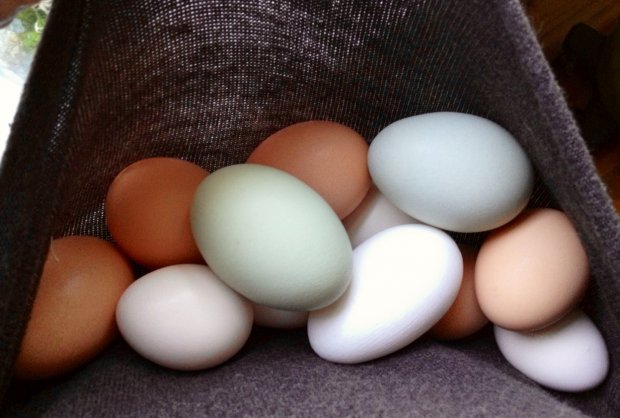
Here is what I'm snagging from my coop these days...I currently have 7 hens a workin' (so in this photo there are a few from the previous day).
A chicken's egg laying cycle is dependent on photoperiod (length of darkness) and temperature. Different breeds are more or less sensitive to these environmental factors. So I often hear folks complain about the lack of eggs in the winter and they wonder what they're doing wrong. Nothing! It's just the natural cycle of things. My Silkies actually layed a few eggs here and there over the winter, as will my Barred Rock and Ameraucana. But the others; Polish & Faverolle won't drop a single egg in the winter. Others do better in the summer. This has nothing to do with whether you have chickens in the city, or in the country (I've been asked that as well.)
I also hear folks talking about putting a light in the coop during winter to extend the photoperiod. That' s all fine and well if your goal is heavy production at the cost of a short egg laying life span of your birds. Artificially modifying the photoperiod can stress your chicken's endocrine system. In commercial production, that's not a concern because laying birds are usually sacrificed after 1-year. But in a home flock, you usually have the quality and length of life as a concern with your birds.
So give your girls a break, would ya? When they are in season, they work hard! Everyone needs a little winter rest right? Happy spring!
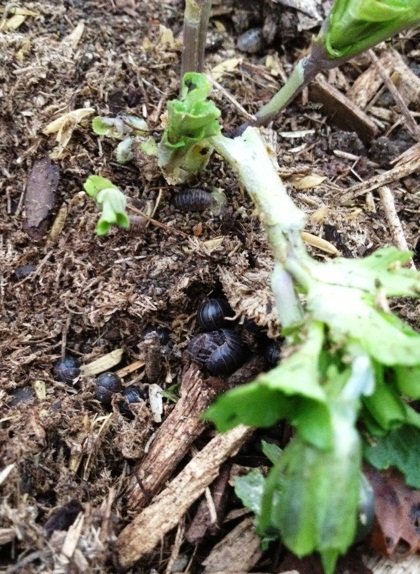
 Ok folks, if you in DFW, you're going to need to go ahead and get your roses pruned! Roses are already budding out and if you wait too long, you'll end up removing too much new growth. Normally, Valentine's Day is a good pruning target. But with this warm weather, you need to get on it asap! Fertilize with a rose food after pruning.
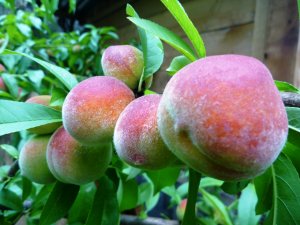 There is still time to plant fruit trees in North Texas! Make sure you choose varieties that will grow to the proper size for your space, are within a reasonable range for our chilling hours, and make sure you get a cross-pollinator if you need one. Dallas/Ft. Worth zone 8 usually receives between 750-850 chilling hours, but it can vary...some years 600 hours, some years 900 hours. Further north and you'll get more, further south and you'll get less.