Are You Ready for a Greenhouse?

September 15, 2026

A Greenhouse is a Big Garden Helper - and a Big Decision!

When it comes to gardening and landscaping, I'll admit I'm a maximalist. I want to grow all the things all the time! Seasonal temperatures and weather do make that a bit challenging, of course. So when it comes to maximizing your garden output a greenhouse can help you expand your plant collections, garden transplants, and food production for more of the year.

If you're ready to start many more of your own seedlings for flowers and food, have a tender plant collection you've run out of space inside to protect in winter, need to protect your food and flower crops from deer or extend their harvest season, or want to do all of the above, it may be time for a greenhouse!
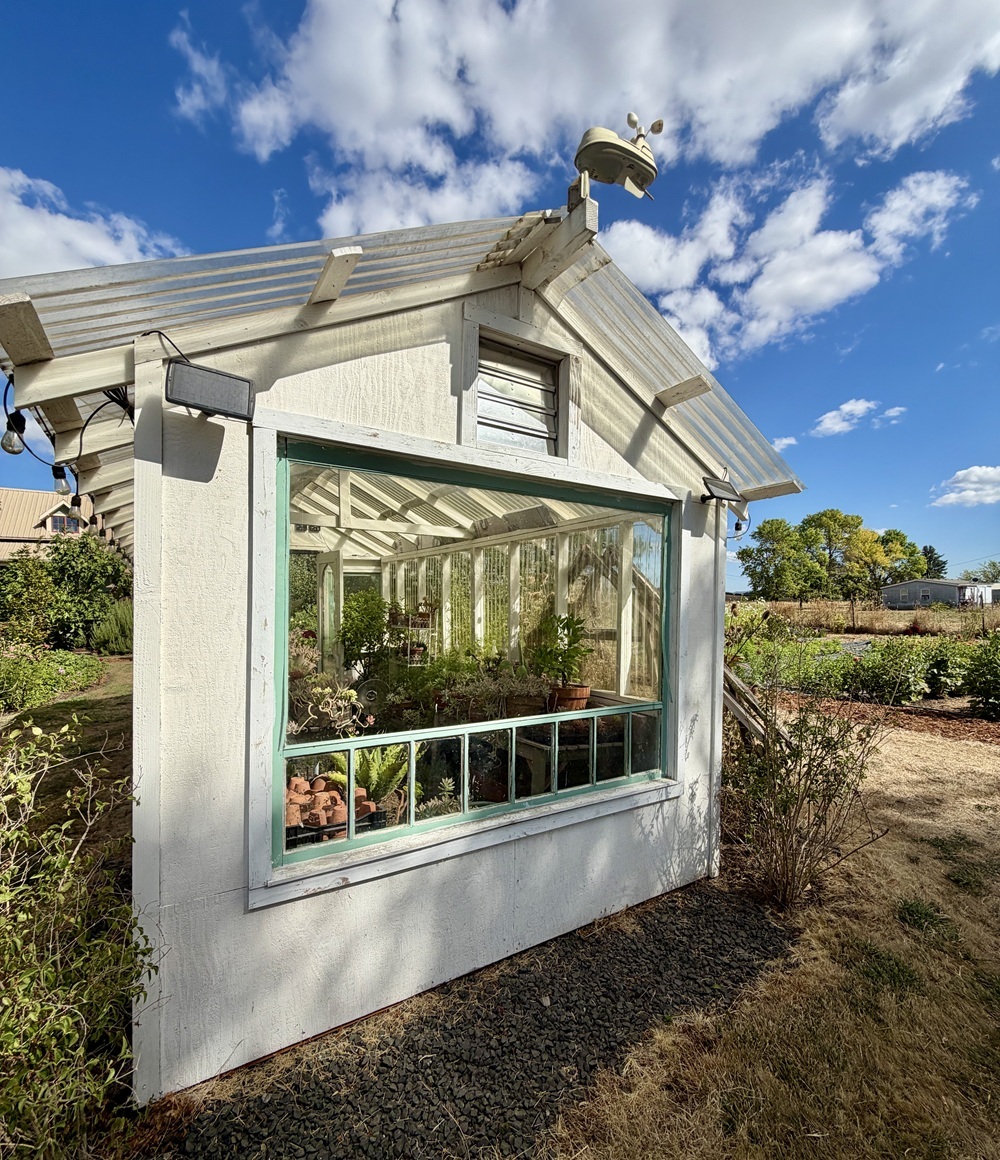
A small DIY greenhouse made with both corrugated plastic and old windows
PC: Leslie F. Halleck

What to Consider When Choosing a Greenhouse

There are many factors to consider when choosing your greenhouse, and I dig into all the specifics on those choices in my new book "Home Greenhouse Revival; Growing Year-Round Foliage, Flowers & Food". But for a quick reference, here are some of the most important considerations when choosing a greenhouse:

  • Which plants do you want to grow in the greenhouse and when?
  • Location: How much flat space do you have? How big can you build?
  • Exposure: What is the sun exposure - do you have an east to west orientation with a southern exposure?
  • What is your climate and weather like? Heavy snow, rain, or wind? Or do you live in a hot climate?
  • Given your climate, which materials for the framing and glazing best suit your situation?
  • What are the zoning, setback, and permit requirements in your are for accessory buildings such as greenhouses?
  • What type of foundation do you need based on the size and weight of materials?
  • Can you wire and plumb your greenhouse for electricity and water? (you'll likely need permits)
  • And of course, what is your budget? Do you want to DIY or have a custom build?

There are of course many other considerations, which I cover in my book, but these are pretty important places to start.
One of the Biggest Greenhouse Mistakes

One of the biggest mistakes I see new greenhouse growers make (and regrets from existing greenhouse owners) is buying or building a greenhouse that is just too small for their growing goals. It's easy to forget to consider how much space inside the greenhouse will be taken up by fixtures and supplies, leaving you with much less growing area than you anticipated. You can very quickly run out of space for the plants you actually wanted to grow in the first place.

That small greenhouse often ends up just being an extra storage shed in the backyard. I've seen it too many times!

Now, you may simply not have enough space on your property for a big greenhouse. That's ok. You can absolutely keep things on the smaller side with your first greenhouse - just be sure to manage your growing goals and expectations upfront, taking into account how many square feet of growing space you'll actually have. if you plan for that ahead of time, you'll be able to make the most of the space you have for clearly defined growing plans.

Another good strategy if space or budgets are limited, is to start with one small greenhouse, then add another small greenhouse later if space and budgets allow. Then you can have different temperature zones for different plants or crops.
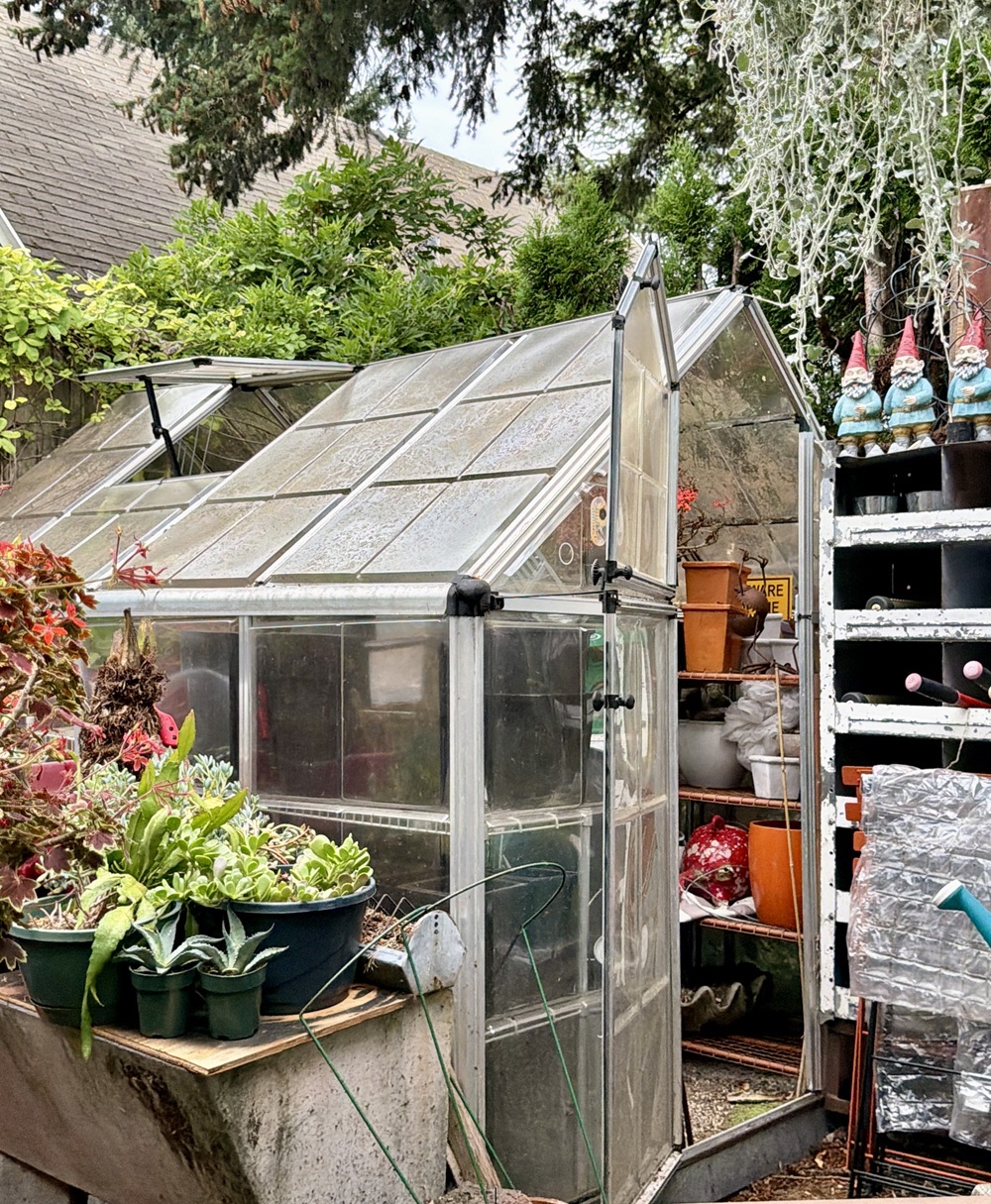
This greenhouse was obviously too small and too shaded, and now it's just become a storage shed.
PC: Leslie F. Halleck

Plan Plantcentric

Instead of focusing only on the type or aesthetic of the greenhouse you think you want, always take a plantcentric approach to your greenhouse plans first. Start with what you want to grow and when and then work backwards to the type of greenhouse you really need to achieve those goals. A seasonal greenhouse for jumpstarting seedlings (if that's your only need) may look or cost differently than a greenhouse that's adequate for a year-round collection of tropical orchids. All of that will depend on your climate and weather.

It's pretty heartbreaking to have to tell folks who have spent a lot of money on a greenhouse that what they've created may not work for the type of plants or the seasons in which they were hoping to grow or harvest.

In my book, I divided out a number of greenhouse categories by temperature range and type of plants and crops, that you can then correlate with the types of framing and glazing that are best for different climates.

Do you want to grow plants, or entertain?
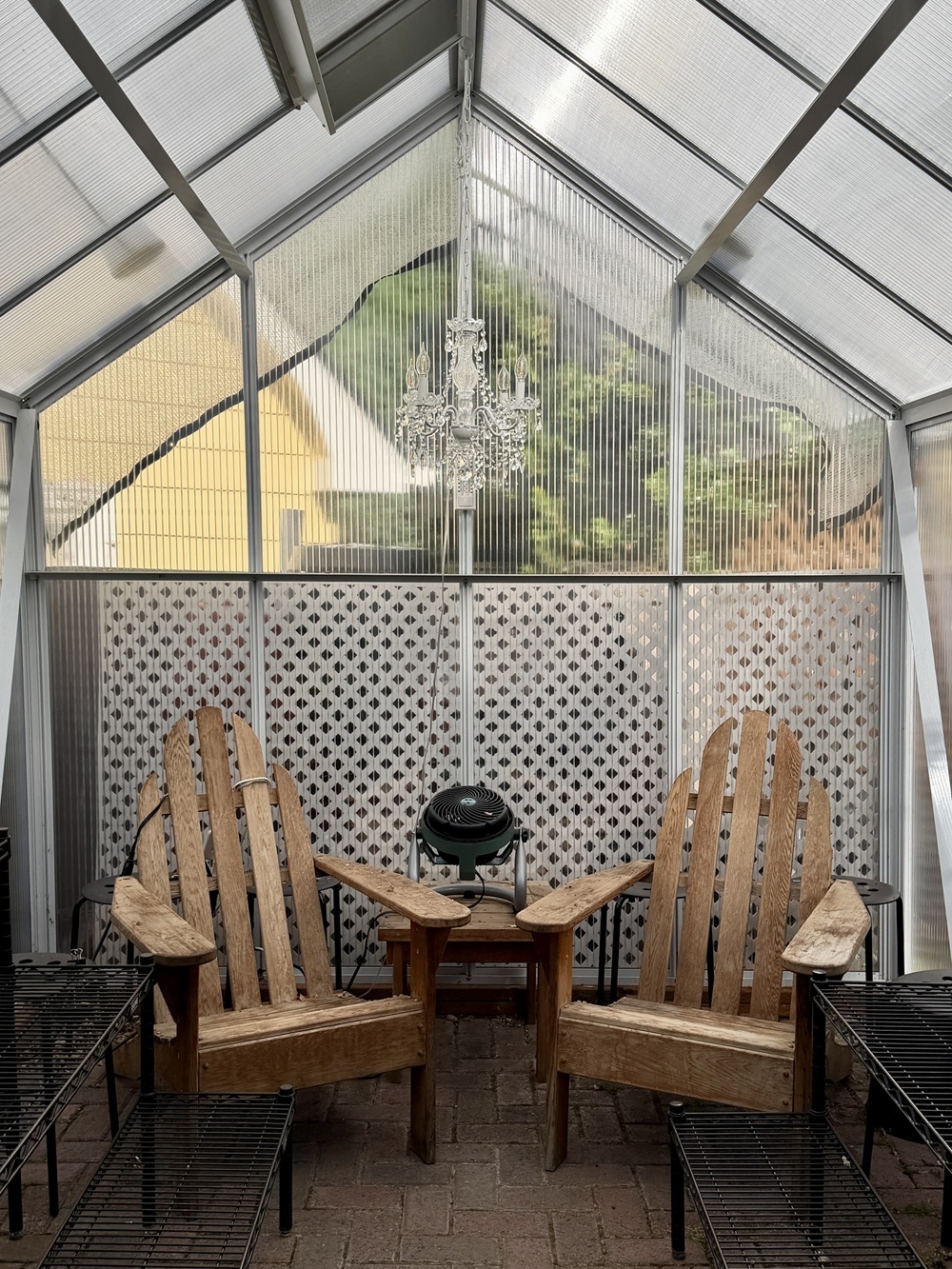
This greenhouse gets too hot in the summer, so it's emptied out of plants.
PC: Leslie F. Halleck

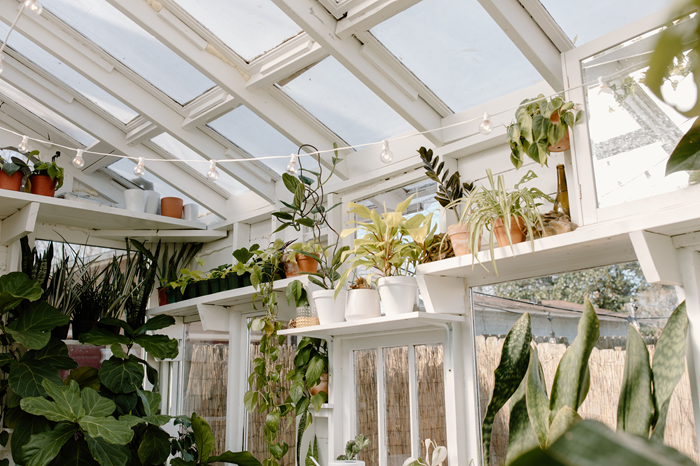
Another important consideration is how you plan to use the greenhouse. Are you expecting to be able to host parties in the greenhouse or use it as a study? There are a lot of fancy photos going around these days of greenhouses that are essentially outdoor entertaining rooms, but are still being sold to you as plant growing greenhouses. We typically refer to spaces that are intended to serve both human activities and plants as conservatories or sunrooms. But I'll caution you to manage your expectations, especially if you live in a warm or hot climate. Often the conditions in your greenhouse will be uncomfortable for you to entertain in if your plants are happy. Temperatures may be too warm, or humidity to high for you and your friends and family. If you make the greenhouse perfectly comfortable for you, your plants may not thrive.

If you have big gardening goals, focus on creating a greenhouse environment that's best for the plant species you're growing - that might mean the parties or writing room stay in the house!

Why you might want a greenhouse

Ultimately, there are many reasons you might want or be ready for a greenhouse. Food security is a big reason these days, as we all want better access to safe fresh food. Being able to extend your growing seasons and harvests are a big plus of owning a greenhouse. Some of you may even have commercial aspirations or want to start selling produce or plants at your local farmer's market.

Perhaps that growing houseplant or orchid collection you started during the plantdemic has taken over your home and they need their own. Or perhaps your prized dahlia tubers need a protected area to overwinter

Or all of the above!

Whatever your growing goals, greenhouses are having a moment right now. There are SO many new accessible options available to home gardeners, not to mention lots of cool tools that you used to only find available to the commercial industry.
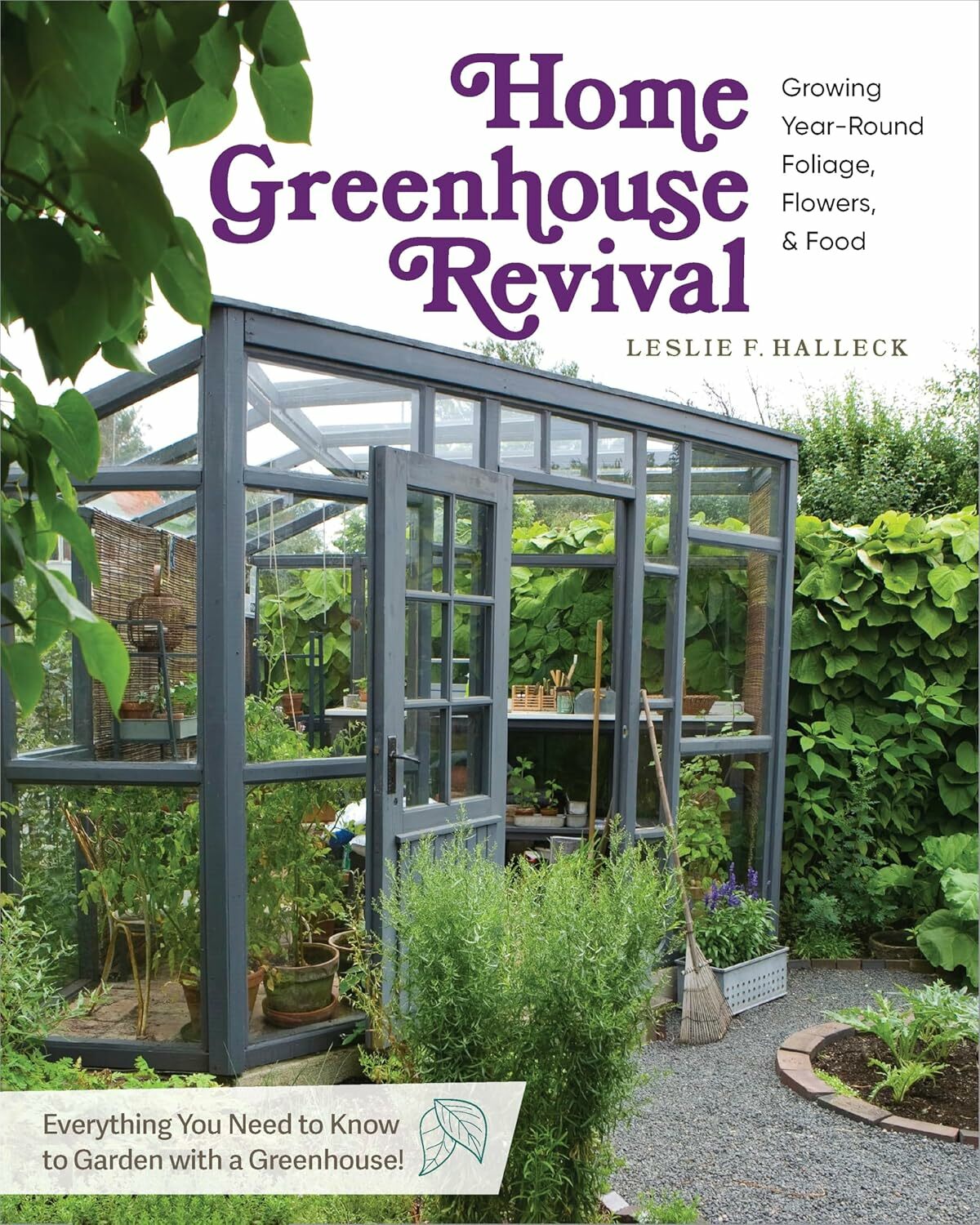
Using a Greenhouse to its Full Potential - The Beginner's Garden Podcast

September 15, 2026

Thinking about getting a greenhouse but not sure what it can actually do for your garden?

Read the full notes and listen to the podcast at Jill's website HERE

A greenhouse can extend your growing season, protect plants through winter, and give seedlings a head start, but only if you understand how temperature, light, and humidity work together.

In this episode, I’m talking with Leslie about greenhouse gardening for beginners, including what I’ve learned from using my own greenhouse for the past six years. We’ll cover unheated versus heated greenhouses, supplemental grow lights, seed starting, pest prevention, and what to consider before buying a greenhouse.

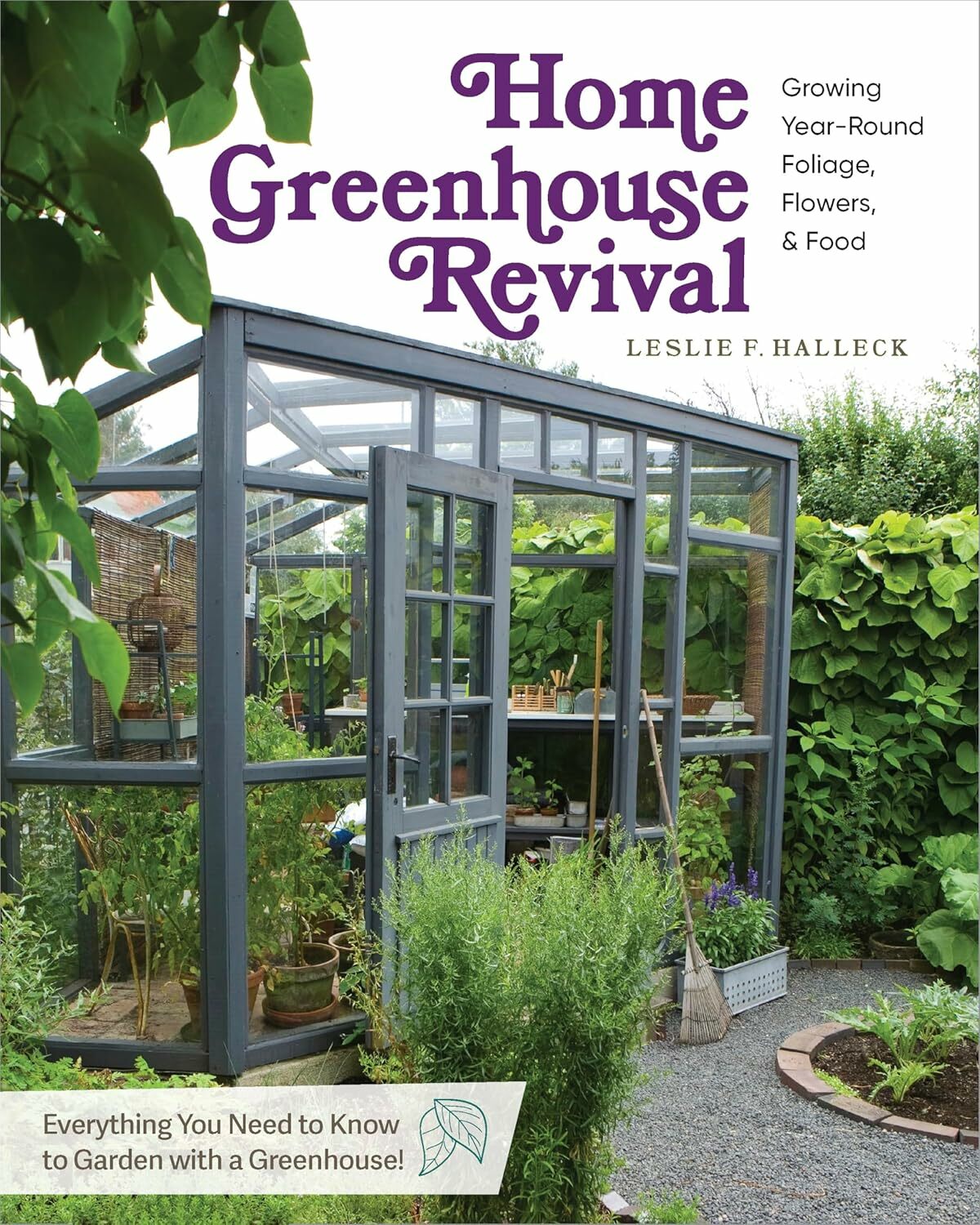
Check out Leslie's book "Home Greenhouse Revival"

Key Takeaways

  • Understand what an unheated greenhouse can do

  • Use temperature and light to extend seasons

  • Know when seedlings need supplemental grow lights

  • Prevent greenhouse pests before they spread

  • Choose a greenhouse based on your plants

Chapters

00:00 – How greenhouses extend your season
03:41 – Why unheated greenhouses still help
06:51 – Keep winter crops growing longer
08:29 – How temperature affects plant growth
09:47 – When greenhouse grow lights help
12:07 – Can greenhouses replace indoor seed starting?
14:18 – Choose plants before your greenhouse
16:43 – Beds, containers, and greenhouse zones
19:42 – Why greenhouse size matters
20:23 – Why seedlings grow faster inside
23:06 – How humidity affects plant growth
24:41 – Understanding grow light limitations
26:44 – How plants actually use light
28:07 – Why winter sunlight is weaker
29:54 – Prevent greenhouse pest problems
32:49 – Using beneficial insects indoors
33:35 – What to know before buying
36:41 – Greenhouse growing beyond vegetables


Cool Tool for Fall Planting: Use an Auger for Planting Trees and Shrubs

September 13, 2026

What's a Horticulturist's Favorite Landscaping Tool?

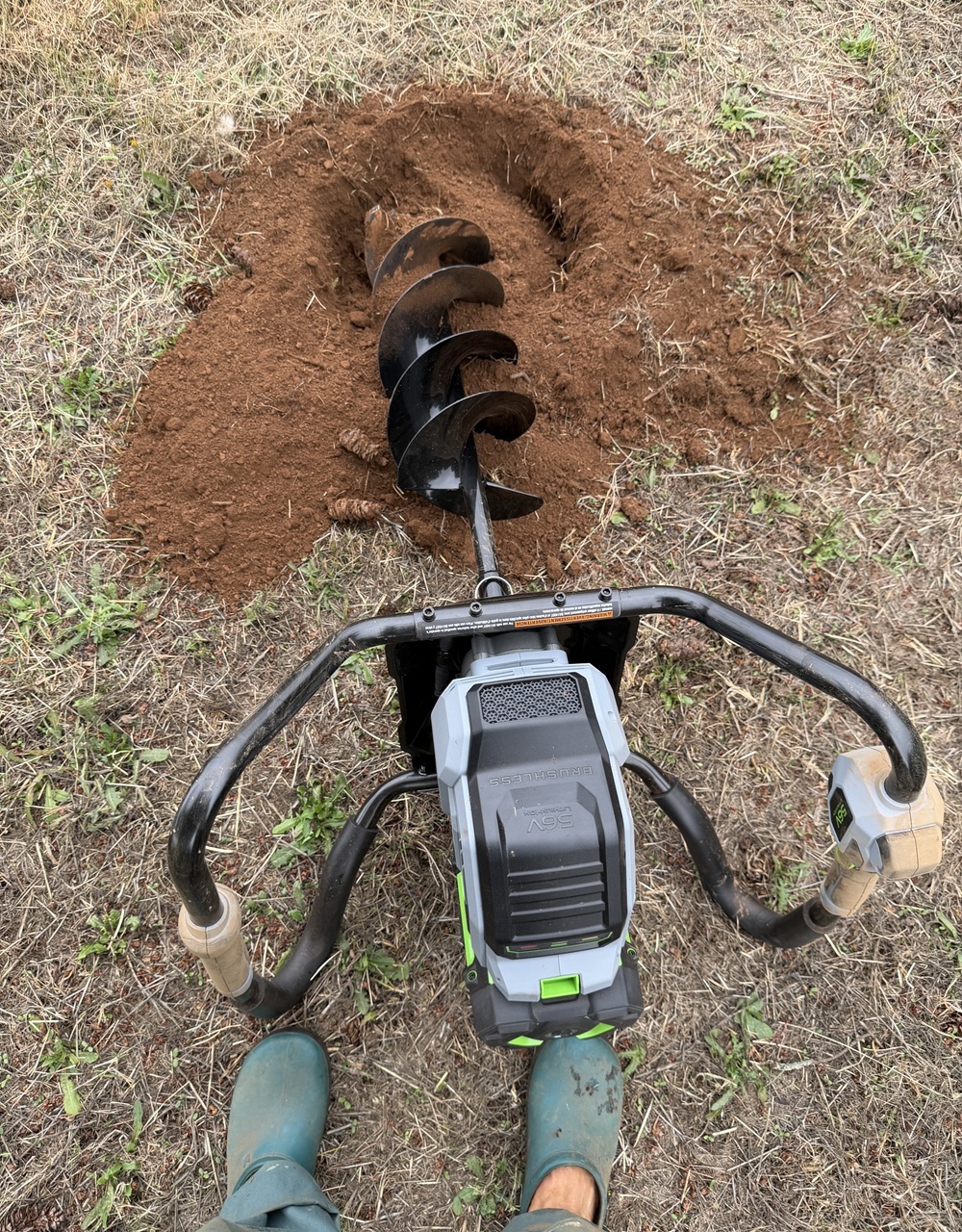
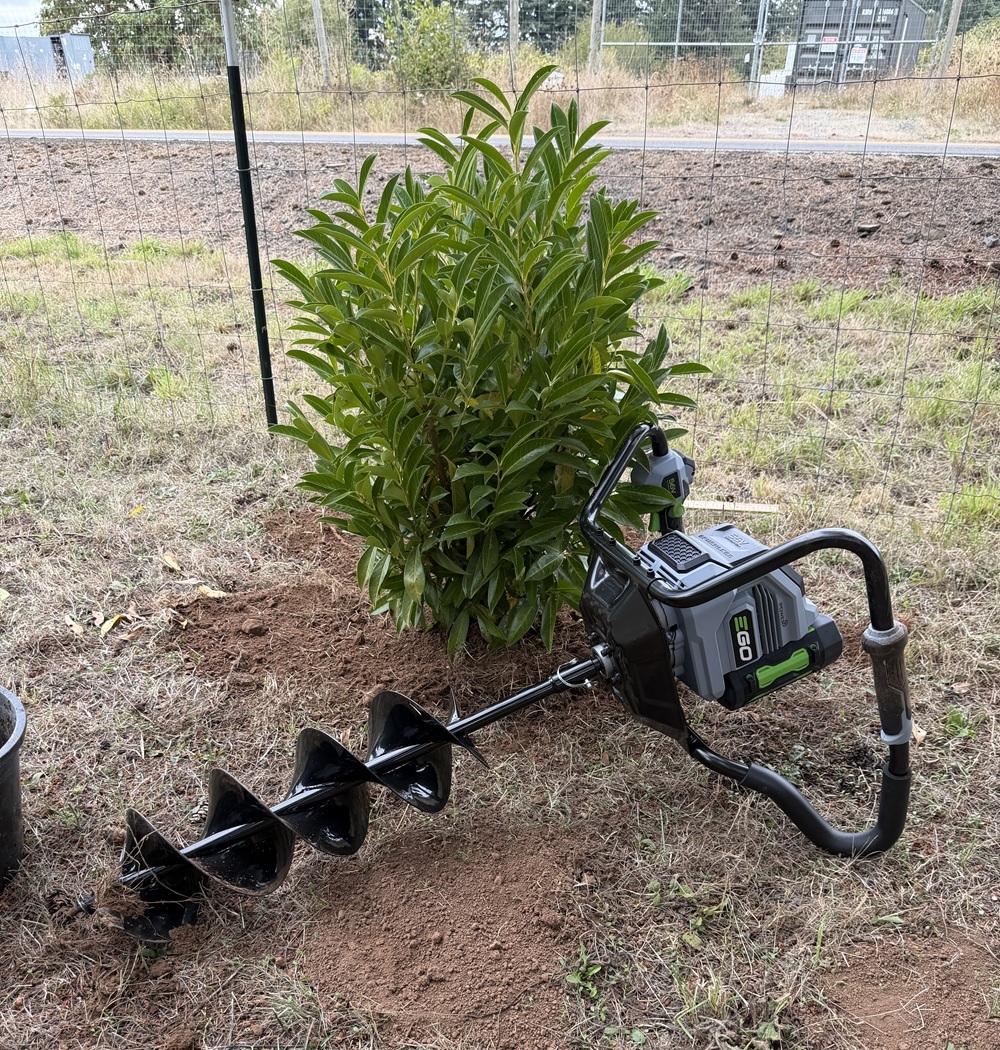
Well, that's like asking who your favorite kid is! But I am often asked what my favorite tools are, and while the list is long, I need to give a shout out to this EGO battery powered auger (8”). It’s been a HUGE timer saver so far. And just so I'm clear up front, this is not a paid or sponsored post in any way, as usual I just like to let you know about plants and products I use and really like.

Plus, Fall is for Planting folks - now is prime time to plant across the country so hopefully your local garden centers have stocked back up for you for the fall planting season. Now's the time to get shrubs, trees, and perennials in the ground to take advantage of cooler winter temperatures and rainfall, making it easier for many plants to get established; especially in climates with dry hot summers.

My 8" Auger I'm using to plants LOTS of shrubs and trees
PC: Leslie F. Halleck

Are Battery Powered Tools Really up to the Job?

I’ve LONG been a proponent of battery powered landscape tools, and was an early adopter. More than 20 years ago I started out with the awesome German Brill battery reel mower, and then moved into a full array of battery powered tools (trimmers, blowers, mowers, chain saws etc). Over the last number of years my full component has moved over to Ego, which I have to say are excellent.

Thing is, I’ve taken a lot of guff from those in the landscaping industry over the last couple of decades for recommending the battery powered gear. They think I’ve never actually used these tools for commercial maintenance because I’m a woman, but I use all the tools myself on all of my own properties, on clients properties, and have run plenty of maintenance crews on many properties, both public and private. I suspect at least half of those folks critical of my endorsements are now using battery powered gear because WHO wants to listen to gas powered gear anymore? I don’t, and the clients don’t.

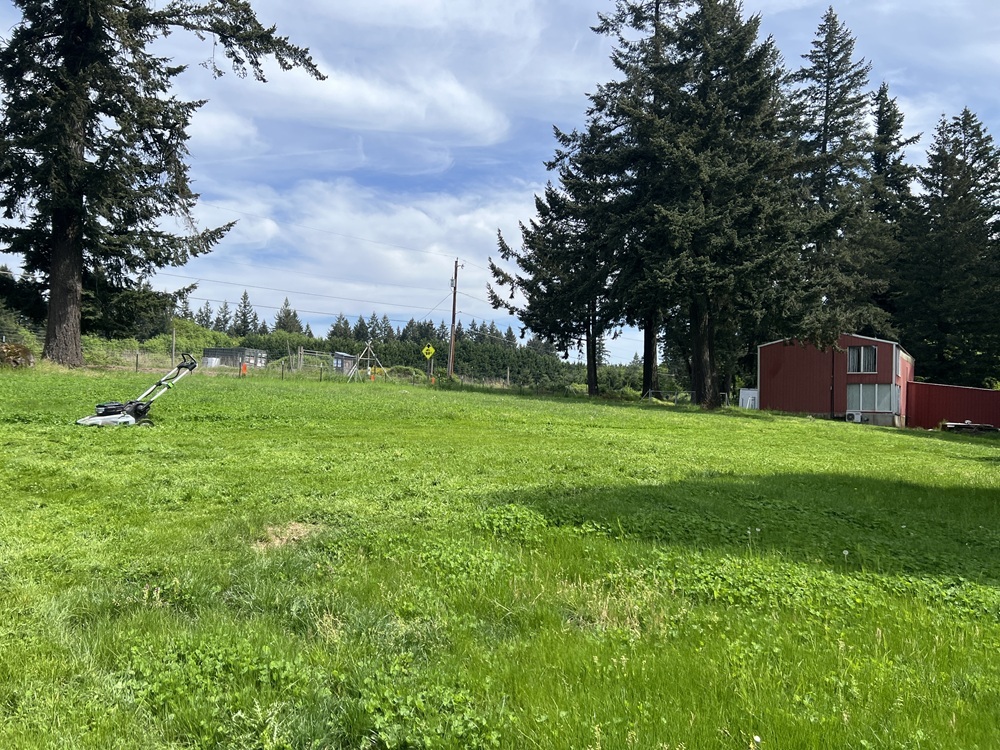
Me and my Ego push mower on about the third mowing, after I mowed down the initially 3-foot tall grasses, clover, and other wildflowers for about the third time
PC: Leslie F. Halleck

This spring and early summer my Ego push mower (and my guns) repeatedly mowed down a couple acres of 3-4 foot tough grass and clover (even wet), which was very impressive. I didn’t expect it to handle the job. I’ve moved up to a tractor mower for larger areas but the push mower still comes out for smaller areas.

I also just replaced my weed trimmer to the new model (after many good years on the last one). It’s even a bit quieter than the old one with some new speed options.

Planting Privacy Hedges With an Auger

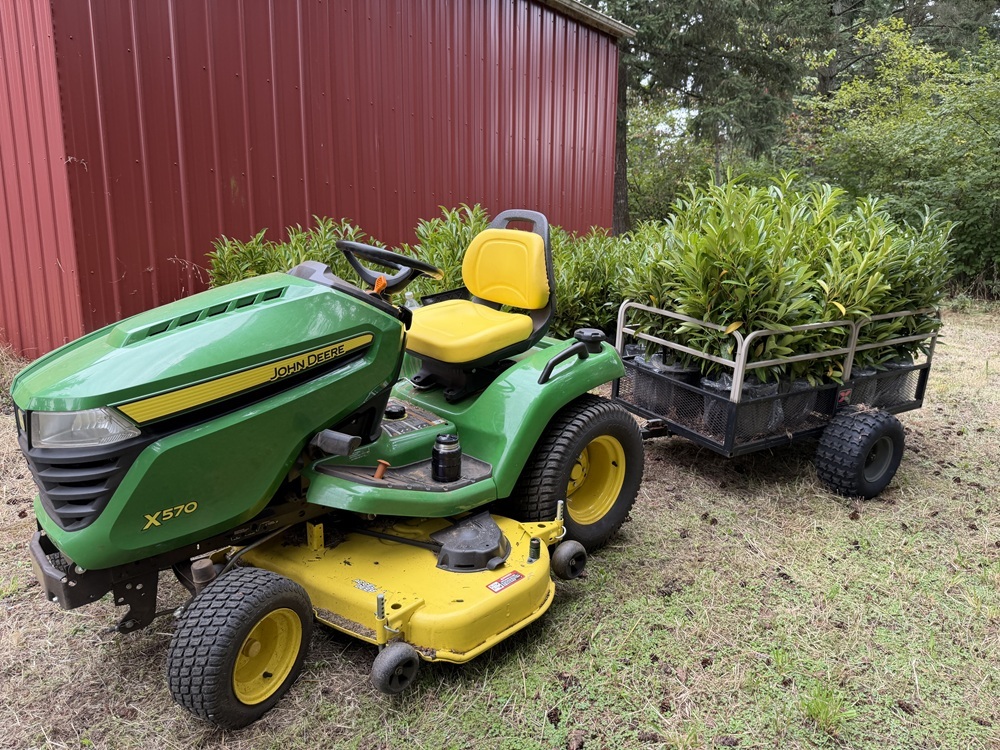
I have LOTS of plants to get in the ground
PC: Leslie F. Halleck

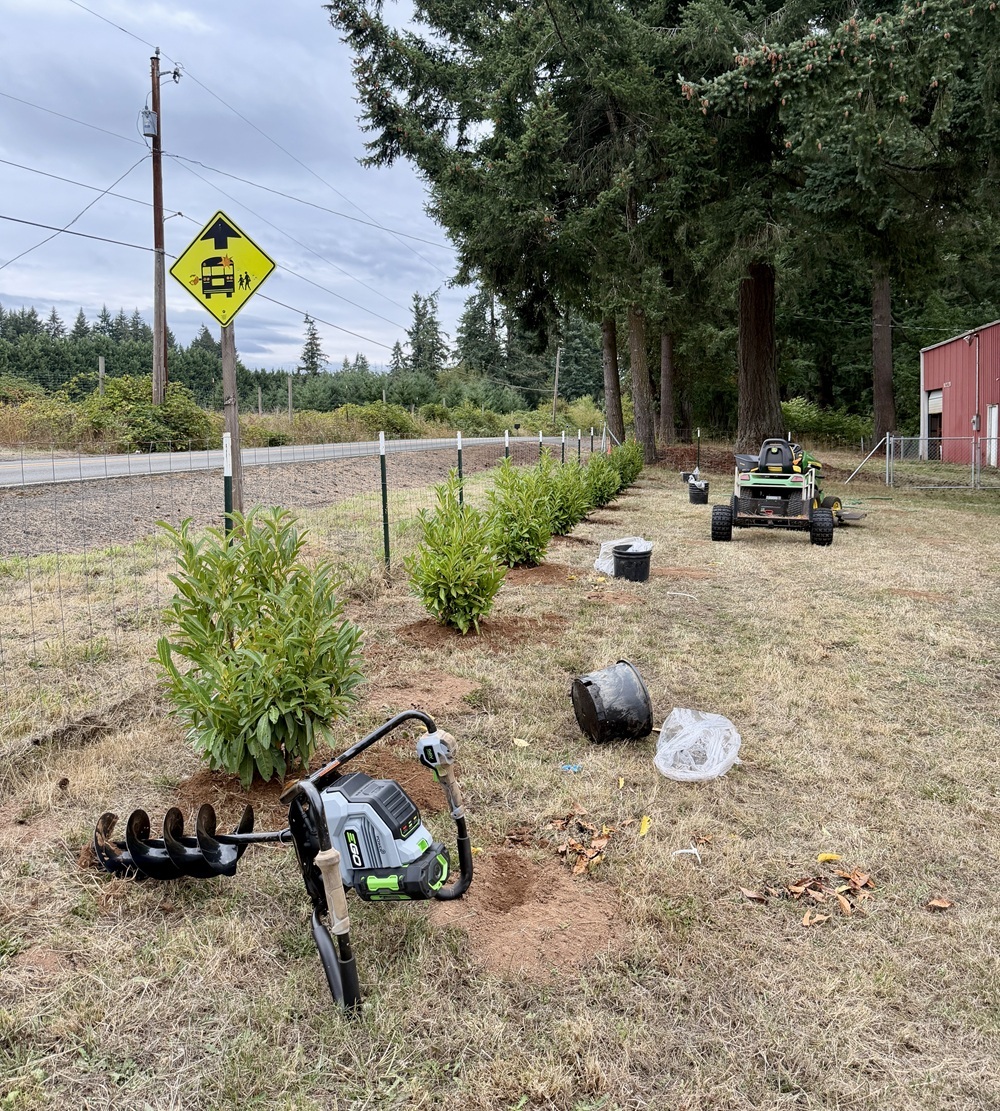
Now I’m using the new EGO 8" batter powered auger to plant privacy hedges and larger shrubs and trees. This baby got me 22 5-gallons in the ground on Saturday in 4 hours (or less because there was also some dawdling about). So that's about 10 5-gallons planted per hour, but I probably could have gone faster if I'd needed to.

One fully-charged battery handled getting 21 plants in the ground before it start flashing red on me, so I just switched out to the 2nd battery for the last plant. I probably could have gotten the last plant finished on the first battery, but the auger speed does slow down noticeably when the battery is almost drained.


"I was at your your house Friday evening and you told me you were going to plant a big privacy hedge - I drove by your house the next day and it was ALL already planted! How did you do that???" Neighbor Nancy


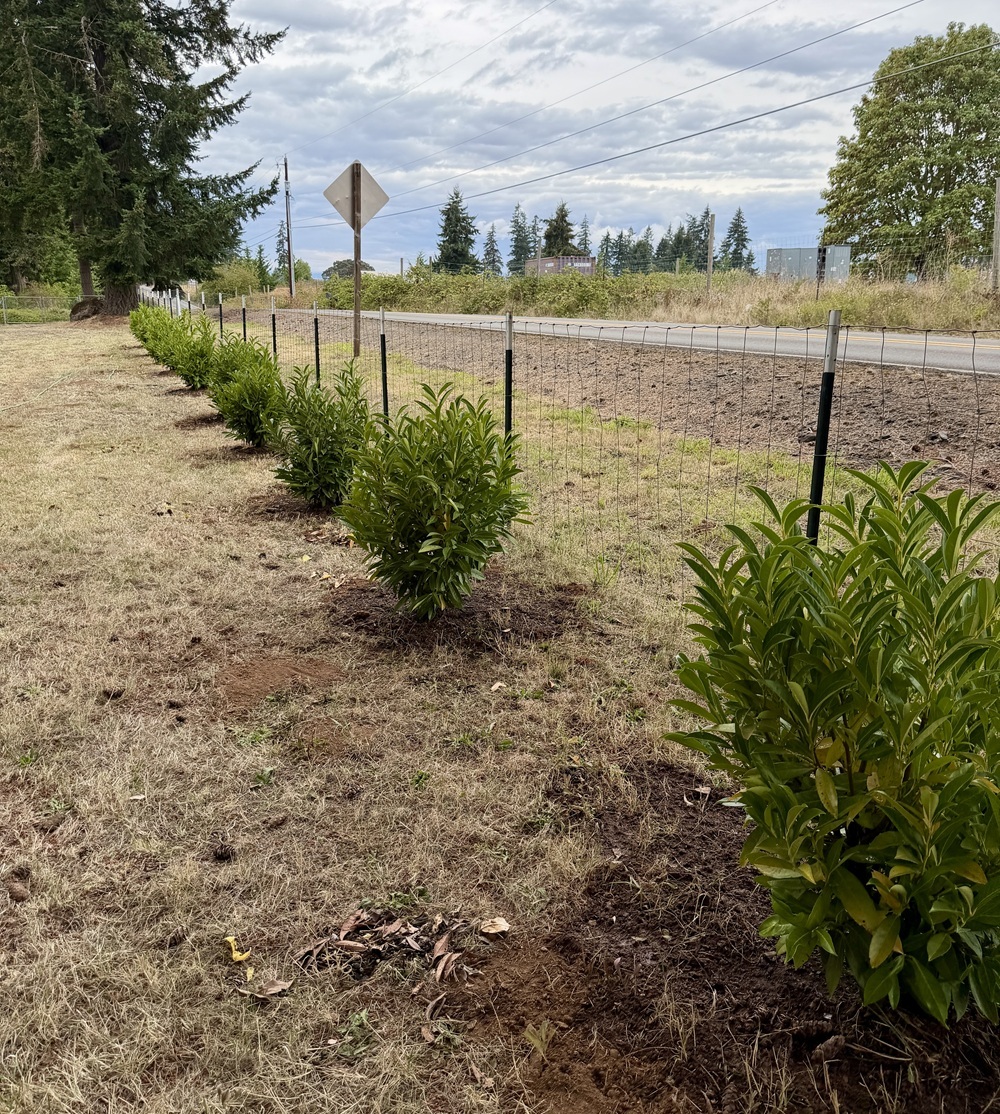
The privacy hedge is coming along quickly
PC: Leslie F. Halleck

While I would have loved to plant larger growing native evergreens here along my front fence line, I was limited by a few important factors:

  • My septic drain field is just beyond this field area, so I can't plant trees or shrubs that get bigger than about 20-25' at the most. Otherwise the root system will travel too far, potentially damaging my drains.
  • DEER will eat a lot of things, including Arborvitae and other evergreens. So I needed a plant they don't like.
  • I needed to pick a plant that's less fire-prone that many of the evergreens (like Arborvitae) that are very commonly used for screening here in Oregon (and many other regions).
  • I need plants that are pretty fast growing so as to block some traffic view and noise. I just don't want to wait 10-15 years to get decent privacy.
  • I struggled with plant type and quantity availability at the retail level - as many places are selling down right now instead stocking up for fall.

SO, Schip Laurel (Prunus laurocerasus 'Schipkaensis') it is. Not the most exciting choice, but again, I had limitations. But don't worry, most of the plants on my property are natives and I'll have many more strategically chosen native or highly adapted species to plant as I reduce some of the invasives.

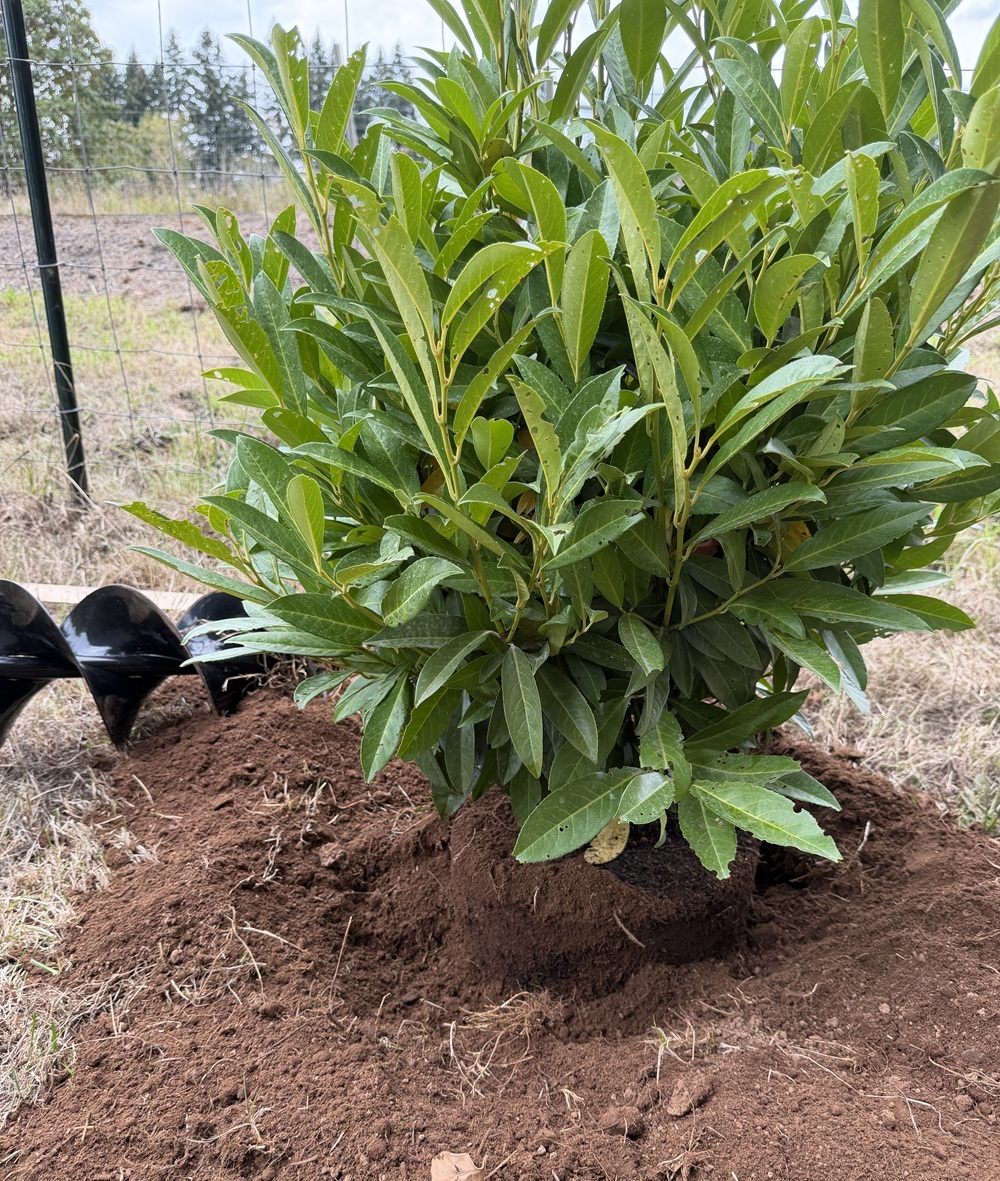
Most shrubs and trees should be planted in a hole that holds the root ball level with the soil surface, but twice as wide.
PC: Leslie F. Halleck

How Safe is Using an Auger to Plant?

Using a large hand-held auger like this can be intimidating if you've never used one. The type of soil you have can also determine whether or not it's best to use.

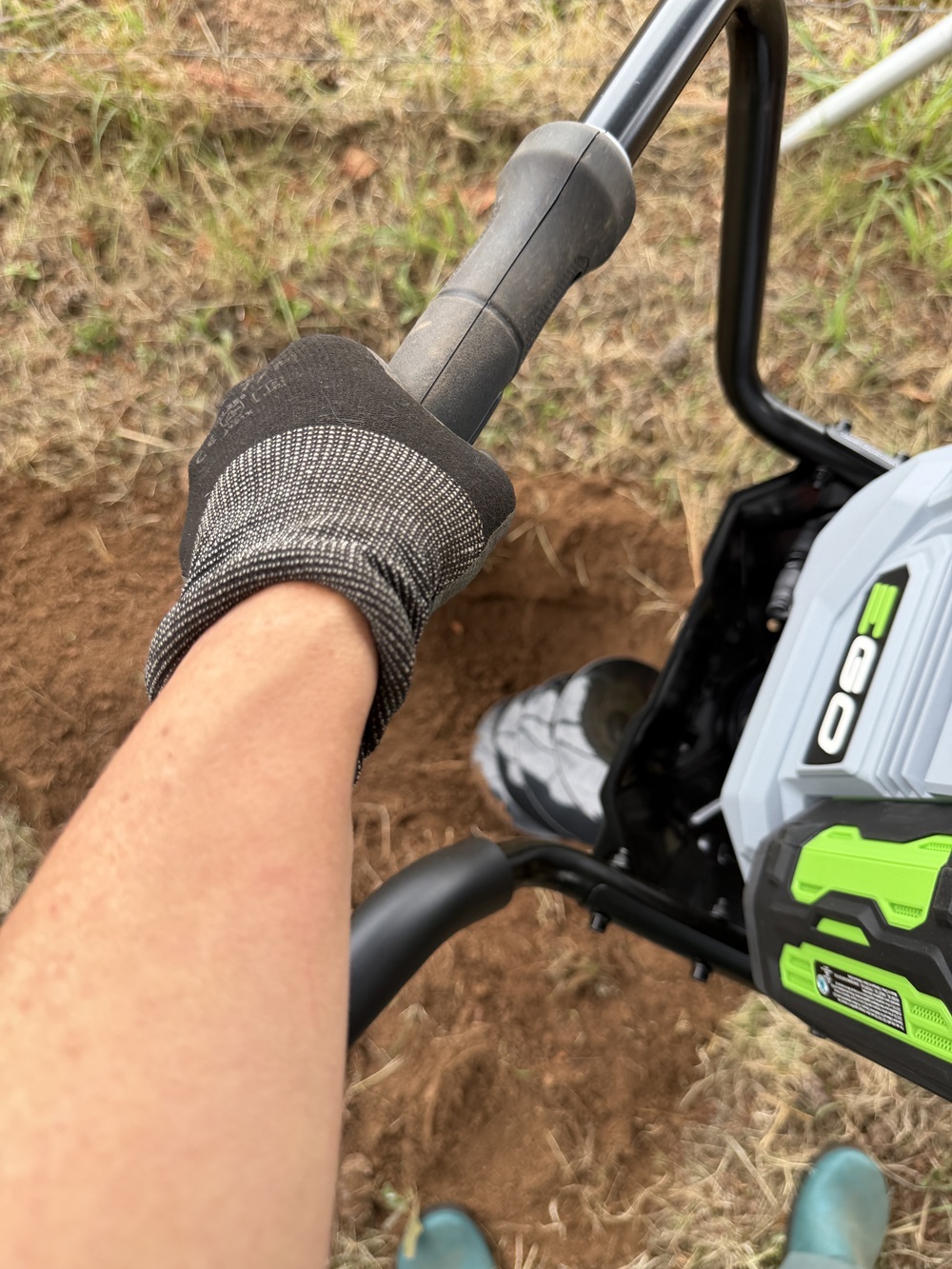
If you’re small in stature and weight like me, you need to learn to get a feel for when some kickback is coming and learn to compensate and distribute your weight and pressure with your dominant arm and legs to prevent it. I brace my legs apart with a slight bend in the knees and keep extra pressure against the right handle with my dominant arm. You'll get a feel for it pretty quick. When the blade hits very hard dry soil, rocks, or maybe gets stuck in wetter sticker soil, it can kickback or recoil to the left side, which can suddenly twist your torso around if you're not prepared. You could certainly pull a muscle or end up with a good thigh bruise if you're not bracing yourself properly.

The good thing about this tool is that it does have kickback stop function, and you can quickly just release the power button to stop it. It also has two speeds and a reverse function, all of which are handy.

Make sure you have a good grip and brace your legs
PC: Leslie F. Halleck

When it comes to soil type, augers typically work much better in soils that aren't super heavy clay, and aren't really wet or 100% dry. Here in my location in Oregon I have what is called Jory soil series, which is a dark reddish-brown silty clay loam with a red clay sub soil. Because I was waiting for optimal fall planting time, we got one really nice rain about a week ago, and I waited until the soil dried some, but not completely, which left it the perfect consistency to drill into. Not wet, but not totally dry.

Now, if you have VERY heavy clay that has never been amended, like I used to have in the North Texas area where I gardened for decades, using an auger like this may be tougher - especially if it's at all wet.

Rocks can also present a challenge, so make sure to do a little digging around in the area just to see what you might be dealing with. The auger can recoil a little or stop if it hits a sizeable rock, as well as large woody tree roots.

PRO TIP: When you're drilling the top few inches of soil to first defined the width of your hole - I recommend doing that first before you drill down too keep - pull off any wound up grass or weeds on the blade from that first pass as it can keep the blade from moving down once you're ready to dig deeper.

One privacy hedge in! Two more to go
PC: Leslie F. Halleck


Listen to This Before You Buy a Greenhouse! With Leslie Halleck

September 10, 2026

Home Greenhouse Revival; Learn Before You Grow

Here is the transcript from my recent interview with Maria on the Growing Joy Podcast:

Have you fallen down the greenhouse rabbit hole yet, plant friends? If you've had plants for more than a year, you're probably like Maria, who's started Googling “how to put a greenhouse in my backyard” already. She learned that a greenhouse isn't a big plant shelf but a structure, and it's probably the largest single purchase you'll make as a plant parent. Maria is in Zone 10b in Florida and and she still hasn't built hers. So she asked Leslie Halleck, a favorite podcast guest, a long-time friend, and someone who has a master's in greenhouse production and a new book called Home Greenhouse Revival, what to figure out first. And Maria thinks she also holds the guest record for most appearances on the show! Let's dive in!

In this episode of Growing Joy, we learn:

  • [02:06] Meet Leslie Halleck
  • [02:33] Moving her whole life and business from Texas to Oregon
  • [03:29] Why the Pacific Northwest is a ‘horticultural mecca’ for gardeners
  • [04:42] Leslie’s new 6-acre property (what she calls folia forest farm)
  • [06:49] What does her “pocket farming” look like?
  • [09:03] Why are greenhouses trending?
  • [12:51] What is the biggest greenhouse mistake?
  • [14:13] Why cooling a greenhouse is so much harder than heating one
  • [15:29] Experience the richness of single-origin honey with 3x more antioxidants with Manukora Honey!
  • [17:47] Hoop house vs. glass house
  • [18:47] What are the elements that make up a greenhouse? (utilities and infrastructure)
  • [21:21] Greenhouse framing materials and glazing!
  • [22:43] Is there a beginner-friendly greenhouse?
  • [25:04] What Leslie thinks about thrifted/DIY vintage window greenhouses
  • [27:41] How to pick the right greenhouse size?
  • [29:48] Greenhouses as the expensive part of a cheap hobby
  • [30:33] Using multiple greenhouses to zone temperature and humidity
  • [32:47] What about a half-empty greenhouse?
  • [33:26] What is AOI (angle of incidence)? How roof pitch and sun angle affect how much light gets in
  • [35:49] Inside the plant profiles (PPFD, DLI, photoperiod, fertilizer PPM, and VPD)
  • [39:21] How does pest management in a greenhouse work?
  • [43:33] Leslie's dream greenhouse for her new property (and why she's leaning Venlo)
  • [48:23] How greenhouse pricing and options have changed and where to find good manufacturers
  • [50:26] Why you want someone local who knows your climate and orientation
  • [51:29] Starting small without setting yourself up to fail (and reviving a greenhouse that already flopped)
  • [54:10] Where to find Leslie, the book, her gardener's round tables, and her UCLA courses!

Pick Your Plants Before You Pick Your Greenhouse

Leslie says this is the number one mistake plant parents make: you aren't being plant-centric about the decision. So she suggests reverse-engineering it.

Start with what you want to grow, when, and in your climate.

She's been called in to consult on expensive greenhouses after they were built, just to tell the owners it won't do what they wanted.

So before you look at a single greenhouse, answer this. Are you…

  • Overwintering orchids?
  • Winter tomatoes and peppers?
  • Starting seedlings early?
  • Overwintering tropicals somewhere cold?

Cooling Is Harder Than Heating

This is why my Florida greenhouse can't look like Leslie's Oregon one.

Over 85°F inside and plants struggle. At 90°F, they tank and pests take off. And if it's over 90°F outside, inside runs much hotter unless you're cooling it.

For example, people keep citrus in the greenhouse all summer in hot climates. All you're doing is breeding scale. It's more ideal to put it outside.

Note: Leslie also talks about AOI (angle of incidence), which is the angle of your greenhouse roof pitch against the angle of the sun. The more perpendicular those two are, the more light transmission you get inside. Steeper pitch, more light.

The Greenhouse Isn't the Only Thing You're Buying

I really thought that greenhouse was the thing you bought. It isn't. Here's what else has to be in the plan:

  • Water access
  • Drainage and flooring
  • Electricity
  • Grow lights
  • A foundation

Note: People assume a greenhouse means free sun forever. But winter days are short and light levels are low, so January seedlings still need lights, which means you may need grow lights!

What Size Greenhouse Do You Need? Everyone Says Bigger

My dear friend Joe Lamp'l installed an epic greenhouse and already wished he'd gone bigger. Leslie said, “That's always what everybody says.”

Going too small is why so many small hobby kits end up abandoned. In an 8×10 or 8×6, here's your realistic ceiling:

  • Seedlings and cuttings
  • A few potted plants
  • A few tender perennials over winter

That's about it, and most people get frustrated with that pretty quickly.

Note: I suggested buying big and growing into it, but Leslie said that a half-empty greenhouse is harder to manage than a full one, because you lose heat.

Greenhouse Pest Control: You Just Built a Buffet

You might think that since a greenhouse is a contained, hyper-controlled microclimate, there are no predators in it. Apparently, every perfect condition you built for your plants is also the perfect condition for pests.

So pest and disease management in a greenhouse is often a higher priority than out in your open garden.

Here's what it takes:

  • Scout constantly
  • Use yellow sticky cards
  • Check every new plant before it goes in
  • Keep a separate pair of greenhouse shoes
  • Release beneficial insects

Start a Greenhouse Now!

You can start small, for sure, despite what Leslie and I said about going bigger. I mean, you just have to match your plant goals to that simplicity!

And it's okay for your greenhouse to sit empty a few months a year. In a hot climate, there may be two or three summer months where everything comes out and it becomes a shade house.

I'm still planning mine, though, and doing the homework.

So if you're anywhere near this decision, you should grab Leslie’s book, Home Greenhouse Revival. It's pretty technical, with about 75 plant profiles and real numbers instead of “bright, diffuse light.” That means actual PPFD (light intensity), DLI (daily light integral, which means total daily light), photoperiod, and VPD (vapor pressure deficit). It's the perfect guide for beginner greenhouse owners!

Mentioned in our conversation:

Find this transcript and additional notes and links from Maria at her Growing Joy website!


Swan Island Dahlias; The Bloom Room!

September 9, 2026

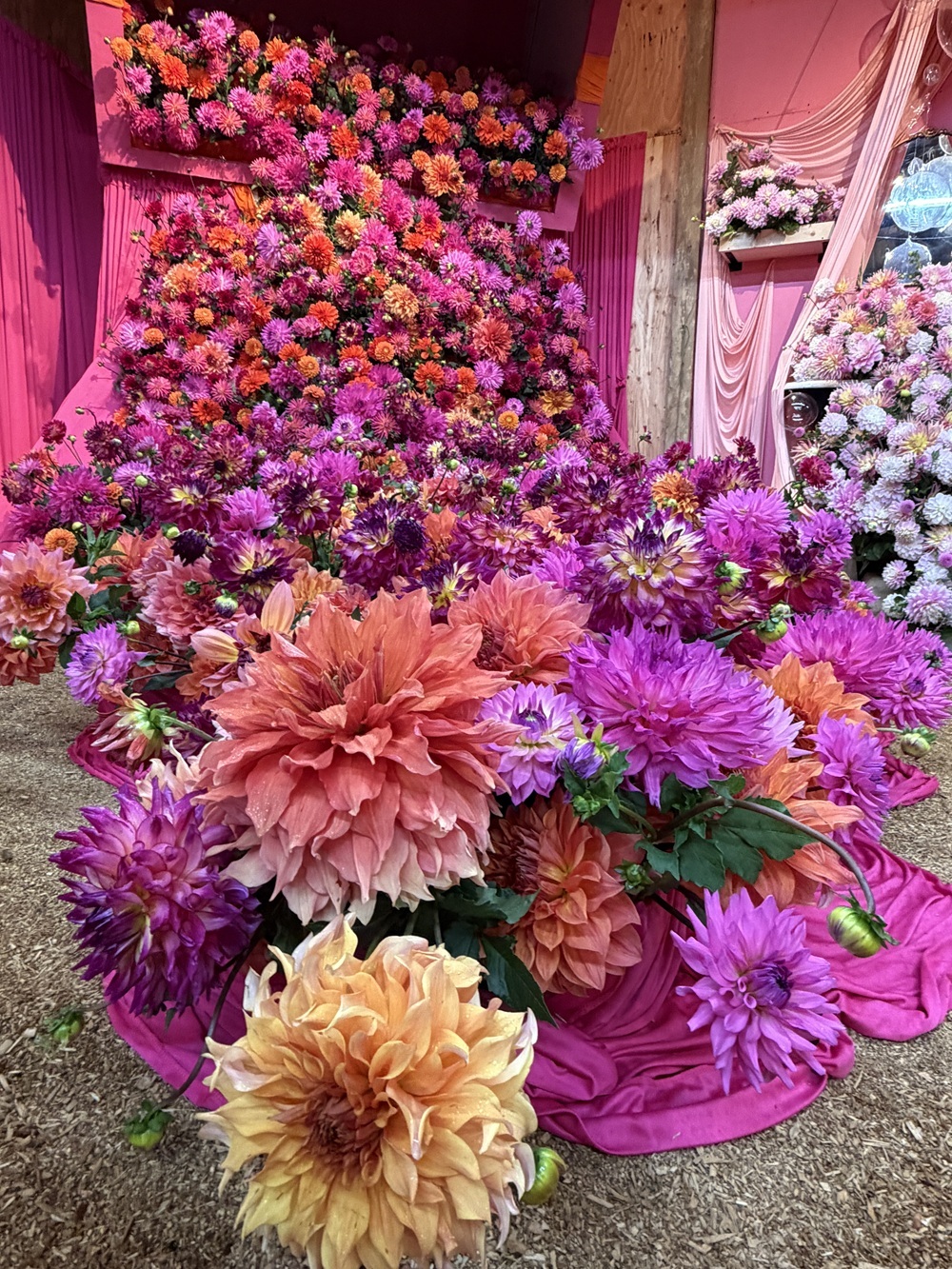
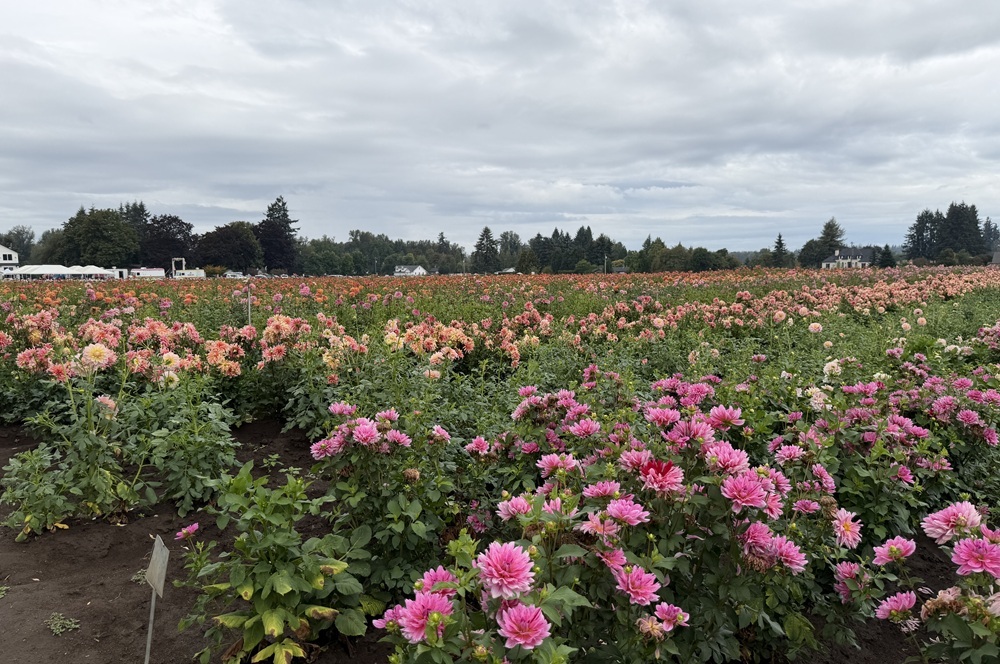
Gorgeous Dahlia Display at Swan Island Dahlias

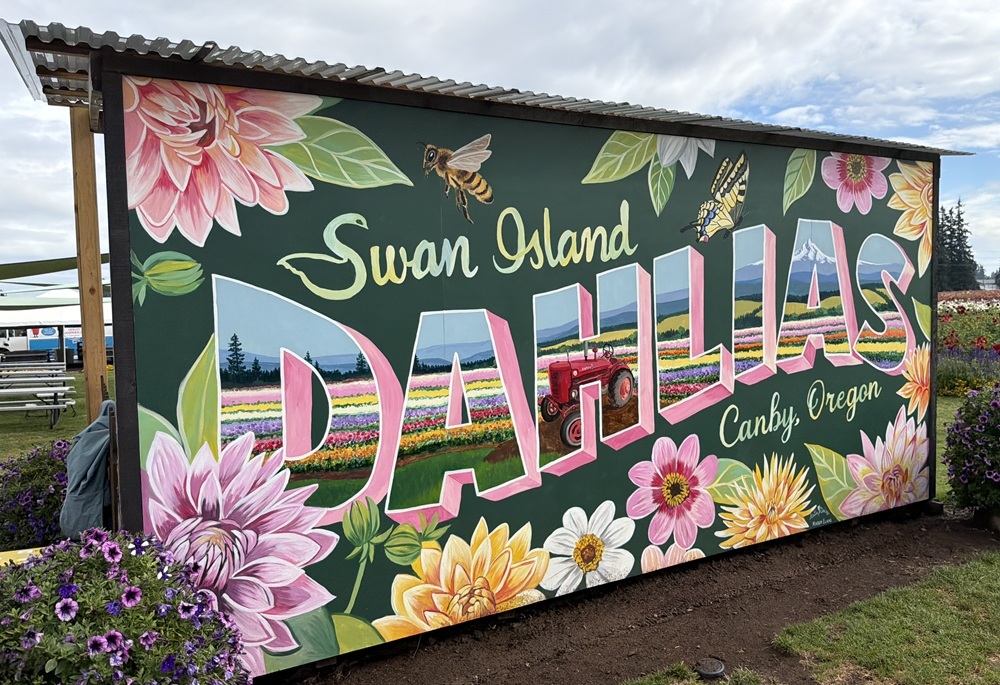
I’m VERY lucky to now have so many amazing growers and nurseries as neighbors, including Swan Island Dahlia in Canby, Oregon! They are family owned century farm, celebrating their 100th this year.

And yes, it’s very dangerous for these folks to be right down the road from me! Because they sell retail to gardeners, and their dahlia catalog is pretty amazing. I got a behind the scenes industry tour about a couple of months ago and then recently hit their dahlia festival and special “Bloom Room”, where flower artists created some AMAZING displays with the farm flowers.

I took about 300 photos while I was there, so there’s no way for me to share them all, but I believe their festival goes through the end of the month, so if you’re in the area don’t miss it! You can walk through their fields and fields of blooming dahlia right now.

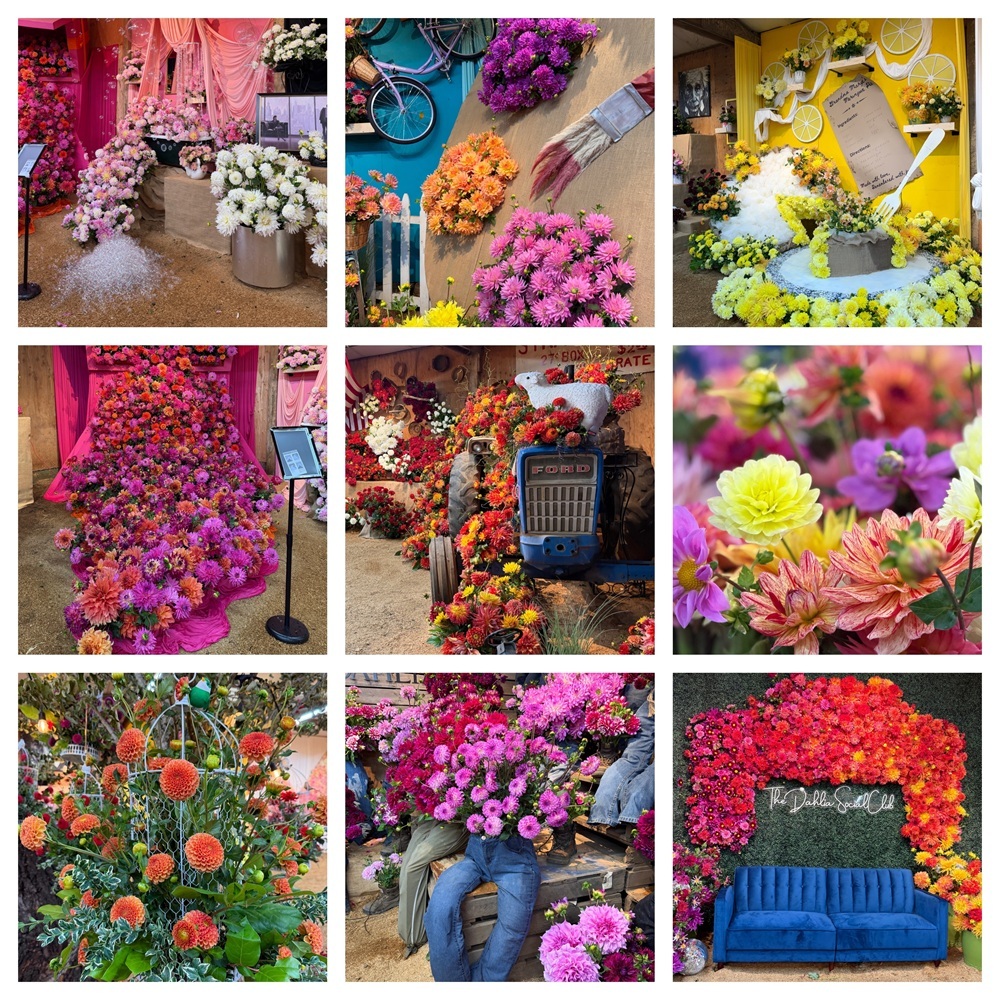
It was tough to get a good shot of the entire Bloom Room, but all the vignettes were stunning and very creative. I particularly liked this "waterfall" of huge orange, coral, and purple blooms. Unfortunately we got there early in the morning and all the displays had been totally rebuilt the day before and the signs showing the varieties and which floral designer created the display weren't posted yet, or I'd give them credit!

PC: Leslie F. Halleck

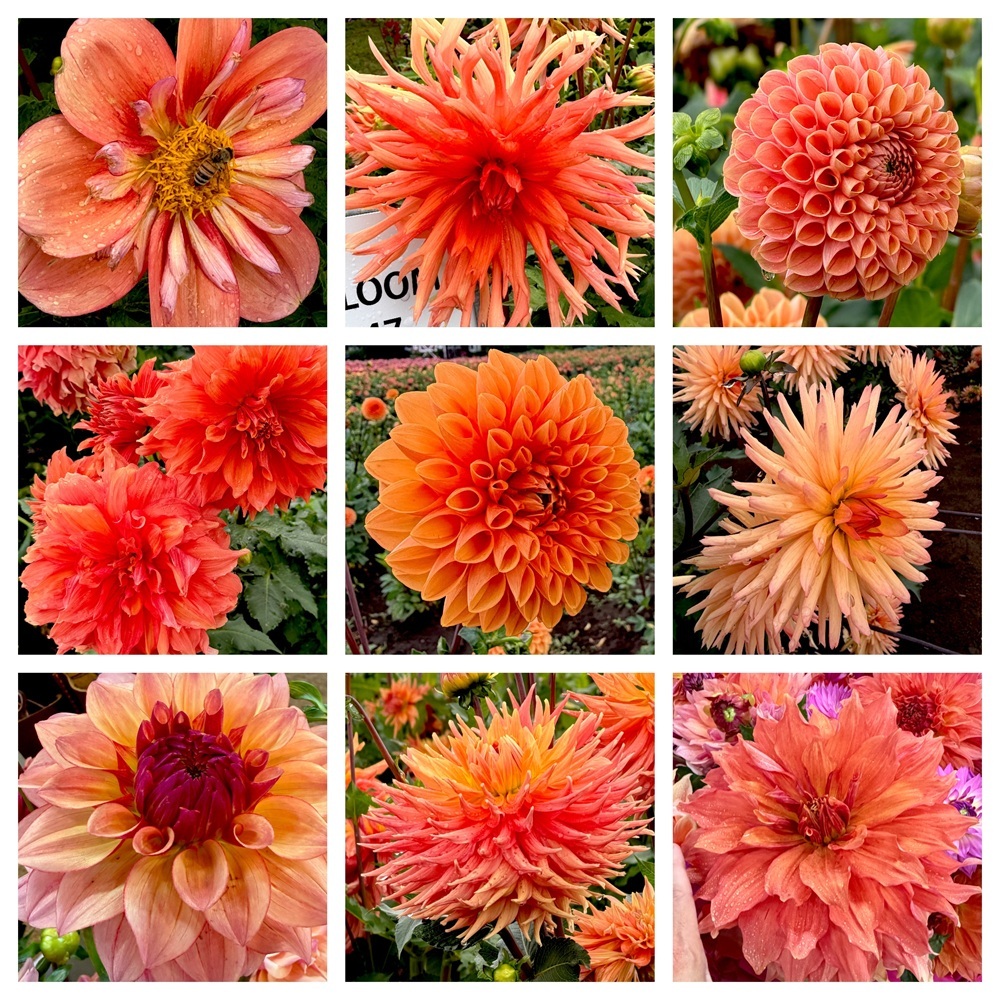
A Penchant for Peach

If you know me, you know I have a penchant for PEACH, orange, apricot, copper, bronze, and coral colored flowers. Same goes for dahlia! I'm admittedly most in love with dahlia 'Cornel Bronze', which is the top right photo in the collage below. The center image is 'Maarn', which is also stunning. The bottom left corner features 'Tuscany', which has a lovely hombre effect.

My favorite orange and peach dahlia at Swan Island
PC: Leslie F. Halleck

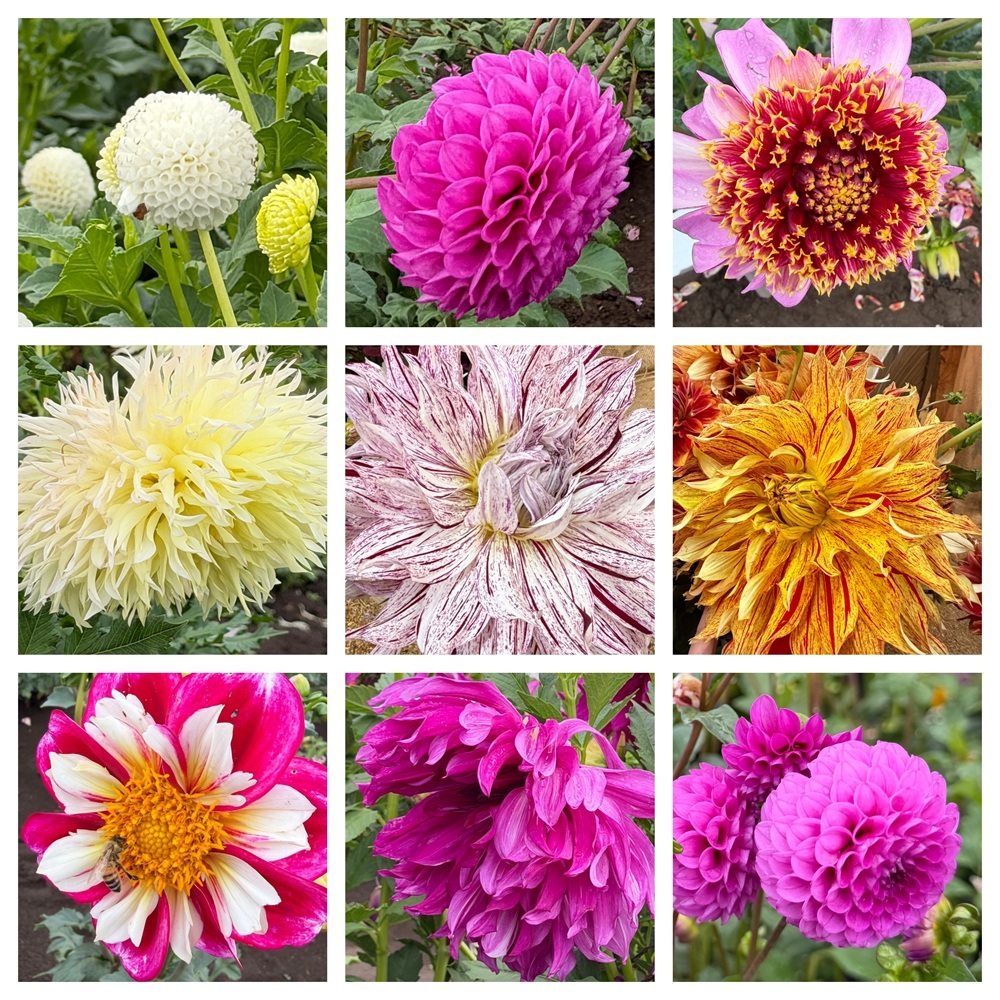
I also like the whites and purples and there are plenty of other funky color mixes!

PC: Leslie F. Halleck

Let's Talk Deer

Now, the reality for me now, and many of you, is DEER. yes, deer will happily munch your dahlia flowers and plants. They don't seem to be much of an issue here in the Swan Island dahlia fields, as they are acres of large open space, and not many places for deer to hide. That's not the case on my property and the deer will mow down anything half palatable if they are hungry. So for me dahlia will now have to either go behind a deer fence, or in the greenhouse. So I'm working on that plan! It may be they go into containers on my several balconies until I have a way to protect them.

Walking the Dahlia Fields

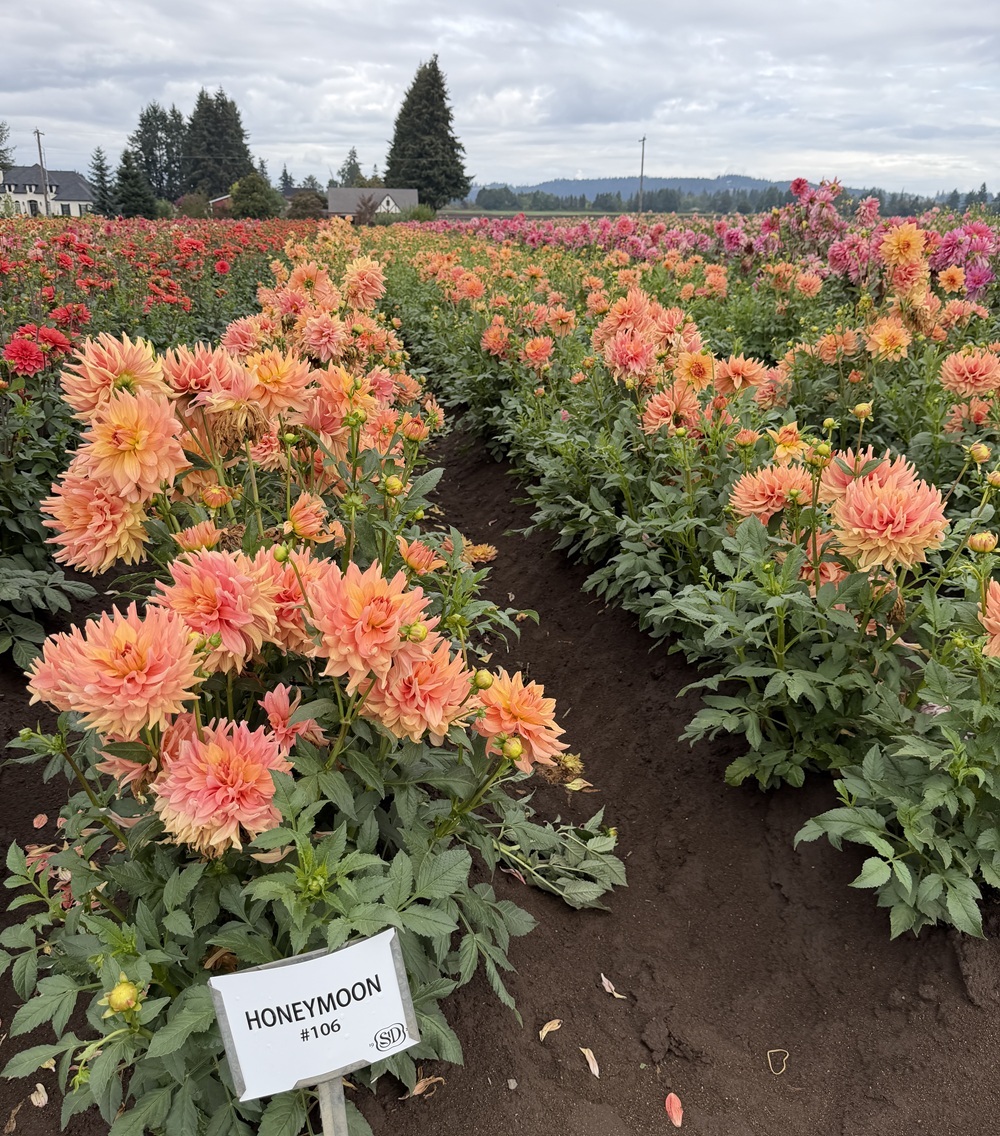
With peak dahlia bloom season underway, we were also able to walk the extensive fields to get a close up view of favorite varieties in bloom. Acres and acres of blooms! It was quite impressive.

'Honeymoon' dahlia
PC: Leslie F. Halleck

Swan Island Dahlia fields
PC: Leslie F. Halleck

The dahlia fields go on and on and the weather is PERFECT right now for a visit. The dahlia festival at Swan Island goes on through the end of September, so you still have time to visit. They have food trucks, music, and great gift shop, and a trolley that can drive you around the fields if walking the distance presents a challenge.

You can shop their website NOW for nation-wide delivery in 2027. I suspect they sell out quickly, so I'd better get on it!

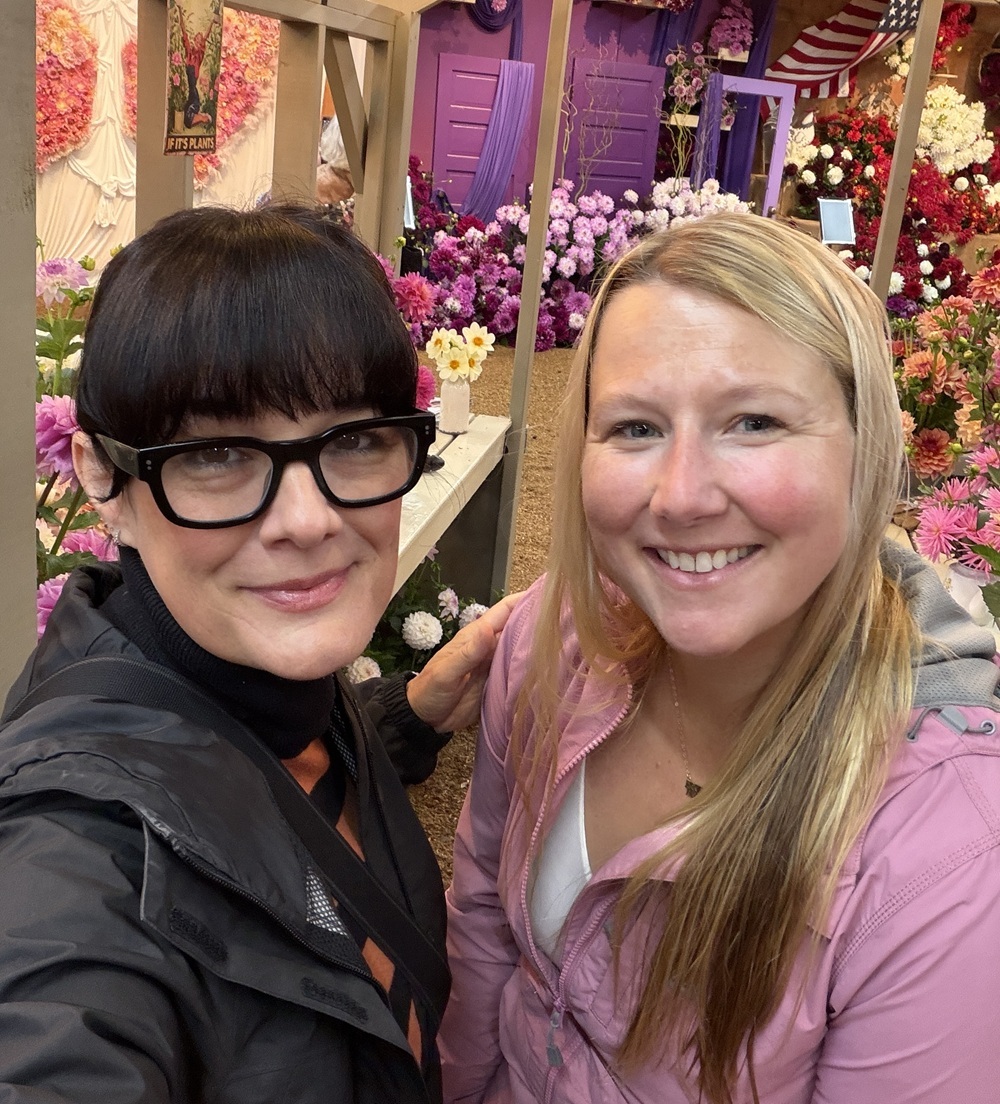
Leslie & Alli - botanical buddies at The Bloom Room!
PC: Leslie F. Halleck

A bonus for me was getting to meet my green industry pal Allison Pennell at the Bloom Room. It's always fun to nerd out with other plant people at events like this. And btw, Alli is the PNW Sales Manager for Coast of Maine Organic soils, so if you're a garden center in the industry hit her up! You can find her on Instagram at @botanical.allison on Instagram.


Planning Your Dream Greenhouse with Leslie Halleck

September 7, 2026

Join Jane and Leslie On The Ledge to Learn About Greenhouse Growing

Here are some of the show notes from my recent podcast chat with Jane:

Want to create your ultimate greenhouse without breaking the bank or making mistakes that harm your plants? Professional plant geek Leslie Halleck joins Jane Peronne on the On The Ledge Podcast to talk about her new book Home Greenhouse Revival: find out how to choose, site, and manage a greenhouse so it actually grows what you want, rather than becoming an expensive garden ornament or storage space.

Patreon subscriber at the Ledge End or Superfan tier? Watch the ad free episode here, and catch my bonus chat with Leslie where we go deeper into the world of horticulture, including why gardening skills are vital for our future. Watch here.

This week’s guest

Leslie Halleck is a professional horticulturist with a lifetime of industry experience, hands on gardening and indoor growing. She's also the author of several books including Gardening Under Lights and Plant Parenting and is an UCLA Extension Instructor for the Horticulture & Gardening Program and Horticulture Certificate Program. Her book Home Greenhouse Revival is out now, published by Cool Springs Press.

Want more of Leslie on On The Ledge? Check out her episodes on The science of plant propagation, tiny plants and growlights.

Key topics

  • We discuss why a plant first approach matters more than choosing the dream structure first.
  • Leslie shares how climate, region, sun angle, shade, and obstructions should shape greenhouse decisions from the start.
  • We discuss why glass is not always the best choice to clothe your greenhouse, especially in windy areas, snow loads, or near falling branches.
  • Leslie explains why secondhand greenhouses can be a smart buy if the structure has good bones, but glazing often deteriorates.
  • We discuss the importance of permits, foundations, power, water, and HVAC or supplemental lighting before committing to a build.
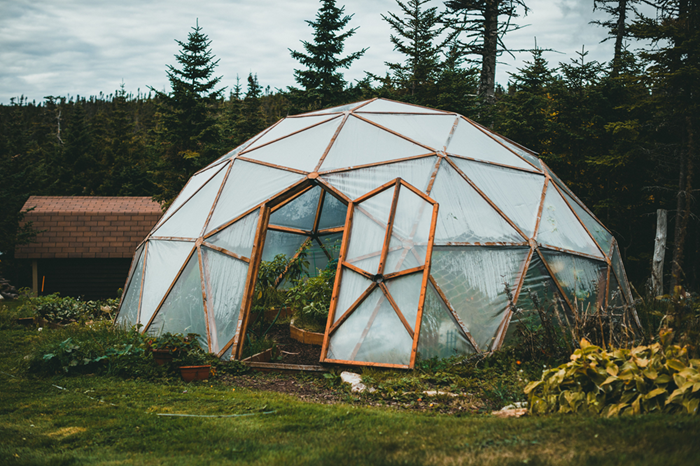
  • Leslie shares how greenhouse shape affects performance, including geodesic domes for heat retention and gambrel roofs for snow.
  • We discuss why cooling is often the hardest part of greenhouse management, especially in summer heat.
  • Leslie explains why taller greenhouses are often easier to cool than short, low ones, and why taking plants outside in summer can be the right move.
  • We discuss sunken or semi subterranean greenhouses, including when they can help with insulation or cooling and when they may fail.
  • Leslie shares why newer greenhouse kits are getting sturdier and more climate specific, but still need to be matched to local conditions.
  • We discuss cheap portable kits, reinforcement, anchoring, and how to manage expectations for temporary or budget setups.
  • Leslie explains why pests and diseases can explode in greenhouses and how IPM, monitoring, and biosecurity help prevent problems.
  • We discuss VPD, humidity, and why vapor pressure deficit is a more precise measure than relative humidity for greenhouse growing.
  • Leslie shares that the book includes detailed plant profiles, practical growing measurements, and add on plant recommendations for each pro

You can see more of the notes over at Jane's Website!


Greenhouse Growing for Beginners: What You Need to Know Before You Buy and Grow

September 3, 2026

Greenhouse Growing with Leslie on the Joe Gardener Podcast

Greenhouse growing can extend your growing season, improve seed starting, protect plants through winter, and even help you grow food year-round. But choosing and setting up a home greenhouse involves a lot more than picking a size and finding a sunny spot.

In this episode of the Joe Gardener podcast we talked about how to choose, set up, and successfully grow in a greenhouse.

We cover greenhouse size and placement, sun exposure and orientation, heating and cooling, ventilation, irrigation, grow lights, seedling heat mats, temperature and humidity, and why your climate and the plants you want to grow should determine the greenhouse you choose.

I also explain why cooling a greenhouse can be harder than heating one, why even a sunny greenhouse may need supplemental grow lights in winter, how temperature differences can cause leggy seedlings, and which greenhouse tools and sensors are actually worth buying.

Whether you're considering buying a greenhouse, setting up your first backyard greenhouse, starting seeds in a greenhouse, overwintering plants, extending the vegetable gardening season, or trying to make an existing greenhouse more productive, this conversation can help you avoid some expensive greenhouse mistakes before you make them.

"Greenhouses are having a moment. They have gone in and out of style for home gardeners, but right now, they are decidedly in, which is why my returning guest this week, Leslie Halleck, wrote her new book, “Home Greenhouse Revival: Growing Year-Round Foliage, Flowers & Food.”

What to Know Before You Buy a Greenhouse

Greenhouse Tools Leslie Recommends

Hygrometer –  You need to, at a bare minimum, understand what your relative humidity is, and that’s the humidity level relative to temperature, ’cause that’s always relative to the temperature.  Warm air can hold more water vapor. Cold air holds less. So you have to know these things because it affects plant transpiration.

Soil moisture meter – A soil moisture meter will help you learn better watering habits. “ Over time you won’t rely on those anymore because they’re pretty rudimentary, but initially as a new greenhouse grower it can help you figure out if you’re watering adequately or not,” Leslie says.

Quantum flux meter – To measure light, a conventional light meter is not adequate. A quantum flux meter, or  photosynthetically active radiation (PAR) meter. “ You cannot rely on human eyeballs to determine whether there is enough usable light for the plants that you’re growing,” Leslie says. A quantum flux meter can tell you the photosynthetic photon flux density in the greenhouse — the intensity of the light. And you can use it to calculate the greenhouse’s daily light integral.

Vapor pressure deficit sensor – A vapor pressure deficit, or VPD, sensor will let you know when the heater needs to be kicked on or if the vents need to be opened more often. “If the vapor pressure deficit is bigger, that means your relative humidity is lower. You have a bigger deficit of water vapor, which means you can add more water vapor to that space, but it also means your plants are going to transpire faster, they’re going to lose water faster.”

Vents – A greenhouse kit doesn’t necessarily come with vents. “Always add on the vents,” Leslie says. It’s also a good option to get a solar-power-controlled opener and closer for those vents for less labor and healthier plants.

Grow lights – Lighting is needed to supplement sunlight when your greenhouse doesn’t get enough light exposure or the day lengths have gotten shorter.

Heat mats – Heated propagation mats can help your seeds start when the soil temperature would otherwise not be high enough.

You can find all of this content, links to recommended tools, and the full transcript of the interview with additional notes head over to Joe's website!

Get Leslie's New Book

If you'd like to dig deeper into greenhouse growing, you can pick up a copy of my brand new book "Home Greenhouse Revival" here at my shop or at any of the other retailers I've linked to!


Why are all My Greenhouse Plants Stressed in Summer?

August 10, 2026

Summer Heat Can Make Managing Your Greenhouse Impossible

One of the more common complaints I receive when talking to folks about managing their greenhouses is how poorly many of their plants are doing during the hot summer months.

Did you know that once temperatures get too hot outside, the temperature in your greenhouse is going to get even hotter? And there is a point at which no amount of additional cooling is going to lower the temperature enough. Not only that, but the hot and humid conditions created in summer greenhouses are the perfect breeding ground for many tough pests, such as scale.

In fact, if it's warm where you live and you currently have citrus plants in your greenhouse, I'll bet you good money you're struggling with a scale infestation! It's a classic.

Geodesic Greenhouse

But Isn't my Greenhouse Supposed to be Warm?

To a point, yes. It's very easy during summer months for greenhouses to heat up far too much, which causes a lot of plant stress and even plant death.

Ultimately, it's easier to heat a greenhouse than it is to cool it, especially in hot climates. The ideal average best daytime temperature range for your summer greenhouse is between 80-85F (27-29C). If it's 90F (32C) outside, you can bet the internal temperature of your greenhouse is going to be hotter. And once the internal temperature of your greenhouse exceeds 90F, your plants will struggle and pests can be overwhelming. Controlling your internal greenhouse temperature once it's that hot outside is also challenging, even if you are running cooling units.

There are many different appropriate temperature ranges inside a greenhouse depending on what you are growing. In my new book "Home Greenhouse Revival" I break down seven different categories and temperature ranges you can use to guide you when deciding on what type of greenhouse to build or install, and what target temperatures benefit different plants.

So How do I Keep my Greenhouse Cooler in Summer?

Keeping your greenhouse cooler in summer typically involves adding sun-blocking elements such as shade cloth or whitewash on your greenhouse, in addition to running cooling units. Yes, this will block a lot of the radiant energy (sunlight) coming in to the greenhouse, but it will also help reduce internal temperatures and help your cooling units do a better job of moderating the temperature.

OR...you just may need to move your plants outdoors for the summer if you live in a very hot climate. And guess what? That's OK. For some of you, depending on your climate, you will be able to grow plants inside your greenhouse year-round. But for those of you in very hot climates, it's OK to know your greenhouse's limit and move plants outdoors if that provides a better growing environment.

Dig Deeper

If you'd love to dig deeper and learn all about managing a greenhouse environment effectively, including all the most effective cooling strategies, check out my new book "Home Greenhouse Revival"


Back to top

Tips in your inbox

E-Newsletter

Sign up for my monthly Halleck Horticultural newsletter for information about my horticulture courses and learning opportunities, plant and gardening information, and hort news. You can also sign up for my weekly Plant for Profits horticulture business newsletter.