Microgreens: What to Grow in the Cool Season
October 27, 2026
What Can You Grow in Your Cool Greenhouse?
Microgreens are a great option
As we head towards the colder winter season, many folks ask what types of edibles can they still start indoors or in a greenhouse right now. The other question I get a lot is “which crop can I grow now that is the most nutrient dense?”. If you’re looking for crops that can both germinate and grow in cooler temperatures and deliver big ROI on health benefits then microgreens are a great option.
Not only are the species that you seed to grow microgreens mostly cool-season vegetable crops, the tiny seedlings are especially nutrient dense. So what exactly qualifies as a “microgreen”? Technically, microgreens are the seedling sprouts of anything edible. Mostly though, we use cool-season crops such as spinach, kale, chard, beets, arugula, basil, lettuce, broccoli, cilantro, and others. While basil also makes a nice microgreen, it won’t be as happy in a cool or cold greenhouse as its a warm-season grower.
What's the difference between “microgreens” and “sprouts”? Not much, but microgreens are just a bit older than sprouts, and have developed at least a couple of true leaves and a small root system.
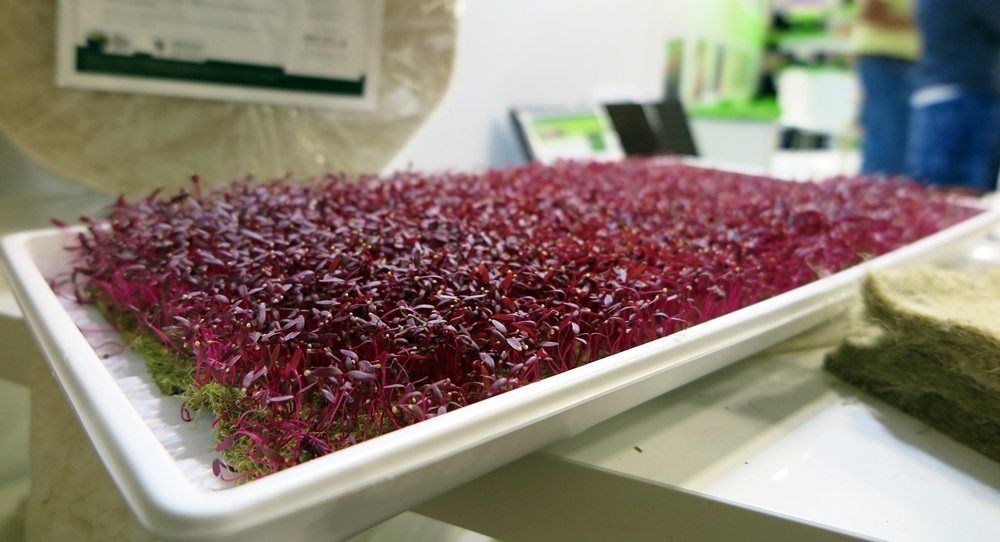
PC: Leslie F. Halleck
Photoperiod and Lighting for Microgreens
Most microgreens or mixed microgreens will be long-day plants when it comes to photoperiod. That means growing them under long photoperiods triggers and speeds up time to flowering. Obviously, we're growing microgreens for their vegetative growth, not the flowers. However, since you’ll be harvesting microgreens so quickly – with perhaps only a couple of true leaves – you’ll usually be harvesting and eating them before they’ll start flowering. So as long as you don’t wait too long to snip them, you can go ahead and grow them under longer photoperiods 14-16 hours, depending on your lamp’s light output, to boost production.
You can grow microgreens under relatively low to medium light conditions, but you’ll want them close to a light source. You can get away with a DLI (Daily Light Integral) of about 5-7 mol/m2/day, but you can boost vigor and speed by going up to 18 mol/m2/day. For light intensity strive for a PPFD (Photosynthetic Photon Flux Density) of about 100-150 umol/m2/s (which you can measure accurately using a quantum flux meter, or a phone app for a ballpark measurement.
For bigger harvests or commercial production, use of LED grow lights to grow microgreens are beneficial, and if your indoor space or greenhouse is relatively dark during the winter I would suggest grow lights, just as you would use for growing transplants from seed. If you're trying to boost antioxidants in your microgreens you can use LEDs that emit radiation in the UV spectrum, but you'll need to use sun protection around those grow lights just like you would being out in the sun.
How to Seed and water Microgreens
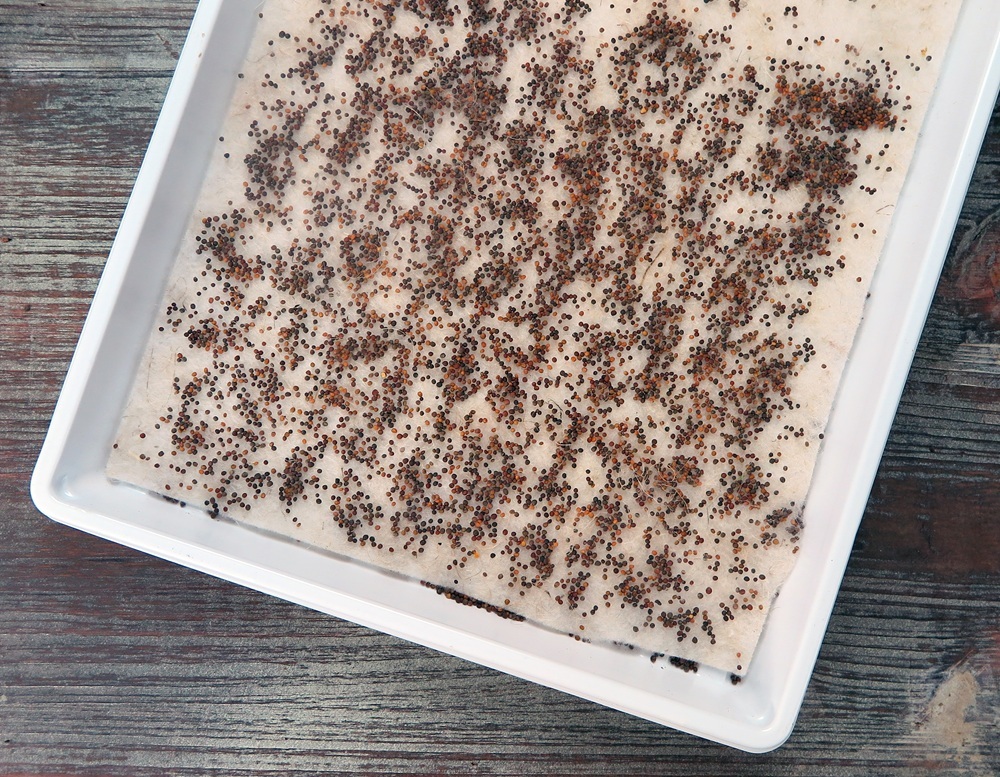
Microgreen seeds on felt capillary mat
PC: Leslie F. Halleck
Direct seed your desired microgreen, or mix of seeds, into enclosed seed tray without drainage holes, or any shallow container without a hole. Use a lightweight seed-starting mix. 2-inches of soil within the tray is plenty. Sprinkle seeds across surface of moist soil and mist to moisten. For greenhouse production I prefer to use soilless or inert media. Felt capillary or coir water-wicking mats can be used in place of soil to cut down on diseases such as damping off. Simply place the mat in the bottom of your tray and sprinkle seeds on top. Be sure to moisten either the seed mix or the mats before you seed. While you want to create a thick stand of seedlings, don’t seed so densely that seeds are on top of one another, which will cause air circulation problems.
To water microgreens just use a humidity dome over the tray until the seeds germinate then remove it. Keep soil or mats consistently moist (not soggy) using a misting spray bottle.
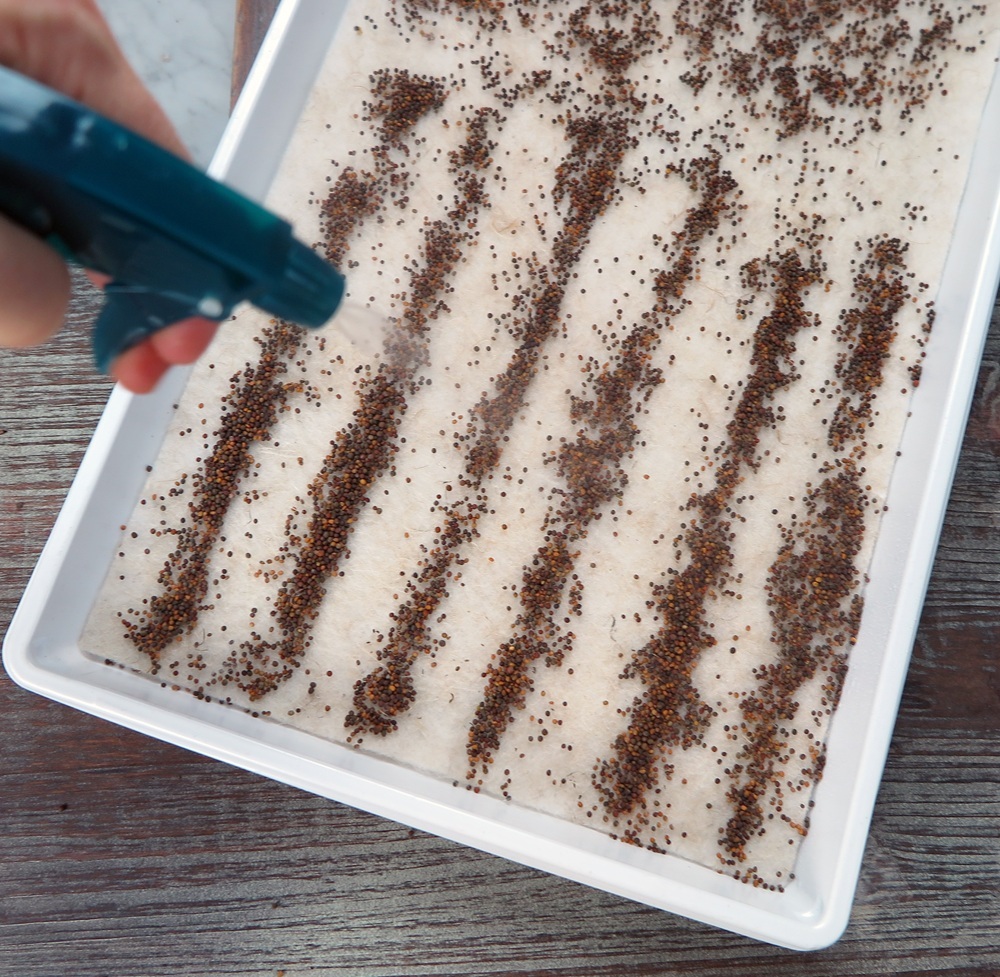
Misting microgreens
PC: Leslie F. Halleck
Temperature for Microgreens
The ideal daytime temperature for most microgreens is about 60-70 F (16-21 C), with nighttime temperatures 45-55 F (7-13 C). If your greenhouse is cooler, simply use a heat mat under the seed tray to speed up germination and development.
Space to Grow Microgreens
The space required to grow microgreens is minimal and you typically only need about two square feet of space to keep a regular harvest going.
Fertilize Microgreens
Fertilization isn’t typically required for microgreens but if you’d like to grow them bigger and are using inert mats to grow them, you can feed with a ½ strength (diluted) 2:1:3 ratio liquid fertilizer liquid seaweed or kelp, just as they begin to develop a true leaf. This feed will help improve flavor and nutritional value.
Pests & Diseases of Microgreens
Mold and fungal damping off disease is the most common problem if seedlings stay too wet or humidity is too high. Seeding to densely can encourage a mold problem, rendering your microgreens inedible. Fungus gnats can be an issue in soil based media but are usually not an issue when using capillary or coir mats. You can use a diluted solution of 3% hydrogen peroxide in the soil or mat (10 parts water to 1 part HP) to help suppress molds and fungi.
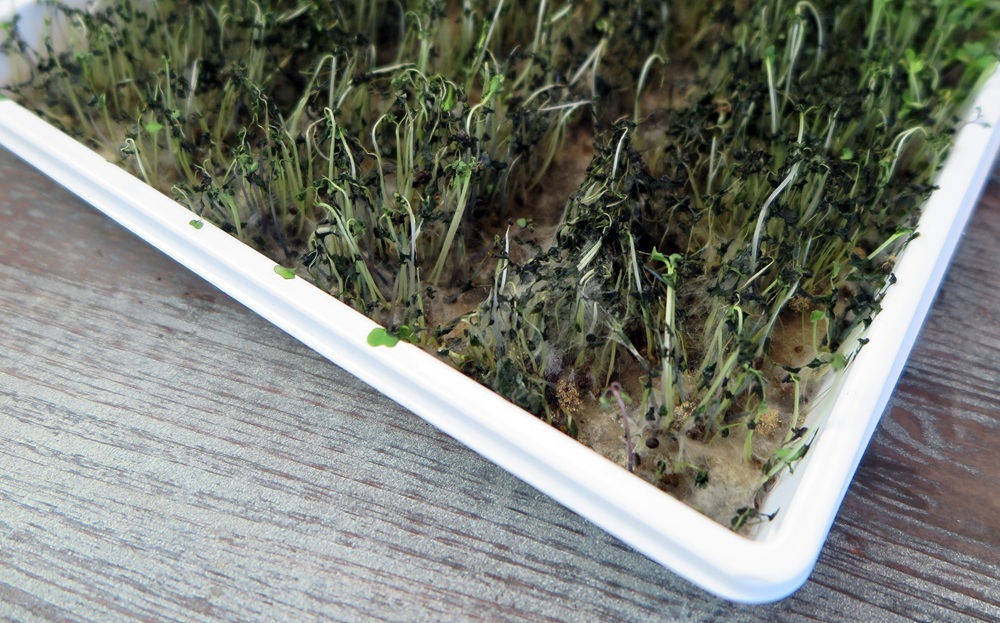
Damping off disease in microgreens
PC: Leslie F. Halleck
Get More Information on Growing Microgreens
If you'd like more detailed information on growing microgreens in your greenhouse or indoors, as well as grow lighting and plant nutrition, grab a copy of my new book "Home Greenhouse Revival" and turn to page 152. All of the detailed plant growing information in the book is also relevant to growing plants indoors and even the outdoor garden.
You can also sign up for my upcoming Greenhouse Masterclass online, November 18-19.

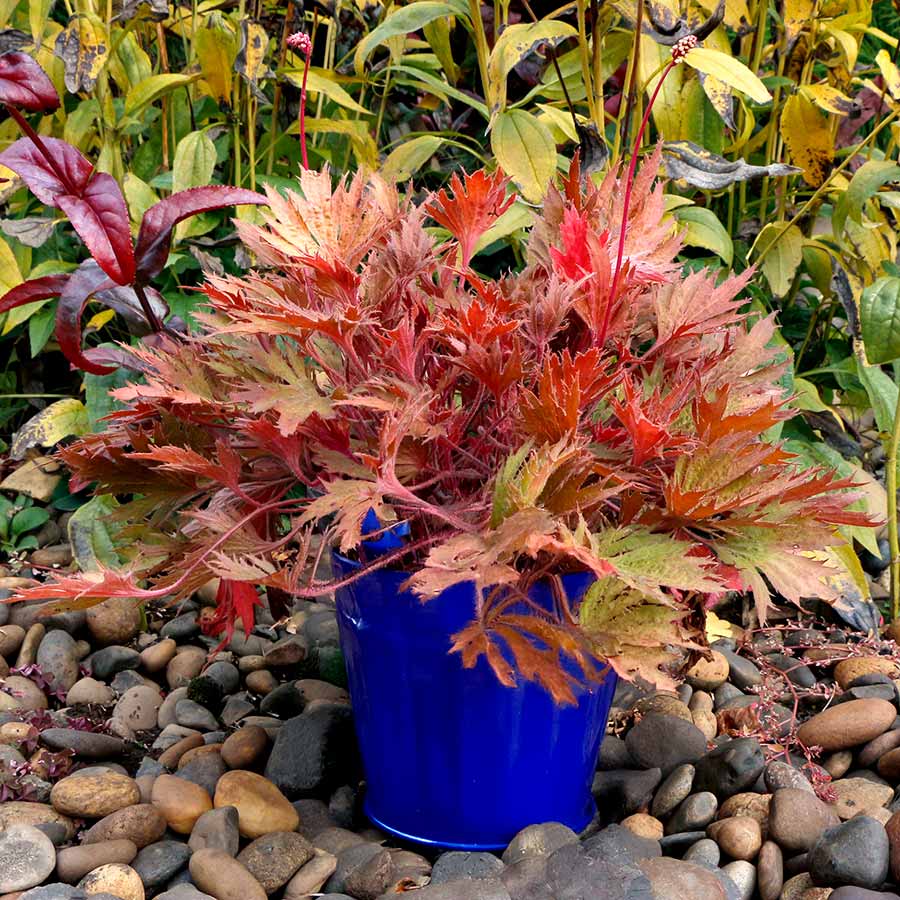
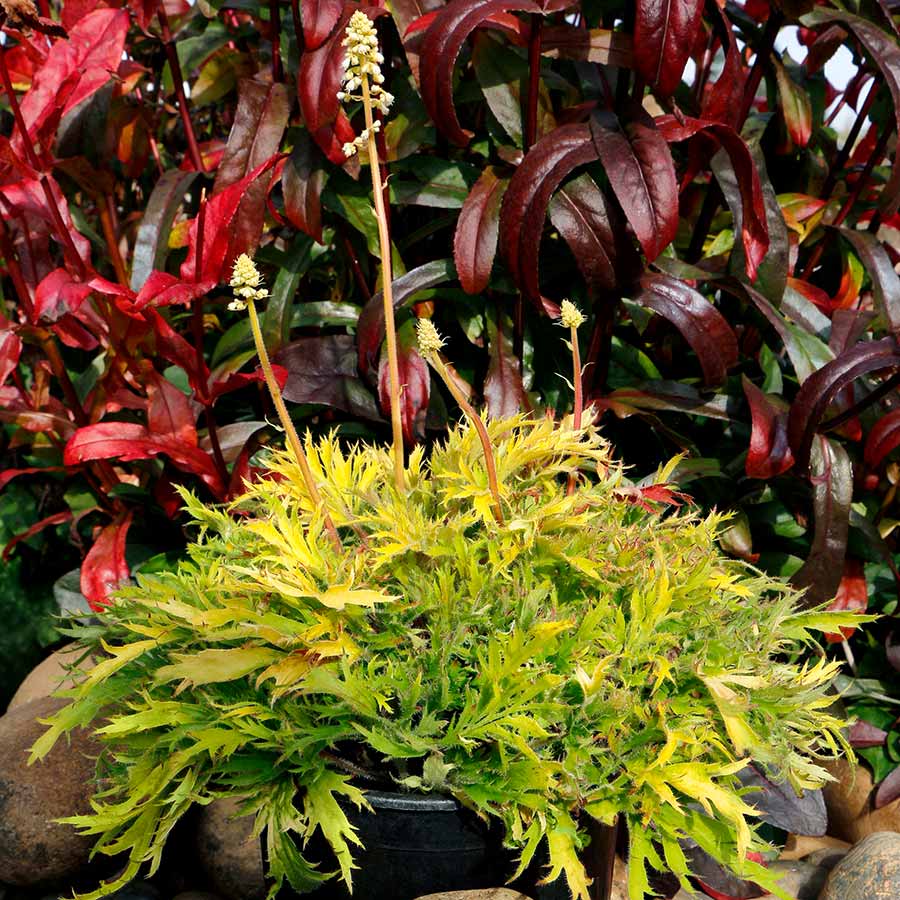


 Pot Belly Pittosporum


 SunMagic

 Starburst