
Cool Tool for Fall Planting: Use an Auger for Planting Trees and Shrubs
September 13, 2026
What's a Horticulturist's Favorite Landscaping Tool?
Well, that's like asking who your favorite kid is! But I am often asked what my favorite tools are, and while the list is long, I need to give a shout out to this EGO battery powered auger (8”). It’s been a HUGE timer saver so far. And just so I'm clear up front, this is not a paid or sponsored post in any way, as usual I just like to let you know about plants and products I use and really like.
Plus, Fall is for Planting folks - now is prime time to plant across the country so hopefully your local garden centers have stocked back up for you for the fall planting season. Now's the time to get shrubs, trees, and perennials in the ground to take advantage of cooler winter temperatures and rainfall, making it easier for many plants to get established; especially in climates with dry hot summers.
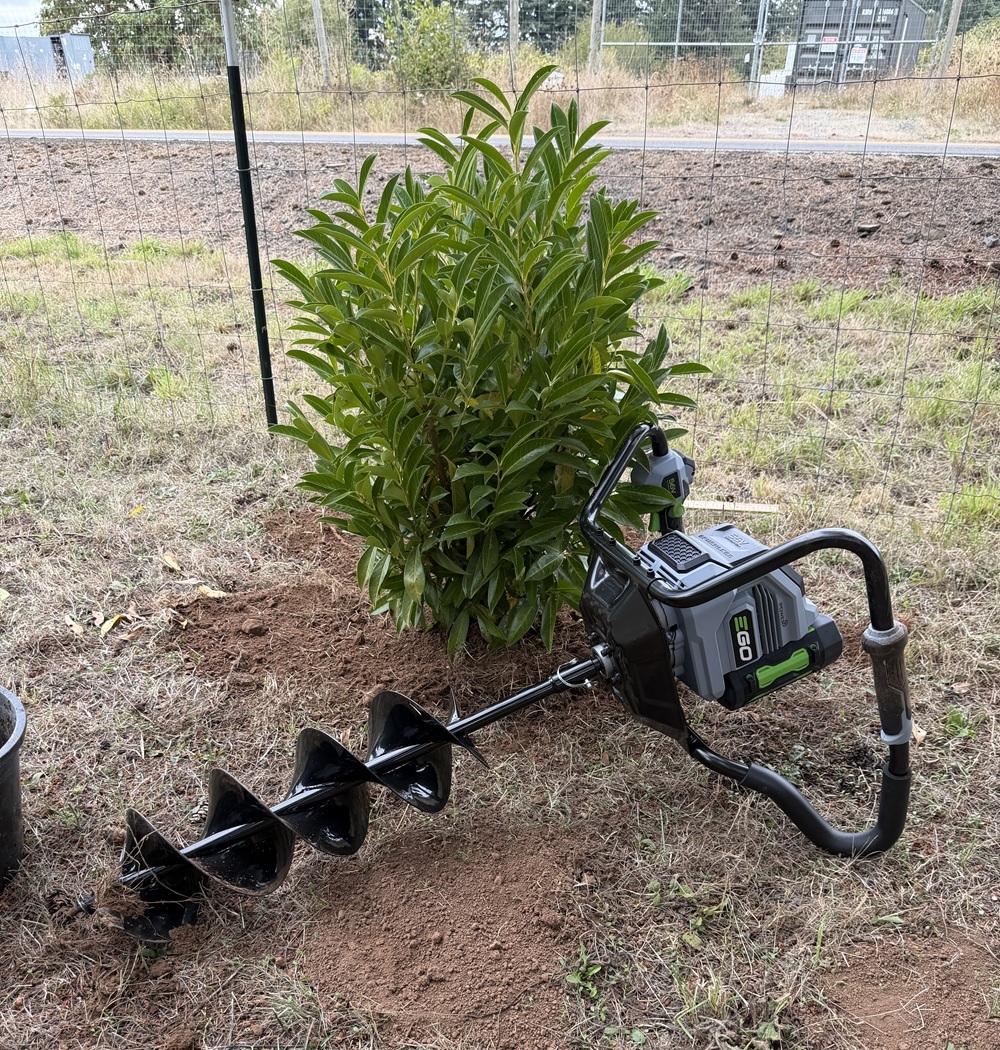
My 8" Auger I'm using to plants LOTS of shrubs and trees
PC: Leslie F. Halleck
Are Battery Powered Tools Really up to the Job?
I’ve LONG been a proponent of battery powered landscape tools, and was an early adopter. More than 20 years ago I started out with the awesome German Brill battery reel mower, and then moved into a full array of battery powered tools (trimmers, blowers, mowers, chain saws etc). Over the last number of years my full component has moved over to Ego, which I have to say are excellent.
Thing is, I’ve taken a lot of guff from those in the landscaping industry over the last couple of decades for recommending the battery powered gear. They think I’ve never actually used these tools for commercial maintenance because I’m a woman, but I use all the tools myself on all of my own properties, on clients properties, and have run plenty of maintenance crews on many properties, both public and private. I suspect at least half of those folks critical of my endorsements are now using battery powered gear because WHO wants to listen to gas powered gear anymore? I don’t, and the clients don’t.
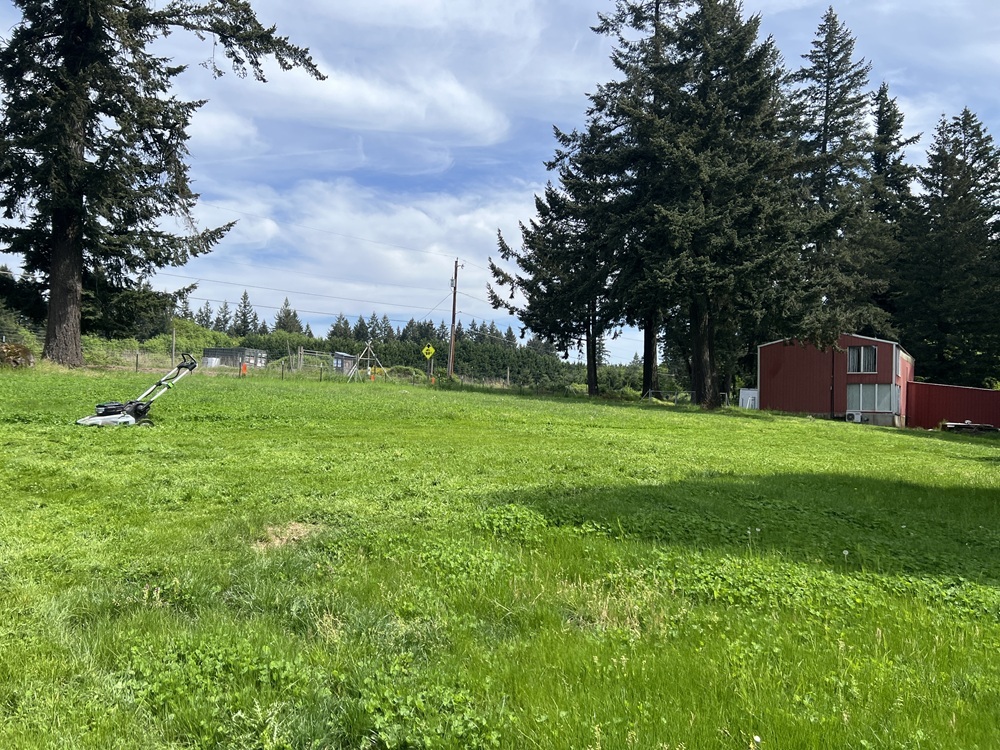
Me and my Ego push mower on about the third mowing, after I mowed down the initially 3-foot tall grasses, clover, and other wildflowers for about the third time
PC: Leslie F. Halleck
This spring and early summer my Ego push mower (and my guns) repeatedly mowed down a couple acres of 3-4 foot tough grass and clover (even wet), which was very impressive. I didn’t expect it to handle the job. I’ve moved up to a tractor mower for larger areas but the push mower still comes out for smaller areas.
I also just replaced my weed trimmer to the new model (after many good years on the last one). It’s even a bit quieter than the old one with some new speed options.
Planting Privacy Hedges With an Auger
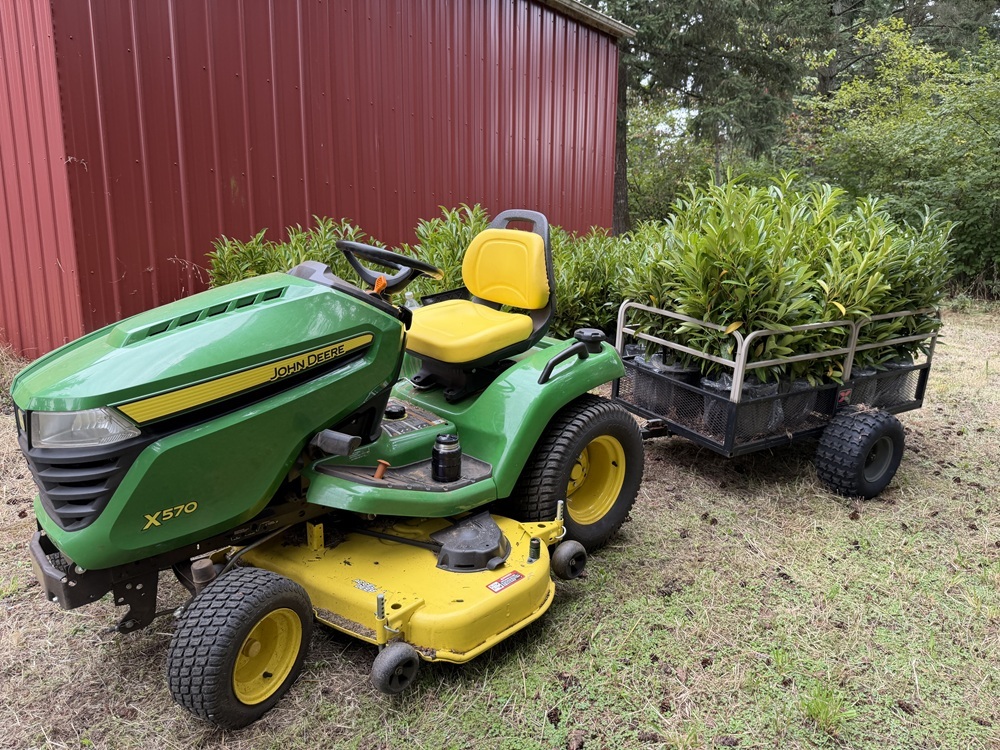
I have LOTS of plants to get in the ground
PC: Leslie F. Halleck
Now I’m using the new EGO 8" batter powered auger to plant privacy hedges and larger shrubs and trees. This baby got me 22 5-gallons in the ground on Saturday in 4 hours (or less because there was also some dawdling about). So that's about 10 5-gallons planted per hour, but I probably could have gone faster if I'd needed to.
One fully-charged battery handled getting 21 plants in the ground before it start flashing red on me, so I just switched out to the 2nd battery for the last plant. I probably could have gotten the last plant finished on the first battery, but the auger speed does slow down noticeably when the battery is almost drained.
"I was at your your house Friday evening and you told me you were going to plant a big privacy hedge - I drove by your house the next day and it was ALL already planted! How did you do that???" Neighbor Nancy
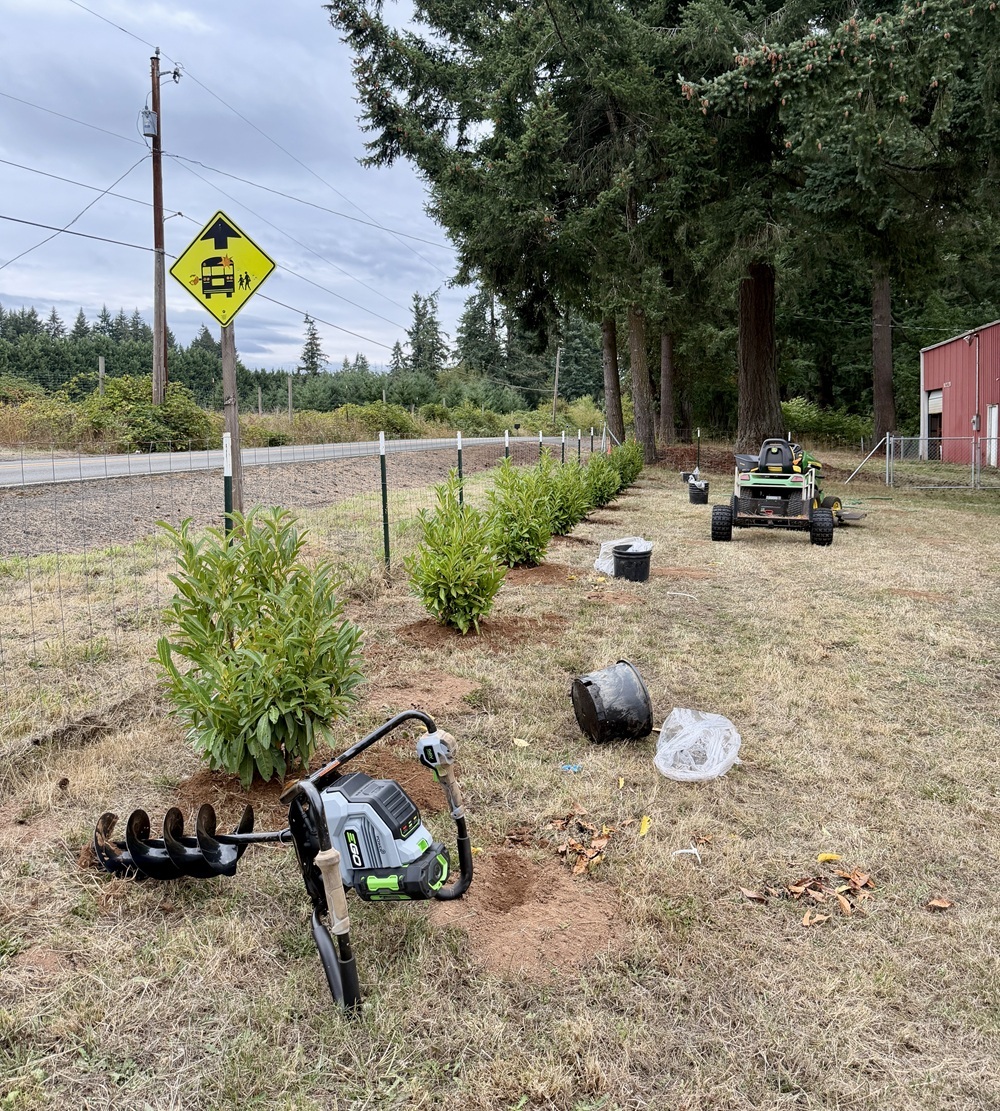
The privacy hedge is coming along quickly
PC: Leslie F. Halleck
While I would have loved to plant larger growing native evergreens here along my front fence line, I was limited by a few important factors:
- My septic drain field is just beyond this field area, so I can't plant trees or shrubs that get bigger than about 20-25' at the most. Otherwise the root system will travel too far, potentially damaging my drains.
- DEER will eat a lot of things, including Arborvitae and other evergreens. So I needed a plant they don't like.
- I needed to pick a plant that's less fire-prone that many of the evergreens (like Arborvitae) that are very commonly used for screening here in Oregon (and many other regions).
- I need plants that are pretty fast growing so as to block some traffic view and noise. I just don't want to wait 10-15 years to get decent privacy.
- I struggled with plant type and quantity availability at the retail level - as many places are selling down right now instead stocking up for fall.
SO, Schip Laurel (Prunus laurocerasus 'Schipkaensis') it is. Not the most exciting choice, but again, I had limitations. But don't worry, most of the plants on my property are natives and I'll have many more strategically chosen native or highly adapted species to plant as I reduce some of the invasives.
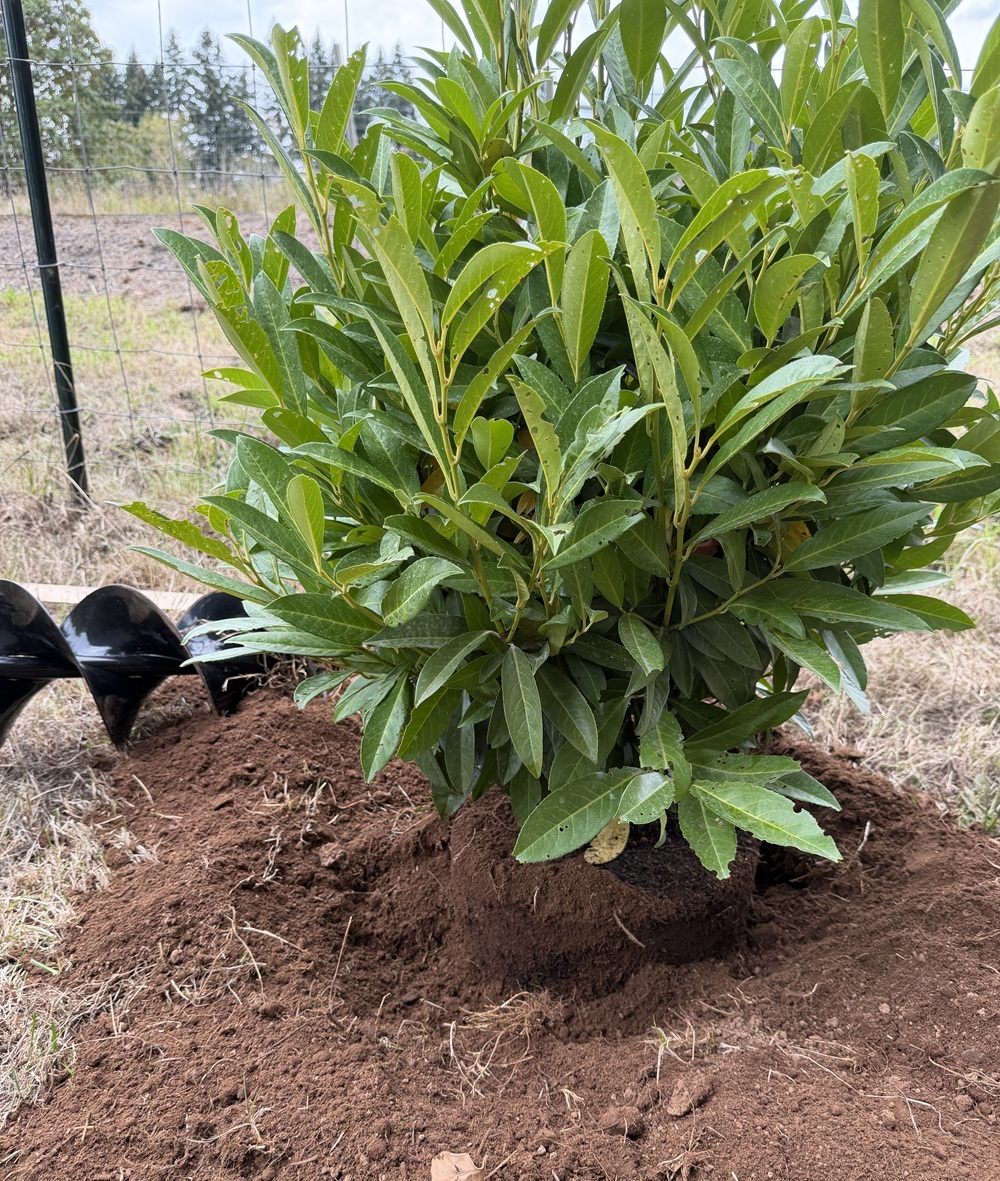
Most shrubs and trees should be planted in a hole that holds the root ball level with the soil surface, but twice as wide.
PC: Leslie F. Halleck
How Safe is Using an Auger to Plant?
Using a large hand-held auger like this can be intimidating if you've never used one. The type of soil you have can also determine whether or not it's best to use.
If you’re small in stature and weight like me, you need to learn to get a feel for when some kickback is coming and learn to compensate and distribute your weight and pressure with your dominant arm and legs to prevent it. I brace my legs apart with a slight bend in the knees and keep extra pressure against the right handle with my dominant arm. You'll get a feel for it pretty quick. When the blade hits very hard dry soil, rocks, or maybe gets stuck in wetter sticker soil, it can kickback or recoil to the left side, which can suddenly twist your torso around if you're not prepared. You could certainly pull a muscle or end up with a good thigh bruise if you're not bracing yourself properly.
The good thing about this tool is that it does have kickback stop function, and you can quickly just release the power button to stop it. It also has two speeds and a reverse function, all of which are handy.
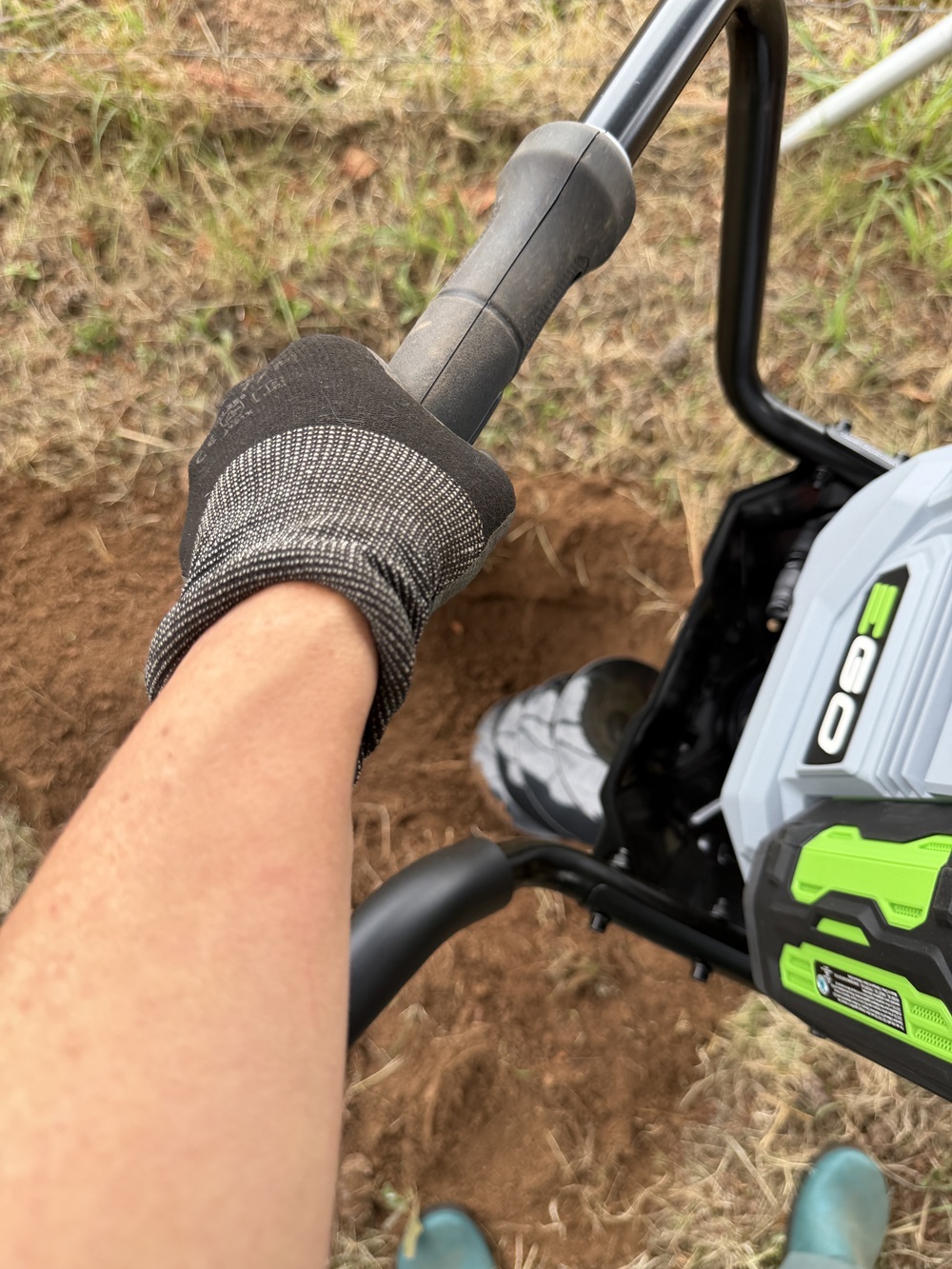
Make sure you have a good grip and brace your legs
PC: Leslie F. Halleck
When it comes to soil type, augers typically work much better in soils that aren't super heavy clay, and aren't really wet or 100% dry. Here in my location in Oregon I have what is called Jory soil series, which is a dark reddish-brown silty clay loam with a red clay sub soil. Because I was waiting for optimal fall planting time, we got one really nice rain about a week ago, and I waited until the soil dried some, but not completely, which left it the perfect consistency to drill into. Not wet, but not totally dry.
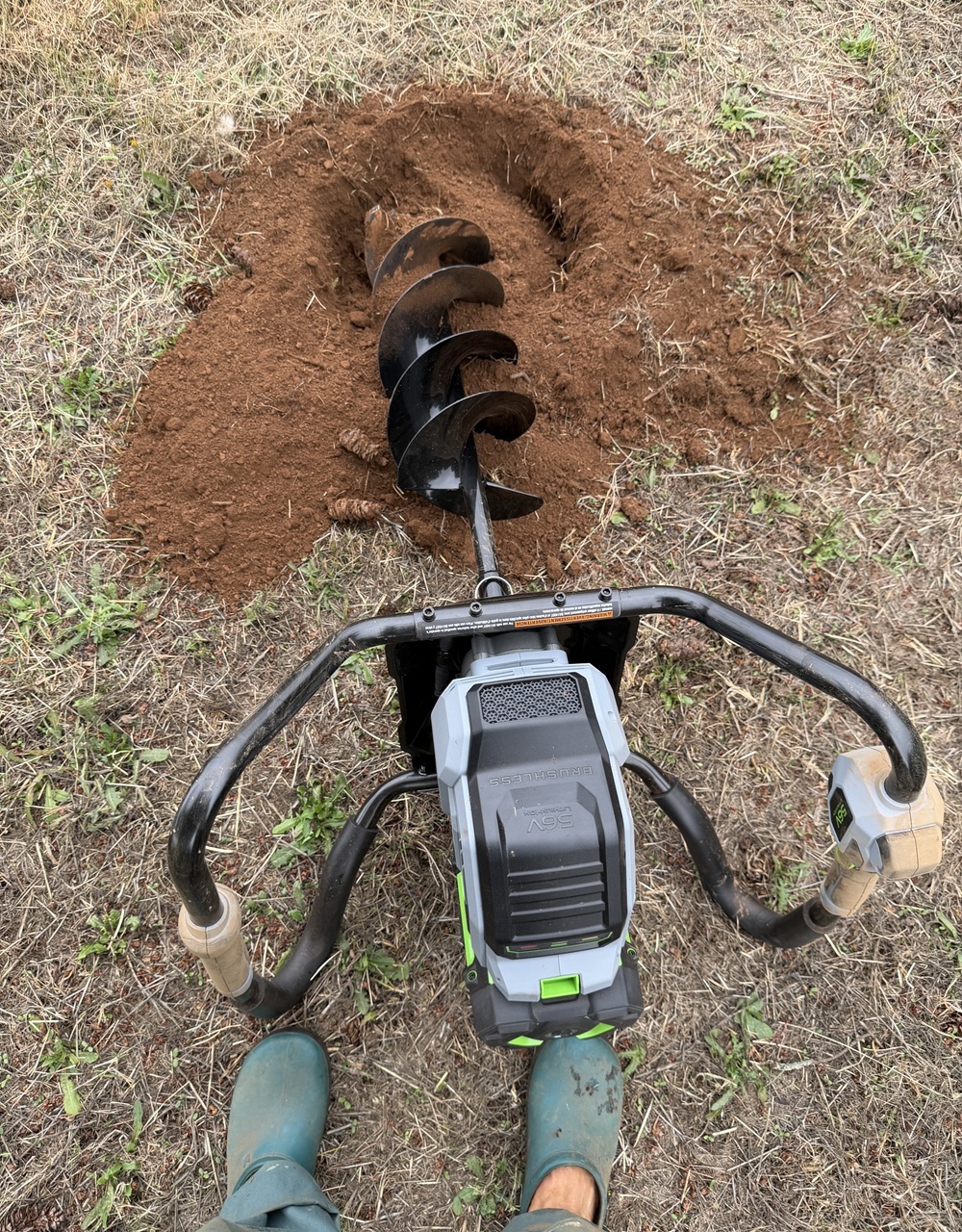
Now, if you have VERY heavy clay that has never been amended, like I used to have in the North Texas area where I gardened for decades, using an auger like this may be tougher - especially if it's at all wet.
Rocks can also present a challenge, so make sure to do a little digging around in the area just to see what you might be dealing with. The auger can recoil a little or stop if it hits a sizeable rock, as well as large woody tree roots.
PRO TIP: When you're drilling the top few inches of soil to first defined the width of your hole - I recommend doing that first before you drill down too keep - pull off any wound up grass or weeds on the blade from that first pass as it can keep the blade from moving down once you're ready to dig deeper.
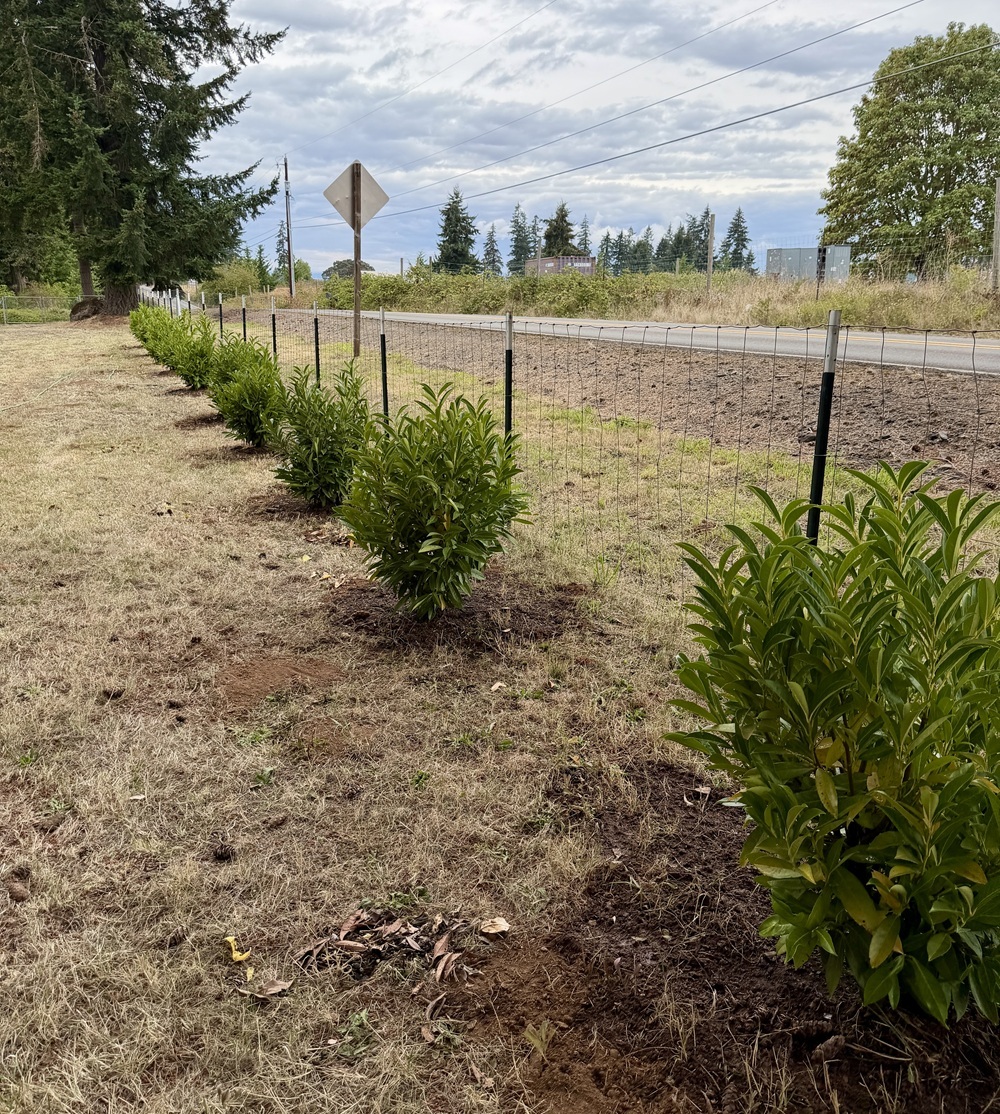
One privacy hedge in! Two more to go
PC: Leslie F. Halleck