
A Sea of Yellow; St. John's Wort Groundcover
June 3, 2026
I'm About to be Covered in St. John's Wort!
By now most of you know that pink is not my favorite color when it comes to choosing landscape and garden plants. And, that my new property is basically covered in pink flowering plants. Well, I'm also not a huge fan of yellow, but that's next up on the garden menu here at the forest farm!
I have several large beds surrounding my front circular driveway that have been run over by creeping St. John's Wort, also called Aaron's beard (Hypericum calycinum) and they are just starting to burst into bloom, creating what will soon be a see of YELLOW covering my front yard, lol.
I know, I know, "What you don't like pink AND yellow? What's left?" People say that to me all the time. Well, there's blue, purple, lavender, violet, orange, peach, coral, chartreuse, white, green, and all subsequent derivations, and that is usually my color palette when choosing plants intentionally for planned ornamental gardens (versus wildscaping, wildflowers, reestablishing natives, etc when I tend to just go with the flow colorize).
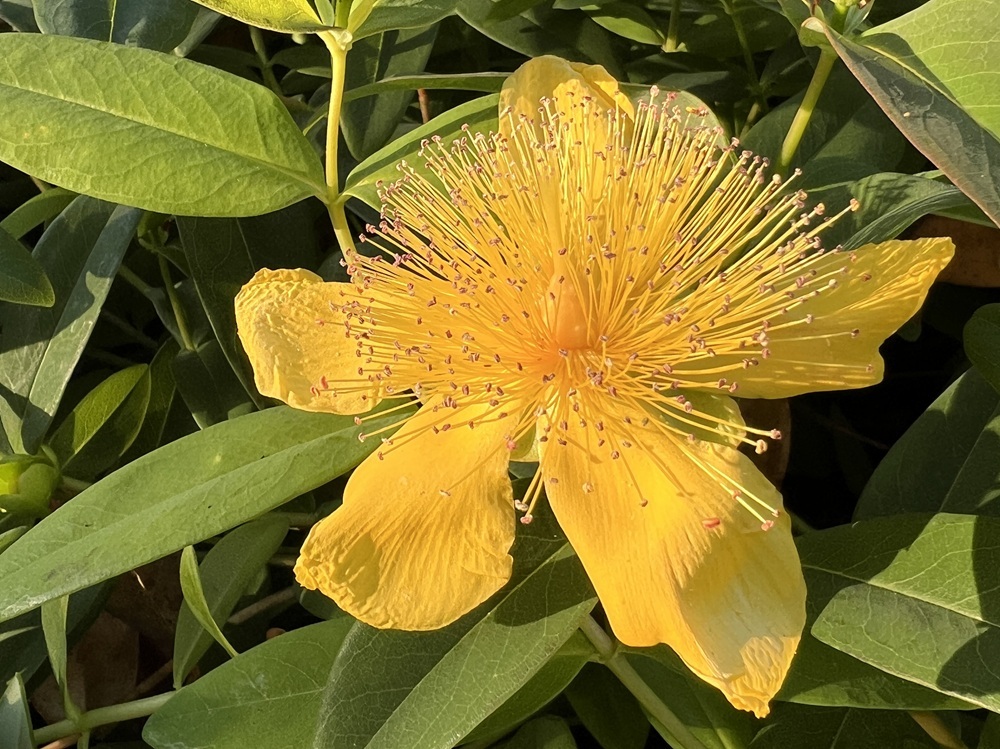
Hypericum calycinum blooming in my garden
PC: Leslie F. Halleck
Plants are semi-evergreen with a bluish tint to the foliage, can tolerate shade but bloom heavier with some sun. In Texas these plants typically need at least some afternoon shade and are considered a shade-plant, but up here in Oregon I have large swaths growing in areas that get sun most of the day and they are thriving. Plants typically grow in a mounding habit about 12-18 inches (30-45 cm) tall, spreading via stoloniferous tissue that can be tough to dig out once it's established.
I haven't watered it a single bit since moving into my home and we haven't had that much rain this spring, but these stands seem pretty self sufficient at this point.
St. John's Wort can be Invasive
Now, this is not to say I don't think these sunburst flowers are cool...they most certainly ARE. I've always admired the showy flower form and they will certainly make the pollinators happy. And if you are looking for a fast-growing groundcover species to reduce erosion, especially on hillsides or low-maintenance areas, this plant will most certainly do the job. As you can well see by my images!
However, prepare for it to be very aggressive when it comes to overwhelming other surrounded plants, and potentially becoming invasive, which it can easily easily be here Oregon. Plants not only spread underground, but also by seed.
When I grew Hypericum in Texas it was slightly better behaved but that's likely only because of the much more extreme heat and growing conditions there, and some of the other species and hybrids are a bit more restrained in their spreading habit, or are shrubs versus groundcovers.
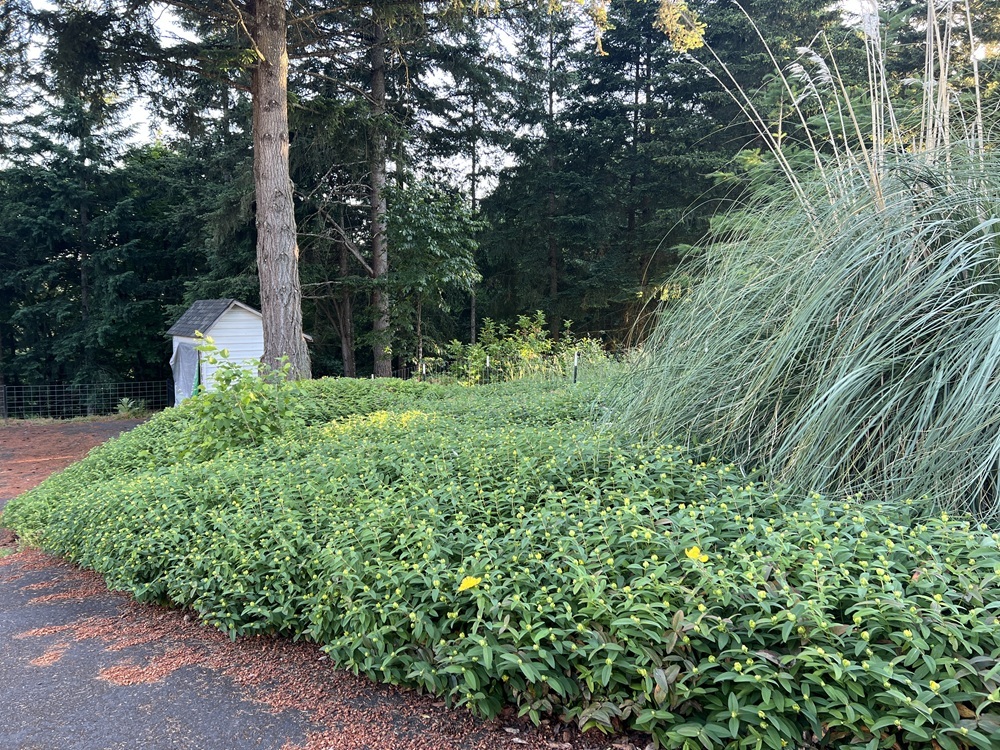
This is just one of the large swaths of hypericum at my farm that has choked out many other plants that used to be in the bed.
PC: Leslie F. Halleck
Does this St. John's Wort Have Medicinal Benefits?
No- do not go making tea with this species! This species is not the one used for medicinal benefits; that would be Hypericum perforatum. This species is mildly toxic to both humans and pets so do not ingest it. I can cause gastrointestinal distress and the sap can cause skin irritation and photosensitivity.
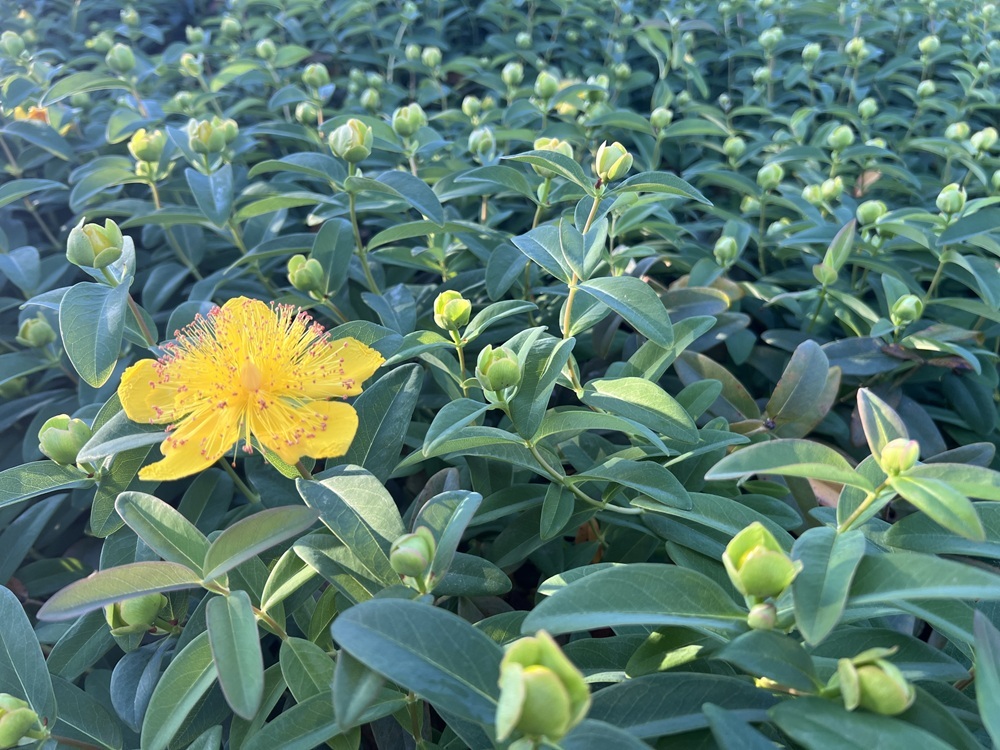
Hypericum calycinum quickly spreads to create masses of yellow sunburst blooms.
PC: Leslie F. Halleck
No Nectar, but it's a Pollen Powerhouse
You'll find that bumble bees are the primary pollinator for this species but other bees will also visit the flowers. Interestingly, the flowers do not produce nectar, but they do produce loads of pollen.
Another fun fact about this plant is that one of the reasons it is so successful is that it also can repel predators using the same pigments that create the ultraviolet patterns that attract pollinators. While we see yellow when we look at these flowers, bees see a dark bullseye pattern that attracts them to the flowers. Pigments called dearomatized isoprenylated phloroglucinols (DIPs) create the UV pattern but the DIPs are also found in the plant's reproductive structures. It turns out these DIPs are also toxic to certain caterpillars that could much these plants down and keep them from producing seed.
In any case, I'm preparing myself for the onslaught of yellow in my front yard, just as I'm recovering from the pink attack! That, and in order for me to be able to plant any other species, or screening plants, up in these beds, I'm going to have to tackle digging out A LOT of Hypericum! Wish me luck...